
TL;DR:
- Nutrafol is a natural supplement targeting multiple root causes of female hair loss.
- Results typically appear after 3 to 6 months of consistent use.
- It works best when combined with addressing underlying health issues.
Most women dealing with hair loss have tried at least one product that promised everything and delivered almost nothing. It's exhausting, and it makes it genuinely hard to trust anything new, even when the science looks promising. Nutrafol sits in a unique spot: it's not a prescription drug, not a shampoo, and not a quick fix. It's a supplement designed around the idea that hair loss has multiple root causes and that your body needs targeted nutritional support to address them. This guide breaks down exactly what Nutrafol is, what the evidence says, and how to figure out if it's the right move for your situation.
Table of Contents
- Understanding hair loss in women
- What is Nutrafol and how does it work?
- Does Nutrafol really work? Evidence, results, and user experiences
- How to decide if Nutrafol is right for you
- The truth most guides won't tell you about Nutrafol
- Seamlessly track your hair growth journey with MyHair
- Frequently asked questions
Key Takeaways
| Point | Details |
|---|---|
| Root cause matters | Understanding the type and cause of your hair loss is crucial before starting any treatment. |
| Nutrafol is drug-free | Nutrafol offers personalized, natural solutions for women but is not FDA-approved as a medication. |
| Results take time | Expect to see hair growth improvements after three to six months of consistent Nutrafol use. |
| Consult professionals | Always consult a dermatologist if you have underlying concerns or aren't seeing results. |
| Track your journey | Monitoring your hair regularly helps you assess progress and adjust your regimen as needed. |
Understanding hair loss in women
Hair loss in women aged 25 to 45 is far more common than most people realize, yet it's still one of the most under-discussed health concerns in this age group. Part of the problem is that hair loss rarely has a single cause. More often, it's the result of several triggers working together at the same time, which makes it frustratingly hard to treat without a personalized approach.
The three most common causes in this age group are hormonal shifts, chronic stress, and genetic predisposition. Hormonal changes tied to pregnancy, postpartum recovery, perimenopause, or stopping birth control can all disrupt the hair growth cycle significantly. Stress, both physical and emotional, pushes more hairs than usual into the shedding phase called telogen effluvium. And genetics can make the scalp more sensitive to androgens (male hormones that everyone has), leading to gradual thinning over time.
What makes the 25 to 45 window particularly tricky is that your hormonal landscape is actively shifting. You might be in postpartum recovery at 28 and early perimenopause at 43. The triggers are different, and so are the solutions. Reaching for any supplement without understanding your personal pattern is a bit like treating a fever without knowing if it's from a cold or an infection.
Here are some of the most common contributing factors to female hair loss:
- Hormonal imbalances (estrogen, progesterone, thyroid hormones)
- Nutritional deficiencies (iron, vitamin D, zinc, biotin)
- Chronic stress and elevated cortisol
- Autoimmune conditions like alopecia areata
- Scalp inflammation from product buildup or dermatitis
- Genetic sensitivity to DHT (dihydrotestosterone)
One thing that the science of hair health makes clear is that hair loss is rarely a stand-alone issue. It's usually a signal from your body that something else needs attention.
"Diagnosis is key before trying supplements like Nutrafol; underlying issues may affect results."
This is why getting a proper evaluation from a professional, using resources like a dermatologist hair loss guide, can save you months of trial and error. Treating a hormone imbalance looks very different from treating stress-related shedding, and lumping them together is where most DIY approaches fall short.
What is Nutrafol and how does it work?
Nutrafol is a hair wellness supplement, not a pharmaceutical drug. That distinction matters. It means it hasn't gone through the FDA drug approval process, but it also means it's formulated with botanical and nutritional ingredients rather than synthetic compounds. The brand markets it as a drug-free formula for women by life stage, which is one of the more thoughtful aspects of its design.

Nutrafol offers two main formulas for women:
| Formula | Target age group | Key focus |
|---|---|---|
| Nutrafol Women | 18 to 44 | Stress, hormones, and nutrition |
| Nutrafol Balance | 45 and older | Perimenopause and menopause support |
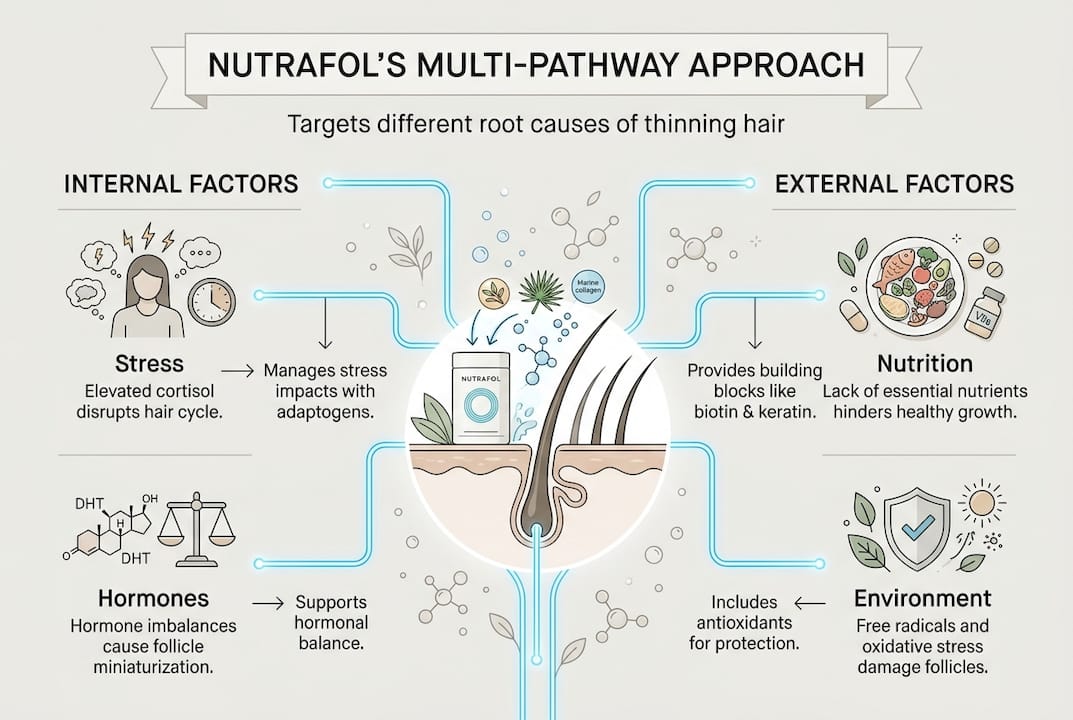
The active ingredients are the real story. Each formula includes a blend of botanicals and nutrients chosen to address the root causes Nutrafol identifies as most relevant to each life stage. Key ingredients include:
- Saw palmetto: helps block DHT at the follicle level
- Ashwagandha: an adaptogen that supports cortisol regulation
- Biotin: supports keratin production, the protein that makes up hair
- Marine collagen: provides amino acids that support follicle structure
- Curcumin: an anti-inflammatory derived from turmeric
- Tocotrienol complex: a potent form of vitamin E with antioxidant properties
The logic behind combining these ingredients is that hair loss is rarely caused by just one factor, so a multi-pathway approach may work better than targeting a single nutrient. Ashwagandha addresses the stress angle while saw palmetto works on the hormonal side, and biotin covers basic nutritional needs.
You can compare how this stacks up against other options using a detailed supplement comparison for women to see where Nutrafol fits relative to other available choices.
Pro Tip: Before starting Nutrafol, check your thyroid hormone levels and get a full panel done if possible. Saw palmetto can interact with certain hormone-sensitive conditions, and knowing your baseline protects you from unexpected changes.
Nutrafol positions itself as targeting the root causes rather than masking symptoms. That's a meaningful claim, but it also means you need to give it real time to work. It's addressing biology, not painting over a problem.
Does Nutrafol really work? Evidence, results, and user experiences
This is the question every woman asks before spending money on a three-month supply of any supplement. The honest answer is: yes, but with important caveats.
Studies on Nutrafol do show positive outcomes, but many of them are funded by the company itself. Independent reviews, including a well-cited holistic Nutrafol review, generally support a modest benefit, particularly for women experiencing non-genetic, stress-related, or nutritionally driven hair loss. The effect is real, but it's not dramatic. Think less shedding, improved hair texture, and gradually more coverage over time, not a sudden return to your 22-year-old ponytail.
Here's a quick comparison of what sponsored versus independent research tends to show:
| Study type | Typical findings | Reliability note |
|---|---|---|
| Company-sponsored | Strong positive outcomes, fewer side effects | Higher bias risk |
| Independent reviews | Modest benefit, gradual improvement | More objective |
| User reports | Mixed but trending positive at 6 months | Highly variable |
The timeline is critical. Results are gradual, not instant, and the evidence supports a consistent window of 3 to 6 months before most women notice meaningful changes. Quitting at week six because nothing seems different is the most common reason Nutrafol doesn't "work" for people.
Here's a practical timeline to follow if you decide to try it:
- Month 1 to 2: Shedding may temporarily increase as the growth cycle resets. This is normal and often called a "purge" phase.
- Month 3: Most women start noticing reduced daily shedding and slightly improved texture.
- Month 4 to 5: Baby hairs and new growth become visible around the hairline and temples.
- Month 6: A clearer picture of your personal results emerges.
Tracking your progress matters more than most women realize. Take a photo in the same lighting every two weeks, keep a short journal of your stress levels and diet, and note any changes in shedding. This kind of data is invaluable, both for your own peace of mind and for conversations with your doctor. For more practical guidance, check out Nutrafol usage tips and real Nutrafol stories from women with similar situations.
How to decide if Nutrafol is right for you
Not every product works for every person, and Nutrafol is no exception. Getting clear on whether it's a good fit for your specific situation will save you time, money, and frustration.
Nutrafol tends to be a strong fit for women who:
- Experience diffuse thinning across the scalp rather than patchy loss
- Notice increased shedding tied to stressful periods or life transitions
- Have ruled out serious medical conditions with a doctor
- Want a drug-free, natural approach as a first-line or complementary strategy
- Are between 25 and 45 and dealing with non-genetic causes
According to an independent Nutrafol review, the supplement fits well for women in this age range who are seeking natural, personalized options for non-genetic hair loss.
However, some women need to take extra care before starting. Talk to your doctor first if you have:
- Thyroid disease (hypothyroidism or hyperthyroidism)
- Hormone-sensitive conditions like PCOS or endometriosis
- A current pregnancy or breastfeeding situation
- Known medication interactions, especially with blood thinners or hormone therapy
Pro Tip: Ask yourself three questions before buying: Do I know the likely cause of my hair loss? Have I seen a doctor in the past year about it? Am I prepared to commit for at least six months? If you can answer yes to all three, you're set up for success.
If Nutrafol isn't delivering results after six months, it's worth exploring other avenues. The best hair growth treatments cover a range of options including topical minoxidil, PRP therapy, and dietary changes. A clinical review of Nutrafol suggests that women with clear genetic causes may get better results from prescription treatments. Resources on medicine for hair loss can walk you through what prescription options actually look like.
The truth most guides won't tell you about Nutrafol
After spending years in the hair wellness space, the most important thing we've learned is this: Nutrafol works best when it's part of a bigger picture, not the whole strategy.
The marketing around supplements like this often leads women to believe that a daily pill will reverse years of thinning. It won't. What it can do is support the conditions your body needs to grow hair more effectively. That's genuinely useful, but it's not the same as a cure.
The women who see the best results are almost always the ones who also address what's underneath: the chronic stress, the iron deficiency, the thyroid issue that got overlooked for years. Adding a supplement on top of an untreated root cause is like watering a plant that has root rot. You're doing something right, but missing the actual problem.
Some of the most honest reflections on this come from real Reddit Nutrafol stories, where women share both wins and frustrations in equal measure. The pattern in the success stories is almost always the same: patience, consistency, and a doctor in the loop.
Seamlessly track your hair growth journey with MyHair
Understanding your hair loss is one thing. Actually watching it change over time, with data you can trust, is something else entirely.
MyHair's AI-powered hair analysis gives you objective scalp and hair assessments based on real scans, not guesswork. When you're using Nutrafol or any supplement, knowing whether your hair density is actually improving makes all the difference. You stop second-guessing and start making smarter decisions. Get started with MyHair and let the data guide your next steps. Pair it with your supplement routine and you'll always know exactly where you stand.
Frequently asked questions
How long does it take to see results with Nutrafol for women?
Most women see noticeable changes within 3 to 6 months of consistent daily use. Stopping early is the most common reason women conclude it doesn't work.
Is Nutrafol safe for everyone?
Nutrafol is safe for most women, but those with thyroid or hormone sensitivities should consult their doctor before starting to avoid unexpected reactions.
Does Nutrafol work for genetic hair loss?
Nutrafol may provide some benefit for non-genetic hair loss, but women with a strong genetic pattern are likely to get better results from medical treatments like minoxidil or finasteride.
Should I stop Nutrafol if I don't see quick results?
No. Results are gradual and typically develop over 3 to 6 months, so tracking your progress with photos and giving it a full trial period is strongly recommended before stopping.
Recommended
- How to use Nutrafol for hair growth: tips and science | MyHair
- Nutrafol Reddit Reviews: Real Hair Growth Stories 2025 | MyHair
- Top Shampoo for Hair Loss – Expert Comparison 2025 | MyHair
- Hair Loss Diet: Foods and Tips for Stronger Hair in 2025 | MyHair
- Cabello, piel y uñas: suplementos para el cuidado y bienestar diario - Earthvit