TL;DR:
- Postpartum hair loss is a temporary, hormone-driven process that typically resolves within 12 to 18 months with proper nutrition and gentle care. Visible signs of regrowth include short baby hairs at the hairline emerging around 6 to 9 months postpartum, indicating recovery progress. If shedding persists beyond a year or is accompanied by other symptoms, medical evaluation is essential to identify underlying conditions like thyroid issues or nutrient deficiencies.
Postpartum hair loss regrowth is the natural process by which hair shed after childbirth gradually returns, with most women seeing visible recovery within 6 to 12 months. Clinically, this shedding is called telogen effluvium, a temporary disruption of the hair growth cycle triggered by the hormonal shift after delivery. The good news: hair typically returns to its pre-pregnancy density by around 12 months postpartum. Supplements like Nutrafol and continued prenatal vitamins can support the process, but the most powerful tool you have right now is understanding exactly what is happening and why.
Why does postpartum hair loss happen and how does regrowth work?
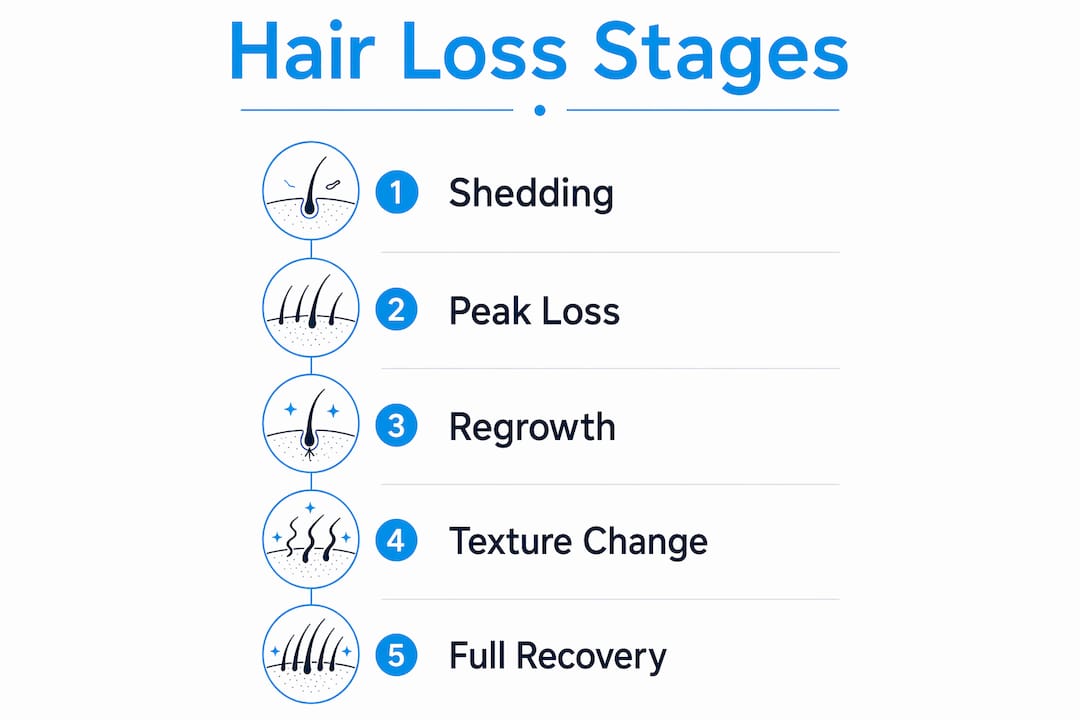
Postpartum hair loss is driven by a sharp drop in estrogen after delivery. During pregnancy, elevated estrogen keeps hair in the anagen (active growth) phase longer than usual, which is why pregnancy hair looks so thick. Once estrogen falls, a large percentage of those hairs shift simultaneously into the telogen (resting) phase and then shed together.

Shedding typically starts 2 to 4 months after delivery and peaks around 4 to 6 months. This synchronized shedding is what makes postpartum hair loss feel so dramatic. You are not losing more hair than normal over time. You are losing months worth of normal shedding all at once.
Regrowth follows the shedding. Hair follicles re-enter the anagen phase, and short baby hairs appear at the hairline and parting around 6 to 9 months postpartum. These fine, upright strands are the clearest sign that recovery is underway. Over the following months, they lengthen and blend into the rest of your hair, with full cosmetic recovery typically complete by 18 months.
One nuance worth knowing: hair texture and color can shift slightly after pregnancy. Straight hair may become wavy, or vice versa. This is a normal follicle-level change and not a sign of damage.
Pro Tip: Distinguish regrowth from breakage by location. Baby hairs appear at the hairline and scalp parting and grow outward uniformly. Breakage produces uneven, frayed ends scattered throughout the length of existing hair.
| Phase | Typical timing | What you notice |
|---|---|---|
| Shedding onset | 2 to 4 months postpartum | Increased hair in shower drain and brush |
| Peak shedding | 4 to 6 months postpartum | Noticeable thinning at temples and crown |
| Early regrowth | 6 to 9 months postpartum | Short baby hairs at hairline |
| Full recovery | 12 to 18 months postpartum | Density returns close to pre-pregnancy baseline |
How nutrition and lifestyle support postpartum hair recovery
What you eat directly affects how well and how quickly your hair follicles recover. Hair is made of keratin, a protein, so inadequate protein intake is one of the fastest ways to slow regrowth. Aim for lean proteins at every meal: chicken, eggs, Greek yogurt, legumes, and fish all supply the amino acids your follicles need.
Key nutrients for hair follicle health during postpartum recovery include:
- Iron (ferritin): Low ferritin is one of the most common modifiable contributors to prolonged shedding. You can have low ferritin without feeling anemic, so a blood test is the only reliable way to know your levels.
- Zinc: Supports follicle repair and protein synthesis. Found in pumpkin seeds, beef, and chickpeas.
- Vitamin D: Deficiency is widespread in new mothers and linked to hair cycle disruption. Fatty fish, fortified dairy, and sunlight exposure all help.
- B-complex vitamins (especially biotin and B12): Support keratin production and red blood cell formation. Eggs, leafy greens, and whole grains are good sources.
- Healthy fats (omega-3s): Found in walnuts, flaxseed, and salmon. These reduce scalp inflammation and support follicle membrane integrity.
Continuing your prenatal vitamins postpartum makes sense, especially if you are breastfeeding, because your nutritional demands remain high. That said, prenatal vitamins alone will not stop postpartum telogen effluvium. No treatment reliably stops this shedding phase entirely. Vitamins correct deficiencies that would otherwise make shedding worse or recovery slower.
Hydration matters more than most new mothers realize, particularly while breastfeeding. Dehydration reduces nutrient delivery to the scalp and can worsen hair fragility. Stress management also plays a direct biological role: elevated cortisol prolongs the telogen phase, so even basic practices like short walks, sleep prioritization, and asking for help are legitimate hair care strategies.
Pro Tip: Swap tight ponytails and buns for loose braids or clips during the regrowth phase. Traction on fragile new hairs causes breakage that sets recovery back by weeks.
What are the treatment options for postpartum hair loss?
Most cases of postpartum hair loss resolve without medical treatment. The hormonal basis of this condition means the body corrects itself once hormone levels stabilize. The role of treatment is to remove obstacles to recovery, not to override a natural process.
Here is when to seek a medical evaluation:
- Shedding continues beyond 6 months without any sign of slowing.
- You are still experiencing significant loss at 12 months postpartum.
- You notice symptoms alongside hair loss: fatigue, cold intolerance, dry skin, or scalp inflammation.
- Hair loss is patchy rather than diffuse, which may indicate alopecia areata rather than telogen effluvium.
- You have a personal or family history of thyroid disease or autoimmune conditions.
When you do see a doctor, the standard workup includes ferritin and thyroid labs (TSH and free T4). These two tests catch the most common treatable contributors to prolonged shedding. Thyroid dysfunction, in particular, is more common in the postpartum period and can mimic or amplify telogen effluvium.
Regarding minoxidil: it is the most widely used topical treatment for female hair loss, typically at 2% concentration in foam or liquid form. However, minoxidil during breastfeeding requires caution. Limited infant safety data exists, and at least one case of infant hypertrichosis linked to maternal topical use has been reported. If you are breastfeeding, discuss this with your doctor before starting any topical treatment.
Platelet-rich plasma (PRP) therapy is sometimes considered for persistent cases after the 12-month mark, but it is not a first-line option for standard postpartum recovery. Supplements beyond correcting documented deficiencies offer limited evidence of benefit. The most effective early strategy remains patience, nutrition, and gentle hair care.
| Treatment | Best timing | Breastfeeding safety |
|---|---|---|
| Nutritional correction | Immediately postpartum | Safe and recommended |
| Prenatal vitamins | Throughout postpartum period | Safe |
| Topical minoxidil (2%) | After weaning, or with doctor approval | Use with caution |
| PRP therapy | After 12 months if persistent | Consult provider |
How to recognize signs of healthy regrowth and manage your appearance
The clearest sign of postpartum hair restoration is the appearance of short, fine baby hairs along your hairline and at your part. These hairs stand upright because they are too short to lie flat, which is why they can look frizzy or unruly. That is not damage. That is new growth emerging exactly as it should.
Tracking your progress with monthly photos taken in the same lighting and position is one of the most practical things you can do. Hair grows approximately 1 centimeter per month, so changes are subtle week to week but visible month to month. Myhair's hair growth signs guide outlines eight specific indicators to look for, which takes the guesswork out of knowing whether you are on track.
Styling tips that protect new growth while managing appearance:
- Change your part. A shifted part redistributes volume and hides thinning areas without any product.
- Try a blunt cut or layers. Removing length reduces the weight pulling on fragile new hairs and adds visual fullness.
- Use a volumizing shampoo. Products from brands like Kérastase, Olaplex, or Living Proof add lift without coating the scalp.
- Avoid heat styling on wet hair. New hairs are structurally weaker and more prone to breakage before they reach full thickness.
- Scalp massage. Two to three minutes daily increases blood flow to follicles and can be done while shampooing.
Pro Tip: If you are still seeing significant shedding at 12 months postpartum, do not assume it is normal. Postpartum hair loss 2 years later is not typical and warrants a full evaluation for thyroid dysfunction, iron deficiency, or other underlying conditions.
Key takeaways
Postpartum hair loss regrowth is a predictable, hormone-driven process that resolves for most women within 12 to 18 months when supported by adequate nutrition, gentle hair care, and timely medical evaluation if shedding persists.
| Point | Details |
|---|---|
| Shedding is temporary | Most women return to pre-pregnancy hair density by 12 to 18 months postpartum. |
| Nutrition accelerates recovery | Iron, protein, zinc, and vitamin D are the most critical nutrients to prioritize during regrowth. |
| Baby hairs confirm progress | Short, upright hairs at the hairline from 6 to 9 months are the first visible sign of recovery. |
| Minoxidil needs caution | Topical minoxidil requires medical guidance during breastfeeding due to limited infant safety data. |
| Persistent loss needs evaluation | Shedding beyond 12 months or with accompanying symptoms warrants ferritin and thyroid testing. |
What I've learned from watching women navigate postpartum hair loss
The most damaging thing I see is not the hair loss itself. It is the panic that leads women to reach for aggressive treatments before the natural recovery window has even closed. I have spoken with mothers who started high-dose biotin supplements, scalp serums, and even topical minoxidil at four months postpartum, which is still peak shedding. None of those interventions changed the outcome. The hair came back on its own schedule.
What actually helped those women was understanding the realistic recovery timeline and having something concrete to do in the meantime. Fixing a ferritin deficiency, switching to a looser hairstyle, and taking monthly photos gave them a sense of agency without unnecessary risk. That combination of knowledge and small, safe actions is genuinely powerful.
The one thing I would push back on is the idea that postpartum hair loss is "just cosmetic" and not worth discussing with a doctor. Prolonged shedding is sometimes the first visible sign of postpartum thyroiditis, which affects a meaningful percentage of new mothers and is entirely treatable. If your gut says something is off, trust it and get the labs done. You are not being dramatic. You are being thorough.
— Cyriac
Track your postpartum regrowth with Myhair's AI tools
Watching for baby hairs in the mirror every morning is encouraging, but it does not give you the full picture of what is happening across your scalp.
Myhair's AI-powered hair analysis uses your smartphone camera to assess hair density, track changes over time, and generate a personalized hair score that reflects your actual progress. For new mothers in the postpartum recovery phase, this means you can see measurable improvement months before it is visible to the naked eye. The platform also provides tailored product recommendations based on your specific hair condition, so you are not guessing at what to use. Start with the app onboarding to set your baseline and let the data reassure you that your hair is moving in the right direction.
FAQ
When does postpartum hair regrowth start?
Visible regrowth typically begins around 6 to 9 months postpartum, appearing as short baby hairs at the hairline. Full density recovery usually completes between 12 and 18 months after delivery.
Can postpartum hair loss last 2 years?
Postpartum telogen effluvium lasting beyond 12 months is not typical and should be evaluated by a doctor. Prolonged shedding may indicate thyroid dysfunction, low ferritin, or another underlying condition that needs treatment.
Is minoxidil safe to use while breastfeeding?
Topical minoxidil requires caution during breastfeeding due to limited infant safety data and at least one reported case of infant hypertrichosis. Always consult your healthcare provider before starting any hair loss treatment while nursing.
What vitamins help with postpartum hair recovery?
Iron (specifically ferritin), protein, zinc, vitamin D, and B-complex vitamins are the most evidence-supported nutrients for postpartum hair recovery. Continuing prenatal vitamins helps cover these bases, especially while breastfeeding.
How do I tell the difference between regrowth and breakage?
True regrowth appears as short, uniform baby hairs growing outward from the scalp at the hairline and part. Breakage produces uneven, frayed ends along the length of existing hair and does not indicate new follicle activity.