TL;DR:
- Psoriasis-related hair loss is usually temporary and results from scalp inflammation or physical trauma from scratching and scaling.
- Regrowth often begins within two to four months after controlling inflammation, and proper treatment protects against further shedding.
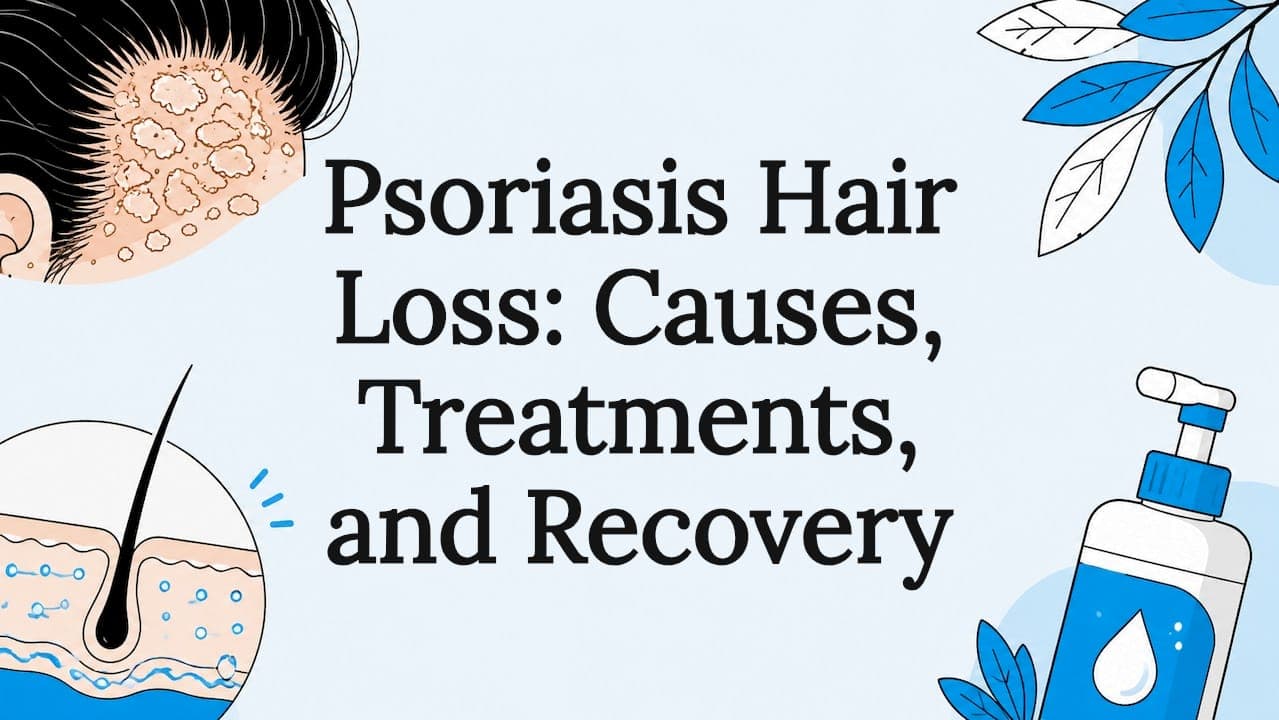
Psoriasis hair loss is defined as temporary shedding or thinning caused by scalp inflammation and physical trauma from scratching or scale removal. 45–56% of psoriasis patients have scalp involvement, and close to half of those experience noticeable hair thinning. The good news is direct: this type of hair loss is almost always reversible. Regrowth typically begins within 2–4 months once inflammation is controlled. Understanding the mechanisms behind scalp psoriasis hair thinning is the first step toward doing something about it.
Does psoriasis cause hair loss, and how does it happen?
Scalp psoriasis causes hair loss through two distinct pathways: biological inflammation and physical trauma. Knowing which pathway is driving your shedding changes how you treat it.

Inflammation and the telogen effluvium response
Inflammatory cytokines like TNF-alpha and IL-1 push hair follicles out of their active growth phase and into a resting state called telogen. When enough follicles enter telogen at once, diffuse shedding follows. This process is called telogen effluvium, and it is the primary biological reason psoriasis and hair loss go together. The follicles themselves are not destroyed. They are temporarily paused, which is why regrowth is possible once inflammation subsides.
Mechanical trauma from scratching and scale removal
The second pathway is physical. Psoriasis patches on the scalp are intensely itchy, and scratching creates a damaging cycle. Scratching triggers the Koebner phenomenon, where skin injury causes new psoriasis plaques to form in the damaged area. More plaques mean more inflammation, more itching, and more hair loss. Separately, thick plaques physically trap and weaken hair shafts. When scales are pulled off forcefully, aggressive scale removal pulls hair roots out of the follicle, acting like unintentional epilation. This is mechanical hair loss, not follicle destruction, and it is fully reversible.
Pro Tip: Distinguish between diffuse thinning across the scalp (more likely telogen effluvium from inflammation) and patchy loss near plaque sites (more likely mechanical trauma). Telling your dermatologist which pattern you have speeds up accurate diagnosis.
- Telogen effluvium: diffuse shedding, caused by inflammatory cytokines
- Mechanical breakage: localized loss near plaque sites from scratching or scale removal
- Koebner phenomenon: new plaques triggered by skin injury from scratching
- Hair shaft breakage: physical weakening of strands trapped under thick scales
What are the most effective hair loss treatments for psoriasis?
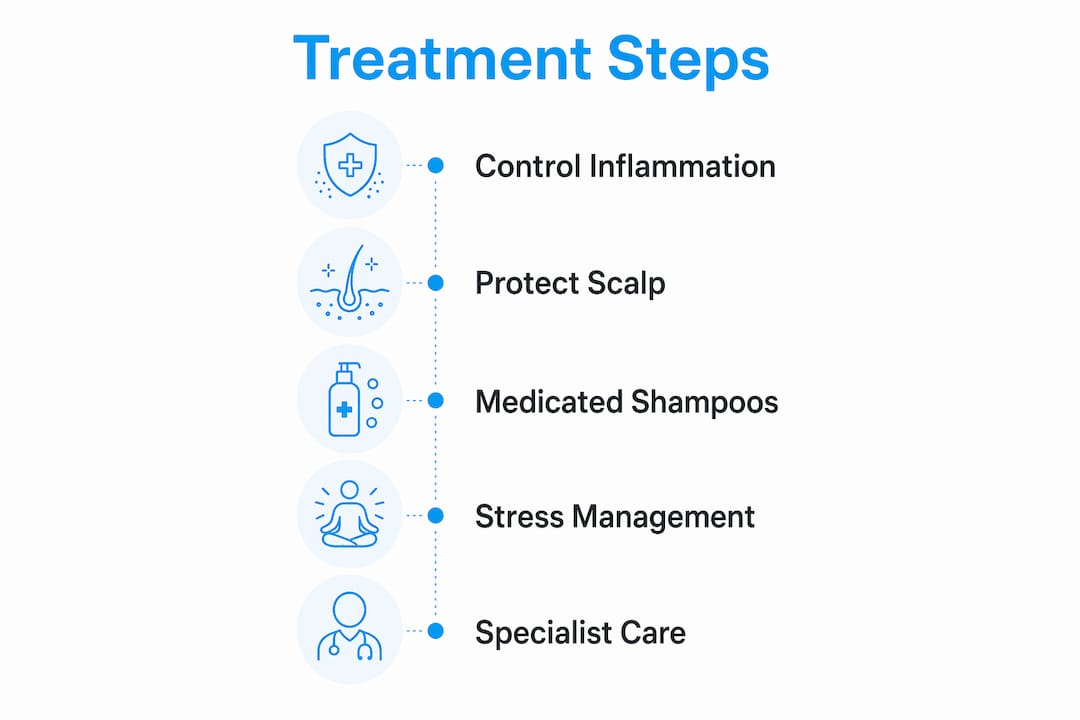
Treating scalp psoriasis hair thinning means controlling inflammation first and protecting the scalp second. The two goals work together.
First-line medical treatments
Topical corticosteroids and vitamin D analogues are the standard first-line therapies for scalp psoriasis. Corticosteroids reduce inflammation directly, while vitamin D analogues slow the abnormal skin cell turnover that creates plaques. For moderate to severe cases, dermatologists escalate to phototherapy or systemic biologics. Each step up in treatment intensity targets the same root problem: unchecked inflammation that disrupts the hair growth cycle.
How to use medicated shampoos correctly
Medicated shampoos containing coal tar, salicylic acid, or ketoconazole reduce scaling and calm the scalp environment. The mistake most people make is rinsing too quickly. Leave the shampoo on for the time listed on the label, usually 5–10 minutes, so the active ingredients can work. Overuse of these shampoos can dry the scalp and cause additional breakage, so alternate with a gentle, fragrance-free shampoo on off days.
Gentle plaque removal: the oil method
Forcing scales off is one of the fastest ways to worsen scalp psoriasis hair thinning. The correct approach is to soften plaques first. Apply a warm oil, such as coconut oil or mineral oil, to the scalp and leave it on for at least an hour before washing. The scales loosen naturally and come away without pulling hair. Applying ointments directly to hair strands rather than the scalp skin causes brittleness and breakage, so keep all topical products at the scalp level.
- Apply warm oil to the scalp and cover with a shower cap for 30–60 minutes.
- Gently massage the scalp with fingertips, not fingernails, to loosen softened scales.
- Wash with a medicated shampoo, leaving it on for the recommended contact time.
- Follow with a gentle conditioner on the hair lengths only, not the scalp.
- Pat dry with a soft towel. Never rub vigorously.
Stress management as a treatment component
Stress increases the frequency and severity of psoriasis flares, which directly slows hair regrowth. Stress reduction is not optional self-care. It is a clinical component of managing the psoriasis effect on hair. Techniques like mindfulness meditation, regular aerobic exercise, and consistent sleep schedules all reduce cortisol levels, which in turn lowers inflammatory activity. Pairing medical treatment with stress reduction strategies produces faster scalp stabilization than medication alone.
Pro Tip: Track your flares against your stress levels for four weeks. Most people find a clear pattern, which makes it easier to intervene early with relaxation techniques before a full flare develops.
When should you see a specialist about hair loss?
Controlling psoriasis should stop most hair shedding. When it does not, a different condition may be at work.
Persistent hair loss after psoriasis is controlled can indicate androgenetic alopecia or alopecia areata developing alongside psoriasis. These conditions were sometimes masked by the psoriasis itself and only become visible once the inflammation clears. A dermatologist or trichologist can differentiate between them with a scalp examination and, if needed, a trichoscopy or biopsy.
Signs that warrant specialist evaluation:
- Hair loss continues or worsens three months after psoriasis plaques have cleared
- Loss is patchy and circular rather than diffuse, suggesting alopecia areata
- The scalp shows smooth, shiny patches without regrowth, which may indicate scarring alopecia
- Hair loss follows a receding or thinning pattern at the crown, pointing to androgenetic alopecia
- You notice significant shedding in areas where you have never had active plaques
Describing your hair loss pattern clearly at your first specialist visit improves diagnostic accuracy. Bring photos taken over time if possible. A visual record of how the pattern has changed is far more useful than a verbal description alone. For severe or treatment-resistant cases, options include platelet-rich plasma (PRP) therapy to stimulate follicle activity, or biologic medications that target the specific immune pathways driving psoriasis inflammation.
Daily habits and coping strategies for managing hair loss with psoriasis
The gap between medical appointments is where most scalp damage happens. Daily habits determine how well your scalp heals between treatments.
Protective grooming practices:
- Use a soft-bristled brush and work from ends to roots to avoid scalp contact
- Avoid tight hairstyles like ponytails or braids that pull on the scalp and worsen inflammation
- Skip heat styling tools during active flares. Heat increases scalp irritation and dryness
- Choose fragrance-free, sulfate-free shampoos and conditioners on non-medicated wash days
- Rinse with cool or lukewarm water. Hot water strips the scalp's natural oils and aggravates plaques
The psychological impact of scalp psoriasis hair thinning is real and significant. Visible hair loss affects self-confidence, social behavior, and mental health. Anxiety and depression are documented comorbidities of psoriasis, not just side effects of vanity. Recognizing this connection matters because untreated psychological stress feeds back into the inflammatory cycle, making flares worse.
Pro Tip: Nutritional support can reinforce your scalp's recovery. Vitamins like biotin, zinc, and vitamin D play roles in hair follicle function. A guide to vitamins for stress-related hair loss can help you identify gaps in your diet that may be slowing regrowth.
Seek support groups, online communities, or counseling if hair loss is affecting your quality of life. The National Psoriasis Foundation offers peer-to-peer support programs specifically for people managing visible symptoms. Connecting with others who understand the condition reduces isolation and builds practical coping knowledge.
Key Takeaways
Psoriasis hair loss is almost always temporary and reversible once scalp inflammation is controlled with appropriate medical treatment and protective daily habits.
| Point | Details |
|---|---|
| Hair loss is usually reversible | Regrowth typically begins within 2–4 months after inflammation is controlled. |
| Two mechanisms drive shedding | Inflammatory cytokines cause telogen effluvium; scratching and scale removal cause mechanical loss. |
| Treat the scalp, not the hair | Apply all topical treatments to scalp skin only to avoid brittleness and breakage. |
| Stress worsens flares | Stress reduction techniques are a clinical part of managing psoriasis-related hair thinning. |
| Persistent loss needs evaluation | Hair loss continuing after psoriasis clears may signal androgenetic alopecia or alopecia areata. |
What I've learned from watching patients manage this condition
By Cyriac
The most damaging misconception I see is the belief that psoriasis has permanently destroyed the hair follicles. It almost never has. Patients come in convinced they will never regrow hair in affected areas, and that fear drives them to aggressive home remedies that cause far more damage than the psoriasis itself.
The second pattern I notice is impatience. Regrowth after a flare takes months, not weeks. People stop their treatment regimen at the four-week mark because they see no visible change, which allows inflammation to return and restarts the cycle. Adherence to treatment, even when results are not yet visible, is the single biggest predictor of successful regrowth.
The emotional weight of this condition deserves direct acknowledgment. Hair loss changes how people see themselves. That is not trivial. The best outcomes I have observed come from people who treat the medical and psychological dimensions simultaneously, work closely with their dermatologist, and track their progress systematically rather than relying on memory or mirror checks alone.
— Cyriac
How Myhair supports your scalp psoriasis recovery
Tracking hair loss progress during psoriasis treatment is difficult without a reliable baseline. Myhair's AI-powered hair analysis gives you a measurable starting point by scanning hair density and scalp condition digitally, so you can see real change over time rather than guessing.
The platform's hair score metrics quantify thinning severity and recovery progress in a format you can share directly with your dermatologist. That kind of documented visual evidence accelerates accurate diagnosis and helps your care team adjust treatment faster. Myhair's onboarding takes minutes, and the personalized insights it generates are built around your specific hair and scalp profile, not a generic template.
FAQ
Does psoriasis cause permanent hair loss?
Psoriasis hair loss is almost always temporary. Follicles are not destroyed by psoriasis inflammation, and regrowth typically begins within 2–4 months after the condition is controlled.
How long does it take for hair to grow back after scalp psoriasis?
Most people see regrowth begin within 2–4 months of controlling scalp inflammation. Full density recovery can take longer depending on how severe the shedding was.
Can I prevent hair loss if I have scalp psoriasis?
Controlling inflammation early with topical corticosteroids or vitamin D analogues, avoiding scratching, and using the oil-softening method for scale removal all significantly reduce hair loss risk.
What type of hair loss does scalp psoriasis cause?
Scalp psoriasis primarily causes telogen effluvium (diffuse shedding from inflammation) and mechanical breakage from scratching or aggressive scale removal. Both types are reversible.
When should I see a doctor about psoriasis-related hair loss?
See a specialist if hair loss continues or worsens three months after your psoriasis plaques have cleared, or if you notice patchy circular loss or smooth scalp patches without regrowth.