Diffuse thinning, clinically called diffuse alopecia, is a widespread reduction in hair density across the scalp rather than loss confined to a specific zone. The three most common drivers are telogen effluvium (a shedding phase triggered by physical or emotional stress), androgenetic alopecia (genetic miniaturization), and anagen effluvium from chemotherapy or toxin exposure. Most non-scarring cases are at least partly reversible once the trigger is identified and treated.
Immediate next steps if you suspect diffuse thinning:
- Schedule a clinical evaluation with your primary care physician or a dermatologist.
- Request baseline bloodwork: complete blood count (CBC), serum ferritin, TSH, and free T4.
- Photograph your scalp under consistent lighting every four weeks to track density objectively.
- Review your medication list for known hair-loss culprits (retinoids, anticoagulants, beta-blockers).
Red flags that need urgent evaluation: sudden loss of more than half your hair within days, visible scalp inflammation or scarring, or shedding accompanied by systemic symptoms such as fever, unintended weight loss, or joint pain. These warrant same-week clinical attention, not a wait-and-see approach.
Pro Tip: Shedding typically peaks 2–3 months after the triggering event, not immediately. If you can't identify a recent stressor, think back three months, not three weeks.
Key Takeaways
Diffuse thinning is most often reversible when the underlying cause is identified early and treated directly, making prompt clinical evaluation and targeted lab testing the single most important step.
| Point | Details |
|---|---|
| Most common causes | Telogen effluvium, androgenetic alopecia, and anagen effluvium account for the majority of diffuse thinning cases. |
| Timing clue for TE | Shedding appears 2–3 months after the trigger; most acute cases resolve within 6–8 months after correction. |
| Essential first labs | Request CBC, serum ferritin, TSH, and free T4 at your first clinical visit. |
| Overlap is common | Androgenetic alopecia and telogen effluvium frequently coexist; treating only one can leave the other unaddressed. |
| Myhair for monitoring | Myhair's AI-powered scans provide quantified density tracking and clinician-ready reports between appointments. |
Table of Contents
- What is diffuse thinning, and how does it differ from other hair loss?
- What are the early signs of diffuse thinning?
- What are the main reasons behind diffuse thinning?
- How do clinicians diagnose diffuse thinning?
- What treatments work for diffuse thinning?
- What should you realistically expect for recovery?
- How can you prevent or reduce diffuse thinning?
- How to track thinning and measure treatment response
- A perspective on what actually matters in diffuse thinning care
- Track your hair health with Myhair's AI-powered analysis
- Sources
- FAQ
What is diffuse thinning, and how does it differ from other hair loss?
Diffuse thinning describes a global reduction in scalp hair density, meaning hair becomes thinner and less dense across the entire scalp rather than receding from a specific area. Clinicians distinguish between two overlapping processes: effluvium (an active shedding phase where follicles prematurely exit the growth cycle) and thinning (reduced density caused by follicle miniaturization or persistent shedding over time). Both can look similar in a mirror, but they have different causes and different treatment implications.
The broadest split is between rapid shedding and gradual miniaturization:
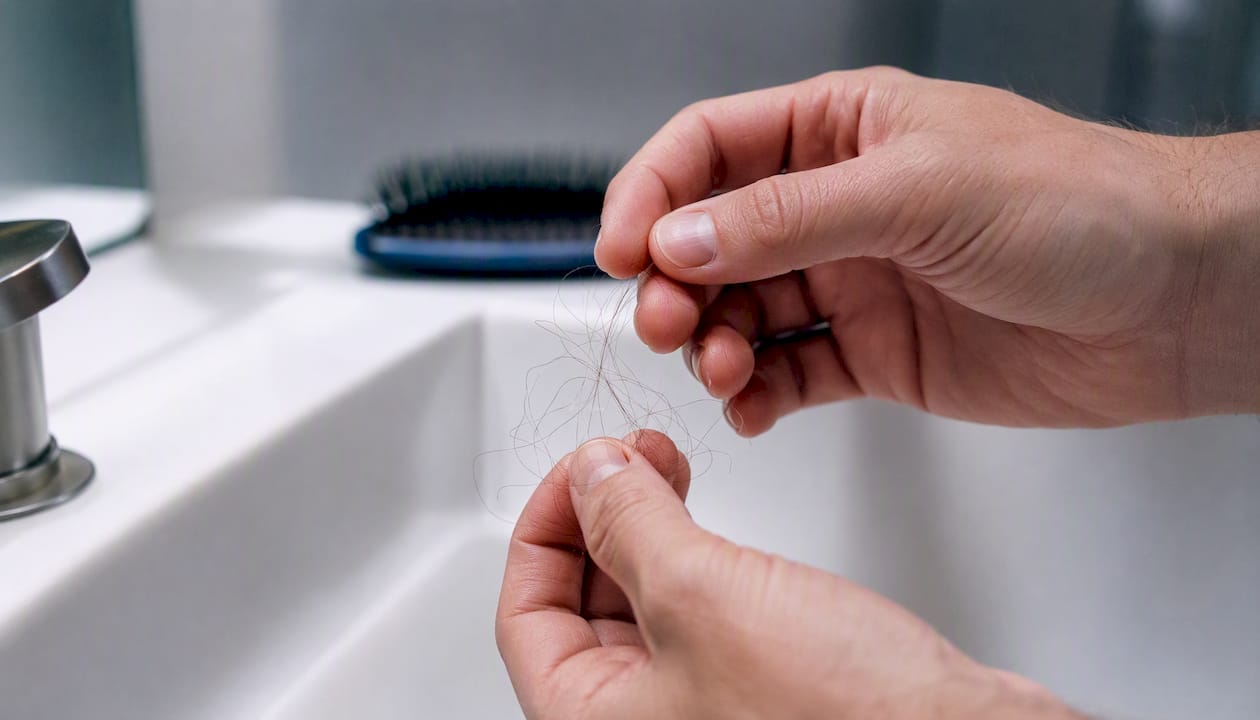
- Rapid shedding (effluvium): Telogen effluvium and anagen effluvium produce sudden increases in daily hair fall. The scalp may look normal on close inspection, but the brush and shower drain tell a different story.
- Gradual miniaturization: Androgenetic alopecia thins hair slowly over years. Individual strands become finer and shorter before the follicle eventually stops producing visible hair.
- Mixed presentations: Both processes can run simultaneously. An underlying androgenetic pattern can be unmasked or worsened by a superimposed telogen effluvium, which is why some people notice sudden heavy shedding that never fully recovers to their previous baseline.
Contrast this with patterned loss (bitemporal recession in men, midline widening in women) and patchy loss (round or oval bald patches typical of alopecia areata). Diffuse thinning looks different in photos: the part widens uniformly, the ponytail shrinks in circumference, and the scalp becomes visible under direct light without a clearly defined bald zone.
What are the early signs of diffuse thinning?
Most people notice diffuse thinning through accumulation rather than a single dramatic moment. The early signs tend to be subtle enough to dismiss for months.
Common early signs:
- More hair than usual on the brush, pillow, or shower drain (losing more than roughly 100 hairs per day consistently).
- A widened central part that wasn't there before, especially visible in overhead lighting or photographs.
- A noticeably thinner ponytail circumference.
- Scalp visible through hair under bright or direct light, particularly at the crown.
- Hair that feels lighter, limper, or less voluminous even after washing.
Clinicians use a few objective bedside tools to confirm what patients describe. The hair-pull test involves grasping 40–60 hairs between two fingers and pulling gently along the shaft. Extracting more than six hairs suggests active shedding. Trichoscopy (dermoscopy of the scalp) can reveal short vellus hairs pointing to miniaturization, or uniform telogen hairs pointing to effluvium. These two patterns call for different workups.
Red flags that change the urgency:
- Sudden, massive shedding within days (possible anagen effluvium from chemotherapy or toxin exposure).
- Scalp redness, scaling, pustules, or areas where hair does not regrow (possible scarring alopecia).
- Systemic symptoms alongside hair loss: fever, fatigue, weight loss, joint swelling, or a new rash.
Scarring alopecias are irreversible if left untreated, which is why inflammation or permanent-looking bald patches should prompt a dermatology referral rather than a watchful wait.
What are the main reasons behind diffuse thinning?
The reasons behind diffuse thinning span a wide range of physiological systems, and more than one cause can operate at the same time. A hospital-based clinical series found telogen effluvium, chronic telogen effluvium, anagen effluvium, and androgenetic alopecia among the most frequently recorded causes of diffuse hair loss in women. Here is how each cause works and when to suspect it.
Telogen effluvium (acute)
The most common cause of sudden diffuse shedding. A physical or emotional stressor pushes a large proportion of follicles simultaneously into the resting (telogen) phase. According to the Cleveland Clinic, common triggers include high fever, childbirth, severe infection, major surgery, crash dieting, and significant psychological stress. The characteristic detail: shedding becomes noticeable 2–3 months after the trigger, not immediately, because the follicle takes that long to shed the resting hair. Most acute cases resolve within six to eight months once the trigger is corrected.
Chronic telogen effluvium
When shedding persists beyond six months without a single identifiable trigger, it becomes chronic TE. This form is more common in women aged 30–60 and often has no obvious precipitating event. Fluctuating shedding, normal scalp appearance, and a negative family history of pattern baldness are typical features. Nutritional deficiencies, low-grade thyroid dysfunction, and ongoing psychological stress are frequent contributors.
Anagen effluvium
Chemotherapy drugs and certain toxins (thallium, arsenic) disrupt the active growth (anagen) phase directly, causing rapid, often dramatic shedding within days to weeks of exposure. Unlike telogen effluvium, the shedding is abrupt and the hair shaft itself may be structurally damaged. Regrowth typically follows once the exposure ends, though texture and color may temporarily change.
Androgenetic alopecia
Genetic predisposition drives gradual follicle miniaturization through the action of dihydrotestosterone (DHT). The American Academy of Dermatology notes that women typically show midline widening and crown thinning while men show bitemporal and vertex recession. The process is chronic and progressive without treatment, but it can appear as diffuse thinning rather than a clearly patterned recession, especially in women.
Medication-induced hair loss
A broad range of drugs can trigger telogen effluvium or direct follicle toxicity. StatPearls on NCBI Bookshelf lists common culprits including retinoids, anticoagulants (heparin, warfarin), antidepressants, anticonvulsants, beta-blockers, and NSAIDs at high doses. The key diagnostic clue is temporal association: shedding begins weeks to months after starting the drug and often reverses after stopping it.
Endocrine and metabolic causes
Both hypothyroidism and hyperthyroidism can produce diffuse shedding. Postpartum hair loss is a classic form of telogen effluvium driven by the hormonal shift after delivery, typically peaking at three to four months postpartum. Polycystic ovary syndrome (PCOS) raises androgen levels in women and can accelerate androgenetic patterning.
Nutritional deficiencies
Low ferritin is specifically linked to chronic telogen effluvium in clinical studies. Zinc, vitamin D, and adequate dietary protein all support normal follicle cycling. Severe protein restriction (as in crash dieting or eating disorders) can push follicles into telogen en masse. Biotin deficiency is rare in people eating a normal diet but is sometimes implicated in cases of very low intake or prolonged raw-egg consumption.
Autoimmune causes and overlap
Alopecia areata occasionally presents as diffuse shedding rather than discrete patches, making it harder to identify without trichoscopy or biopsy. More commonly, clinical reviews show that an underlying androgenetic process is unmasked by a superimposed telogen effluvium, which explains why single-focus remedies often fail. Treating only the shedding episode leaves the chronic baseline condition unaddressed.
Recent mechanistic research adds another layer: a 2024 PubMed study demonstrated that acute stress can trigger sympathetic nerve activation leading to rapid follicle cell necrosis, which may then initiate an autoimmune cascade. This helps explain why stress-related shedding sometimes persists longer than the stressor itself. For practical guidance on managing this specific pathway, Myhair's resource on stress-induced hair loss covers the physiological mechanisms in detail.
How do clinicians diagnose diffuse thinning?
Diagnosis follows a structured sequence. Skipping steps is how causes get missed.
History essentials
A thorough history covers: onset and duration of shedding, any illness, surgery, or major stressor in the three months before shedding began, current and recently stopped medications, menstrual and reproductive history (including recent pregnancy), significant weight changes or dietary restrictions, and family history of pattern baldness.
Pro Tip: Patients often report the shedding started "recently" when the trigger was actually 2–3 months earlier. Clinicians should specifically ask about events in that window, not just the past few weeks.
Physical exam
The hair-pull test, standardized scalp photographs, and trichoscopy are the core tools. Trichoscopy distinguishes miniaturized vellus hairs (pointing to androgenetic alopecia) from uniform telogen bulbs (pointing to effluvium). The scalp is examined for erythema, scaling, follicular plugging, or scarring, any of which changes the differential significantly.
Recommended blood tests
| Test | What it screens for |
|---|---|
| CBC (complete blood count) | Anemia, systemic illness |
| Serum ferritin | Iron stores; low ferritin linked to chronic TE |
| TSH and free T4 | Thyroid dysfunction (hypo- and hyperthyroidism) |
| Comprehensive metabolic panel | Liver and kidney function, protein status |
| Vitamin D | Deficiency associated with hair cycle disruption |
| Zinc | Deficiency associated with diffuse shedding |
| ANA / autoimmune serology | When autoimmune cause is suspected |
| RPR / syphilis serology | When systemic infection is on the differential |
Iron deficiency warrants particular attention: supplementing without lab confirmation is unnecessary and can cause harm. Objective confirmation of low ferritin and other iron indices is required before treatment.
When to consider scalp biopsy
Biopsy is indicated when scarring is suspected, when the diagnosis remains unclear after noninvasive testing, or when the result would change management (for example, distinguishing lichen planopilaris from androgenetic alopecia). Two 4mm punch biopsies from affected areas, processed for both horizontal and vertical sectioning, give the most diagnostic information.
Diagnostic checklist to bring to your appointment:
- Timeline of shedding onset and any events 2–4 months prior.
- Current medication list, including supplements and over-the-counter drugs.
- Recent lab results if available.
- Standardized scalp photos taken under consistent lighting.
- Questions about trichoscopy and whether biopsy is indicated.
What treatments work for diffuse thinning?
The governing principle is straightforward: treat the trigger first, add local supportive therapy second. Applying minoxidil to a scalp that is shedding because of uncontrolled hypothyroidism will produce limited results until the thyroid is managed.
By cause
-
Telogen effluvium: Identify and correct the trigger. Stop the culprit medication if possible, correct nutritional deficiencies confirmed by labs, manage thyroid disease, and address ongoing psychological stress. Reassurance matters here: most acute TE resolves without specific hair-directed treatment once the trigger is removed.
-
Anagen effluvium: If the causative agent (chemotherapy, toxin) can be stopped or completed, regrowth typically follows within months. Scalp cooling during chemotherapy infusions may reduce severity in some protocols.
-
Androgenetic alopecia: Topical minoxidil is first-line for both men and women. Clinical guidance supports oral finasteride for appropriate male candidates; finasteride requires careful counseling for reproductive-aged women given teratogenicity risk. Treatment is maintenance-based: stopping therapy typically leads to resumed progression within months.
Finasteride is FDA-indicated for men only. Women who are or may become pregnant must not handle crushed or broken finasteride tablets, due to the risk of harm to a male fetus. It can also cause sexual side effects (reduced libido, erectile dysfunction) in a minority of men, which usually resolve after stopping treatment. Discuss these risks with a physician before starting.
-
Nutritional deficiencies: Correct confirmed deficiencies with targeted supplementation. For iron, recheck ferritin at three to six months. Avoid high-dose biotin supplementation without indication, as it can interfere with thyroid and cardiac lab assays.
-
Endocrine causes: Normalize thyroid function, manage PCOS with appropriate hormonal therapy, and allow postpartum TE to resolve naturally (it usually does within six to twelve months).
-
Autoimmune or inflammatory causes: Alopecia areata may respond to topical, intralesional, or systemic corticosteroids, or newer JAK inhibitors in appropriate cases. Scarring alopecias require specialist management.
Adjunctive therapies
- Platelet-rich plasma (PRP): Some evidence supports PRP as an adjunct for androgenetic alopecia, though study quality varies and it is not a standalone first-line treatment.
- Low-level laser therapy (LLLT): FDA-cleared devices exist; evidence is modest but consistent for mild-to-moderate androgenetic alopecia.
- Microneedling: Used as an adjunct to minoxidil in some protocols; early data is promising but larger trials are needed.
Expected timeline
Acute TE typically shows visible improvement within 3–6 months of trigger removal. Androgenetic alopecia requires months of consistent therapy before density changes are measurable, and maintenance is indefinite. If there is no response to appropriate treatment after six months, revisit the diagnosis.
When to refer to a dermatologist: unclear diagnosis after initial workup, suspected scarring alopecia, rapid progression despite initial measures, or when procedural options (PRP, microneedling, hair transplant evaluation) are being considered.
What should you realistically expect for recovery?
Prognosis depends almost entirely on the cause. The most useful distinction is reversible versus chronic.
Reversible causes (with treatment):
- Acute telogen effluvium: most cases resolve within 3–6 months after the trigger is corrected.
- Nutritional deficiencies: density improves as stores normalize, though full recovery can take six to twelve months.
- Medication-induced loss: typically reverses after stopping the causative drug, with regrowth over three to six months.
- Postpartum TE: usually self-resolving within six to twelve months postpartum.
- Thyroid-related shedding: improves with thyroid normalization, though full recovery may take up to a year.
Chronic or progressive without ongoing treatment:
- Androgenetic alopecia: progresses without maintenance therapy. Minoxidil and finasteride slow or halt progression but do not cure the underlying genetic process.
- Chronic telogen effluvium: can persist for years if the underlying contributor (low ferritin, ongoing stress, subclinical thyroid dysfunction) is not fully addressed.
Scarring alopecias: irreversible by definition. Early diagnosis and treatment can halt progression, but destroyed follicles do not regenerate.
For a practical look at how thinning progresses across stages, Myhair's guide on hair thinning stages maps each phase to management options. The key clinical signal that a case is moving in the right direction: reduced daily shedding count before visible density improvement, typically by four to eight weeks after the trigger is addressed.
How can you prevent or reduce diffuse thinning?
Prevention is most effective when it targets the modifiable contributors: nutrition, stress, and hair-care habits.
Nutrition:
- Eat adequate protein (the general recommendation for adults is 0.8 grams per kilogram of body weight daily, though higher intakes support active hair cycling).
- Get ferritin checked before taking iron supplements. Supplementing without deficiency confirmation is unnecessary and can cause gastrointestinal side effects.
- Maintain adequate vitamin D and zinc through diet and monitored supplementation if labs confirm deficiency.
- Avoid crash diets. Rapid caloric restriction is a well-documented telogen effluvium trigger.
- Skip high-dose biotin unless a clinician has confirmed deficiency. Excess biotin can skew thyroid and troponin lab results.
For a detailed breakdown of which vitamins actually help with stress-related shedding, Myhair's guide on vitamins for stress-related hair loss covers the evidence clearly.
Stress management:
Chronic psychological stress raises cortisol and activates the sympathetic nervous system, both of which disrupt normal hair cycling. Sleep (7–9 hours consistently), regular moderate exercise, and structured stress-reduction practices (cognitive behavioral therapy, mindfulness) are not soft suggestions. They address a real physiological pathway.
Hair care:
- Avoid tight traction hairstyles (braids, high ponytails, extensions) that stress the follicle at the root.
- Minimize heat styling and harsh chemical treatments.
- Use a wide-tooth comb on wet hair and a gentle, sulfate-free shampoo.
- Reduce mechanical friction: silk pillowcases and gentle towel-drying matter more than most people expect.
Before starting any supplement, ask your clinician:
- Have my ferritin, zinc, and vitamin D been tested recently?
- Is there a confirmed deficiency that warrants supplementation?
- Could this supplement interfere with any of my current medications or lab tests?
How to track thinning and measure treatment response
Tracking is where most self-managed cases fall apart. People rely on subjective impression ("it looks better") when objective documentation would catch a trend months earlier.
A practical monitoring plan:
- Choose three consistent photo angles: top-down crown, frontal hairline, and a parted-scalp view.
- Use the same lighting source (natural window light or a ring light) and the same distance every session.
- Photograph every four weeks during active treatment, every eight to twelve weeks once stable.
- Measure ponytail circumference at the same point each time if hair length allows.
- Log daily shedding counts for two weeks at baseline and again at three months to establish a trend.
Why objective tracking matters: Density changes from treatment are often too gradual for the eye to detect reliably. Clinicians making decisions about escalating or continuing therapy benefit from documented trends rather than patient recall. Standardized photos taken at consistent intervals give both you and your clinician a real data set.
AI-assisted scalp scans can detect small density changes earlier than subjective observation, which improves clinical confidence when deciding whether to escalate or continue therapy. The key features to look for in any tracking tool: repeatable image capture protocol, quantified density output, and exportable reports your clinician can review. What AI tools cannot do is replace a clinical exam, trichoscopy, or biopsy. They are a monitoring aid, not a diagnostic substitute.

Pro Tip: A change in daily shedding count is clinically meaningful. A change in how your hair "feels" on a given day is not. Track numbers, not impressions.
A perspective on what actually matters in diffuse thinning care
The pattern I see most often in people dealing with diffuse thinning is a mismatch between effort and direction. Someone spends months trying every supplement on the market while the actual driver, whether it is low ferritin, a medication started six months ago, or subclinical hypothyroidism, goes untested. The biology of hair loss is genuinely forgiving in most non-scarring cases: identify the cause, remove it, support the follicle, and the scalp usually responds. The problem is that identifying the cause requires a blood draw and a clinical exam, not a product purchase.
The overlap cases are the ones that trip people up most. When androgenetic alopecia and telogen effluvium run simultaneously, treating only the shedding episode produces partial improvement that then plateaus. That plateau gets misread as treatment failure when it is actually an unaddressed second diagnosis. This is why a comprehensive workup matters even when the most likely cause seems obvious.
Stress deserves more clinical attention than it typically gets. The physiological pathway from acute stress to follicle damage is real and documented, not a vague lifestyle concern. Incorporating stress reduction into a treatment plan is not optional if stress is a confirmed contributor.
Most people reading this will have a reversible cause. The path forward is a clinical evaluation, the right labs, and consistent monitoring. That is not complicated. It is just specific.
Track your hair health with Myhair's AI-powered analysis
Knowing the reasons behind diffuse thinning is only useful if you can measure whether things are actually improving. Myhair's AI-powered hair analysis gives you a structured, repeatable way to do exactly that.
Upload standardized scalp scans through the Myhair scanner and the platform's algorithms quantify density, flag changes over time, and generate exportable reports you can share directly with your dermatologist or primary care physician. This is not a diagnostic tool and it does not replace a clinical exam, but it fills the gap between appointments with objective data rather than guesswork. Clinicians making decisions about escalating or continuing therapy have better information when they can see a documented density trend rather than relying on patient recall alone. Start your hair health assessment today and give your next clinical visit a data foundation it can actually work from.
Sources
The following sources informed this article and are worth consulting for deeper clinical detail:
- Alopecia - StatPearls - NCBI Bookshelf
- American Academy of Dermatology (AAD) — Hair loss causes
- Telogen Effluvium: Symptoms, Causes, Treatment & Regrowth — Cleveland Clinic
- PubMed — study on stress-induced hair follicle damage and autoimmunity
- A Hospital-based Study to Determine Causes of Diffuse Hair Loss in Women — PMC
This article is general information, not a substitute for advice from a qualified doctor. Consult a qualified healthcare professional about your own circumstances before acting on anything here.
FAQ
Can diffuse thinning be reversed?
Most non-scarring diffuse thinning is at least partly reversible once the underlying cause is identified and treated. Acute telogen effluvium typically resolves within 3–6 months after the trigger is corrected, while androgenetic alopecia requires ongoing maintenance therapy to prevent progression.
What are the early signs of diffuse thinning?
The earliest signs are increased hair on the brush or shower drain, a widened central part, and a noticeably thinner ponytail circumference. Visible scalp under direct light, particularly at the crown, is another reliable early indicator.
How can you prevent diffuse hair thinning?
Maintaining adequate protein and iron intake (confirmed by labs, not assumed), managing chronic stress, avoiding crash diets, and steering clear of tight traction hairstyles address the most common modifiable risk factors. Correct nutritional deficiencies only after lab confirmation.
Is diffuse thinning hereditary?
Androgenetic alopecia, one of the primary reasons behind diffuse thinning, has a strong genetic component. Women with a family history of pattern baldness are at higher risk of midline widening and crown thinning, though telogen effluvium and nutritional causes can affect anyone regardless of genetics.