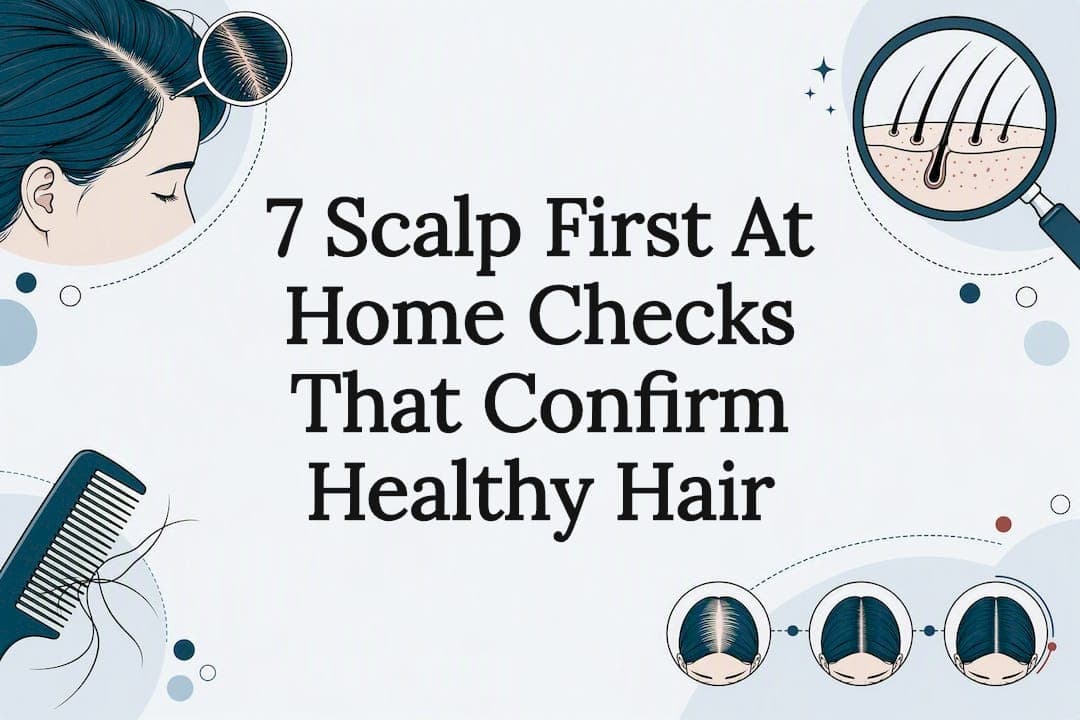
Healthy hair shows natural shine from a flat cuticle, gentle elasticity that snaps back rather than tearing, minimal split ends, manageable tangles, daily shedding around 50 to 100 strands, and a scalp that feels comfortable, not itchy or oily. You can confirm most of this yourself with a stretch test and a water float test. If shedding spikes well past that range or your scalp stays irritated for weeks, that's your cue to see a dermatologist.
TL;DR:
- Regular self-tests, including a stretch and water float, help accurately assess hair health without needing specialized equipment.
- Monitoring scalp condition and shedding patterns over time provides early warning signs of potential issues before visible hair problems develop.
- Consistent use of a single brush and photo documentation during routine checks improve the accuracy of tracking hair changes objectively.
- A scalp free of irritation, flaking, or odor indicates a healthy microbiome, which supports overall hair health and prevents inflammation-related shedding.
- Labeling hair as healthy based on shine alone can be misleading; evaluating elasticity, manageability, and scalp comfort offers a more precise assessment.
Table of Contents
- Signs of Healthy Hair You Can Check Right Now
- How to Test Your Hair's Health at Home
- What a Healthy Scalp Looks and Feels Like
- When Hair or Scalp Signs Mean It's Time to See a Professional
- Why Tracking Your Hair Over Time Beats a One-Off Check
- A Practical Take on Reading Your Own Hair
- See Your Hair's Actual Numbers, Not Just Your Impression
- Sources
- FAQ
Signs of Healthy Hair You Can Check Right Now
Most people judge their hair by how it looks in a mirror on a good day. That's a mistake. The signs that actually matter are the ones you can observe and touch, and most of them trace back to one structure: the cuticle, the outermost layer of overlapping cells that either lies flat or lifts open.
Here's the checklist, in the order that tells you the most.
- Shine. Light bounces evenly off hair when the cuticle scales lie flat against the shaft. Raised or damaged cuticles scatter light instead of reflecting it, which is why over-processed or heat-damaged hair looks dull no matter how much product you add. Shine isn't cosmetic. It's a direct readout of cuticle condition.
- Elasticity. Take a single damp strand and stretch it gently. Healthy hair gives a little, maybe 20 to 30 percent longer, then returns to its original length. Hair that snaps immediately has lost internal moisture and protein structure. Hair that stretches far past that point without resistance has a compromised cortex, the fibrous core beneath the cuticle.
- Low breakage and few split ends. Check your ends first, since that's where damage accumulates over months or years of styling and sun exposure. If you're seeing breakage in the middle of the strand rather than just at the tips, that points to a deeper structural problem, often from chemical treatments or repeated heat styling in the same section.
- Manageability. Hair with a smooth, flat cuticle detangles with minimal resistance and doesn't build up static charge. Constant tangling, especially paired with a rough or straw-like texture when dry, usually means the cuticle is lifted and catching on itself strand to strand.
- Body at the root. Healthy hair has a slight lift and movement at the scalp. Hair that lies completely flat and limp, especially if that's a recent change, can signal excess sebum or early shifts in follicle output. Hair that feels unusually stiff or wiry near the root can point the other way, toward a dry or inflamed scalp.
- Balanced shedding. Losing 50 to 100 strands a day is normal and expected. It's part of the natural growth cycle, not a sign anything is wrong. What counts as abnormal is a sustained jump well above that, clumps of hair in the shower or on your pillow, or shedding that doesn't taper off after a few weeks.
- Reasonable porosity. Healthy hair takes on moisture at a moderate rate and holds onto it, rather than absorbing water instantly and drying out just as fast, or repelling water almost entirely. How your hair responds to humidity, whether it frizzes in minutes or holds a style through a humid afternoon, is a practical daily clue to where your porosity sits.
The four-pillar shorthand you'll see in a lot of consumer hair care guides, shine, elasticity, moisture, and strength, holds up because those four traits genuinely overlap with what dermatologists look for. They're just easier to remember than "cuticle integrity."
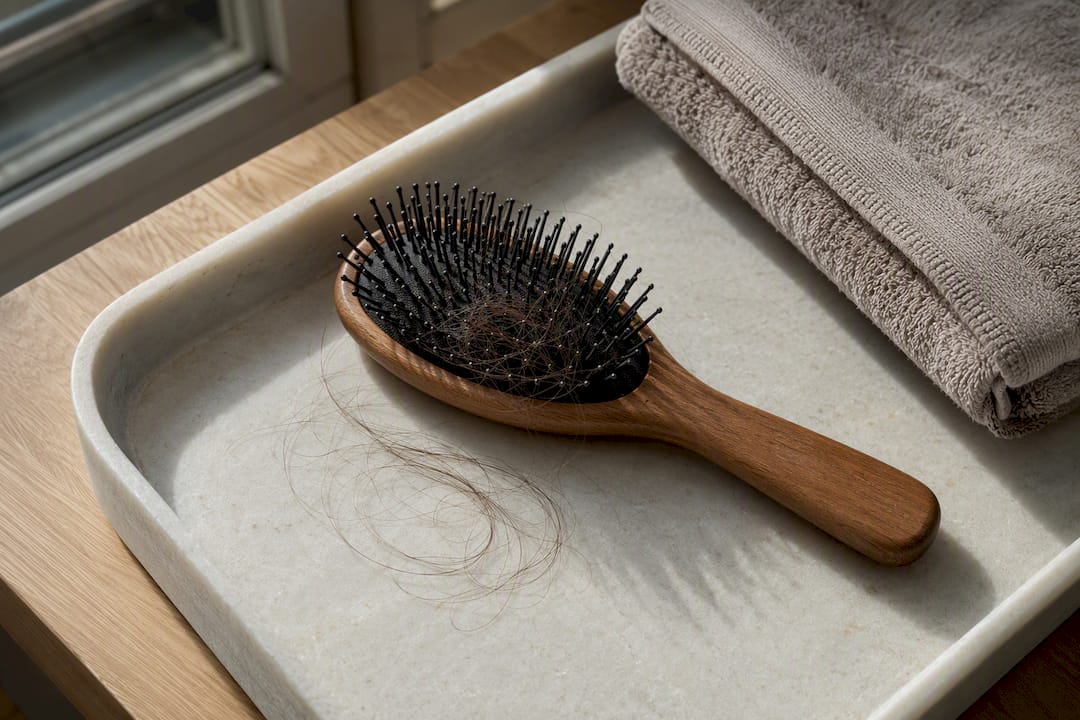
Pro Tip: Pick one brush and use it consistently for a week, then count what collects in it before you wash. A rough baseline like this beats guessing, and it makes it obvious if next month's numbers climb.
How to Test Your Hair's Health at Home
You don't need a lab to get real answers. Four tests, done correctly, will tell you more than a week of staring in the mirror.
- The stretch test. Pull one clean, damp strand between your fingers, ideally one that's already shed rather than pulling from your scalp. Stretch it slowly. Healthy hair extends slightly and returns to its original shape. If it snaps with almost no give, or stretches like a rubber band and doesn't spring back, that's a moisture or protein imbalance worth addressing.
- The water float test. Drop a clean strand into a glass of room-temperature water and watch what happens over a couple of minutes. Hair that floats has a tighter, lower-porosity cuticle that resists moisture. Hair that sinks quickly has a more open cuticle that absorbs water fast, which often means it loses moisture just as fast. This test isn't a verdict on its own; chemically processed hair often sinks but can still be perfectly healthy for its type if it's well conditioned.
- The detangle and humidity check. Run your fingers or a wide-tooth comb through freshly washed, dried hair. Smooth passage with little resistance suggests a flat cuticle. Constant snagging suggests the opposite. Separately, notice how your hair behaves on a humid day: fast frizzing or swelling points to a porous cuticle absorbing ambient moisture unevenly.
- Repeat before you conclude anything. Test three or four strands, not one, since a single hair can mislead you. If you use a lot of styling products, do a clarifying wash first and retest. Buildup on the shaft can make a strand float or resist detangling for reasons that have nothing to do with its actual condition.
None of these tests require special equipment. They just require doing them the same way twice, on hair that's actually clean, so you're comparing like with like.
What a Healthy Scalp Looks and Feels Like
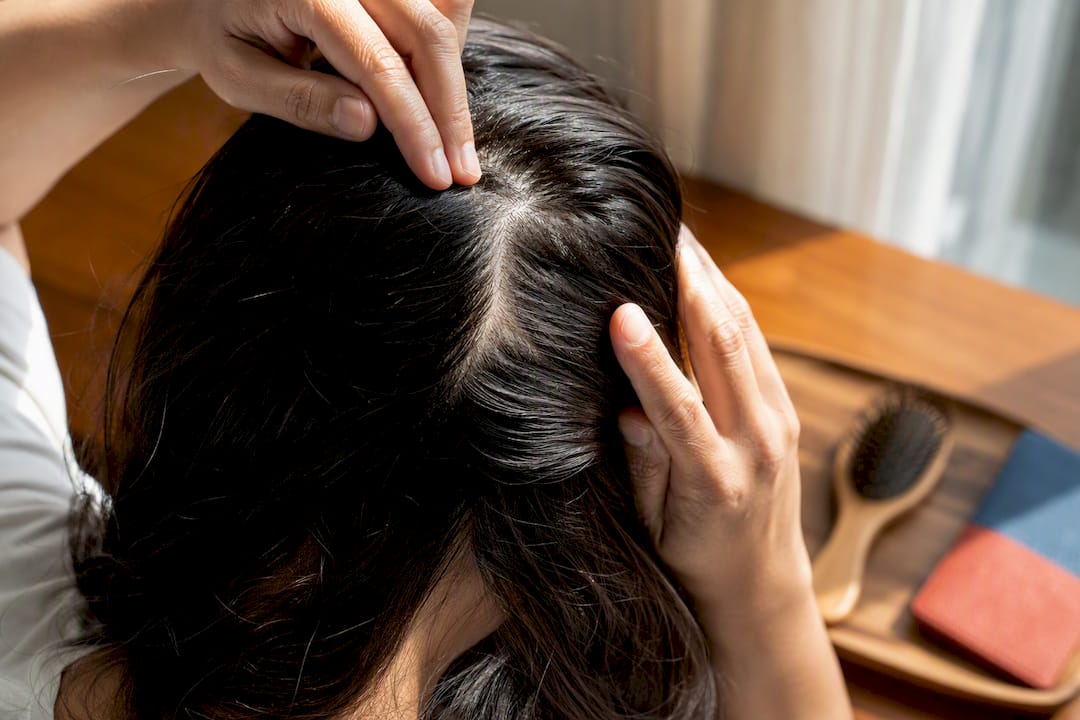
Hair health starts underneath the surface you can see. The scalp hosts a microbiome, a community of microorganisms including yeasts like Malassezia, that helps regulate sebum production and keeps the skin barrier intact. When that balance tips, you feel it before you ever see it in your strands.
A scalp in good shape is honestly a little boring. No persistent itch, no flaking, no tightness, no strong odor by the end of the day. Watch for these signals instead:
- Ongoing itchiness that doesn't resolve after a normal wash cycle
- Visible flaking or scaling, whether dry and powdery or greasy
- Redness, small bumps, or tender spots
- Oiliness that returns within a day of washing
- A noticeable odor that wasn't there before
The mechanism behind all of this matters more than the symptoms alone. Chronic scalp inflammation creates oxidative stress around the follicle and can shorten the hair's active growth phase, which is a direct route to increased shedding if the inflammation goes untreated. This is why treating the scalp often comes before any product change aimed at the strands themselves.
Start with the basics: a gentle, pH-appropriate cleanser, a wash frequency that matches your oil production rather than a fixed schedule, and an occasional clarifying wash to clear buildup. Avoid harsh sulfates if your barrier already feels compromised. Myhair's guide to scalp care walks through adjusting these variables without overcorrecting.
A balanced scalp microbiome directly regulates sebum output and helps prevent the flaking, itching, and limp texture that come with dysbiosis. Research on scalp microbiome composition ties this ecosystem to hair behavior in ways that go well beyond what shampoo marketing usually explains.
When Hair or Scalp Signs Mean It's Time to See a Professional
Most of what shows up on a self-check is manageable with time and gentler habits. Some signs aren't.
- Sudden or patchy hair loss, especially in distinct spots rather than an overall thinning
- Scalp sores, scabbing, or areas that look scarred
- Shedding that stays well above the 50 to 100 strand range for weeks, not days
- Severe pain, burning, or widespread inflammation across the scalp
If you're heading to a dermatologist or trichologist, bring documentation. Photos taken under the same lighting over several weeks are far more useful than a verbal description of "it's been falling out more." Note any new medications, supplements, major diet changes, or stretches of high stress, since all of them show up in hair before you notice.
Expect scalp symptoms like itching or flaking to ease within a few weeks of proper treatment. Changes in density or growth take months, since hair grows in cycles that don't respond overnight.
Why Tracking Your Hair Over Time Beats a One-Off Check
A single stretch test or a glance in the mirror tells you where things stand today. It can't tell you whether your hair is improving, declining, or just having a random bad week, and hair genuinely has random bad weeks. That's the gap objective tracking fills.
Myhair's scanning tools measure hair count, density, and photographic change across scans taken over time, rather than relying on a single snapshot. Objective, repeated measurement filters out day-to-day noise and makes it possible to separate normal shedding variation from an actual downward trend.
- Someone who suspects their shedding has increased can compare scans across a few weeks instead of guessing from memory.
- Anyone testing a new routine or product benefits from a consistent, dated record instead of relying on how their hair "feels" that particular morning.
- Readers preparing for a dermatologist visit get a documented timeline instead of a vague impression to describe out loud.
Pro Tip: Take your scan under the same lighting and at the same angle every time. Inconsistent lighting is the most common reason people think their hair changed when the camera just changed.
A Practical Take on Reading Your Own Hair
Scalp comfort tells you more than shine ever will. If your scalp feels calm and your shedding stays steady, the visible stuff, gloss, tangles, split ends, tends to sort itself out with basic care. People chase shine first because it's the most visible metric, but it's usually the last thing to recover once the scalp and cortex are actually healthy again.
My monthly check is three things: a photo under the same light, one stretch test on a shed strand, and an honest read on whether my scalp has bothered me at all that week. That's it. It takes two minutes and catches problems long before they show up as a mirror complaint.
— Cyriac
See Your Hair's Actual Numbers, Not Just Your Impression
Every test in this guide gives you a snapshot. Myhair gives you the trend line. The platform scans your hair with AI-powered analysis to measure density, hair count, and change over time, then turns that into personalized recommendations instead of generic advice that ignores what your hair is actually doing.
It fits best if you're already adjusting your routine and want proof it's working, or if you've noticed a change and want data before you assume the worst. Rather than relying on memory or a single stretch test, you get a dated, photographic record you can bring to a clinician if things don't improve on their own. Start with a free scan through the app onboarding and see where your hair actually stands.
Sources
For deeper detail beyond this guide, see Healthline's breakdown of normal shedding ranges, the peer-reviewed review on scalp inflammation and follicle function, and Everyday Health's practical rundown of unhealthy scalp signs.
- How Much Hair Loss Is Normal?
- Inflammation in hair disorders and its effect on hair follicle function
- How to Know if Your Hair Is Healthy? 8 Signs & Easy Tests
FAQ
How can you tell if hair is good quality?
Good-quality hair shows even shine, moderate elasticity that snaps back without breaking, minimal split ends, and smooth detangling. The stretch test and water float test can confirm these traits at home in under five minutes.
How do you know if your hair is growing well?
Steady growth shows up as consistent length gain, shedding that stays in the normal 50 to 100 strand range, and stable density over time rather than visible thinning at the part or hairline. Photographic tracking over several weeks, like the scans Myhair offers, makes this far easier to confirm than memory alone.
What does healthy hair feel like?
Healthy hair feels smooth rather than rough or straw-like, has a slight springy give when gently stretched, and detangles without heavy resistance or snagging. It also shouldn't feel unusually brittle, waxy from buildup, or limp at the root.
Is losing more than 100 hairs a day always a problem?
Not necessarily on any single day, since counts vary. But sustained shedding well above that range for several weeks, especially with visible thinning, is a signal worth checking with a dermatologist rather than waiting it out.
Can a healthy scalp still feel a little oily?
Some oil is normal and even protective, but oiliness that returns within a day of washing, especially paired with itching or odor, often points to a scalp barrier or microbiome imbalance worth addressing with gentler cleansing habits.