The habits that save the most hair cost the least effort: wash the scalp instead of scrubbing the whole shaft, detangle wet hair from the ends up, consume an adequate amount of protein daily to support hair health, cut back on heat and bleach, rotate low-tension styles, and get more sleep. None of these require a prescription. Start with these today:
- Shampoo the scalp only, not the full length
- Detangle wet hair ends-first with a wide-tooth comb
- Blot dry with a microfiber towel, never rub
- Apply heat protectant before every hot tool session
- Ensure sufficient protein intake daily, spread across meals
- Skip one tight ponytail or braid style this week
- Get sufficient sleep most nights
- Take a short walk or stretch to offload stress
- Space out bleach or chemical services by months, not weeks
- Check labs (iron, vitamin D) before starting any supplement
Key Takeaways
Smart habits for hair retention work because they protect the follicle and reduce mechanical stress consistently, not because any single product reverses damage overnight.
| Point | Details |
|---|---|
| Wash scalp-first | Apply shampoo to the scalp only; condition the lengths to avoid over-stripping. |
| Detangle wet hair carefully | Start at the ends and work upward with a wide-tooth comb, never a hard brush. |
| Hit your protein target | Aim for roughly 50 grams of protein daily to support the hair-growth cycle. |
| Limit heat and chemicals | Use heat protectant every time and space out bleach or chemical services. |
| Track with real checkpoints | Reassess at 6 to 12 weeks and again at 4 to 6 months using photos and shed counts. |
This article is general information, not a substitute for advice from a qualified doctor. Consult a qualified healthcare professional about your own circumstances before acting on anything here.
Table of Contents
- Scalp Care and Washing: How to Cleanse for Hair Retention
- Nutrition and Supplements That Support Hair Retention
- Styling and Detangling: Reduce Mechanical Breakage
- Heat and Chemical Exposure: What to Change Right Away
- Lifestyle Contributors: Stress, Sleep, Exercise, and Medications
- When to See a Dermatologist for Hair Loss
- A Smart Weekly Habit Plan for Hair Retention
- Sources
- FAQ
Scalp Care and Washing: How to Cleanse for Hair Retention
Wash to keep the scalp clean, not to punish the ends. Apply shampoo directly to the scalp, work it in with your fingertips, and let the lather rinse down through the lengths on its way out. That's enough cleansing for most hair types, and it spares dry, fragile strands from getting stripped every time you shower.
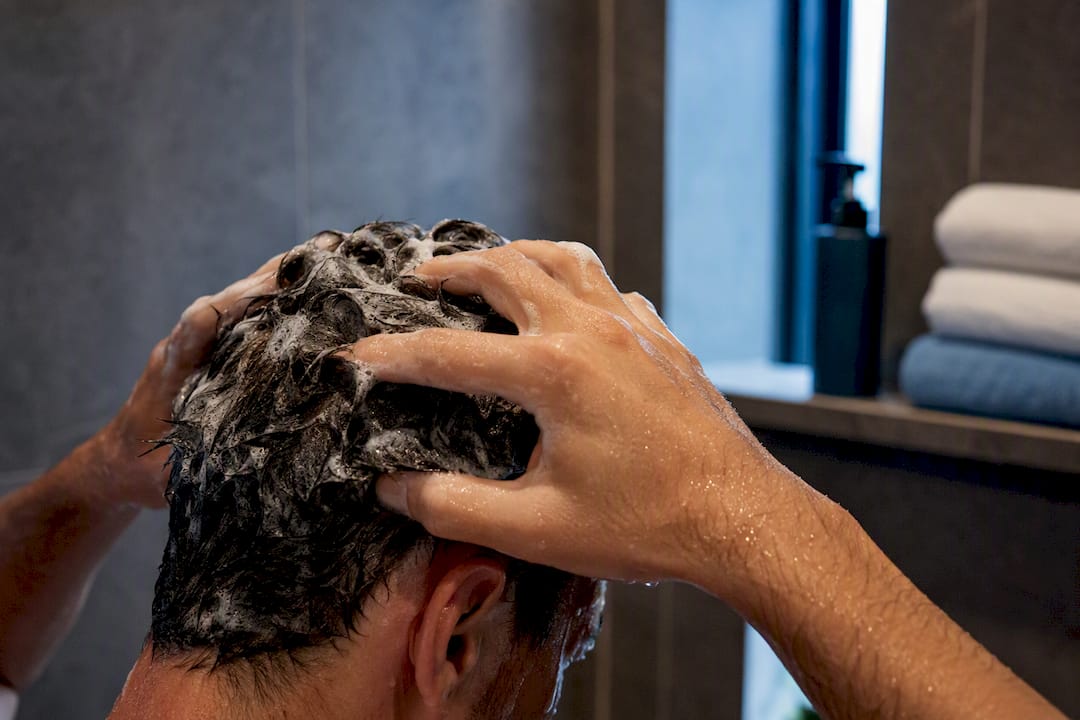
How often depends on your scalp and texture. Oily scalps often need washing every one to two days. Dry scalps and coarser or textured hair frequently do better every 3 to 7 days, since natural oils take longer to travel down the shaft and over-washing pulls moisture the hair needs. The American Academy of Dermatology recommends conditioning after every shampoo and detangling gently, ideally with a wide-tooth comb while conditioner is still in.
A few practical rules:
- Condition mid-shaft to ends, not the roots
- Detangle curly or coily hair in the shower, while slippery with conditioner
- Skip sulfate-heavy formulas if your scalp runs dry or flaky
- Never scrub the scalp with nails when hair is wet and swollen
Pro Tip: If your scalp itches between washes, that's usually product buildup, not dirt. A once-a-week clarifying rinse solves it faster than washing more often.
Nutrition and Supplements That Support Hair Retention
A balanced diet with enough protein, plus correcting any real deficiency, does more for retention than any single supplement on a shelf. Start by looking at what you eat daily, not what you might add to it.
Healthline's guidance points to roughly 50 grams of protein a day as a baseline for supporting hair health, since hair is built almost entirely from protein and the follicle deprioritizes growth when the body runs short. This is exactly why crash diets and extreme calorie cuts so often show up as shedding two or three months later.
Beyond protein, a few micronutrients come up repeatedly in the clinical literature on hair shedding:
- Iron and ferritin (low stores are a common, correctable cause of shedding)
- Vitamin D
- Zinc
- B vitamins, including biotin
Get bloodwork before you start supplementing. Correcting a real deficiency helps; loading up on high-dose biotin when your levels are already normal generally doesn't move the needle.
Styling and Detangling: Reduce Mechanical Breakage
Treat wet hair like it's made of glass, because structurally it's at its weakest. Water swells the hair shaft and loosens the cuticle, so aggressive brushing or towel-rubbing right out of the shower is one of the most common, and most avoidable, sources of daily breakage.
The sequence that actually protects length: section the hair, start detangling at the ends, and work your way up toward the roots in small increments. Never start at the scalp and drag a comb downward through knots. A Cleveland Clinic dermatology team recommends blotting with a microfiber towel or even a cotton T-shirt instead of the rough terrycloth towel most people default to.
- Use a wide-tooth comb, not a fine-tooth comb or a hard-bristle brush
- Blot, don't rub, after washing
- Rotate styles instead of wearing the same tight ponytail daily
Constant tension at the same points along the hairline causes traction alopecia over time, so alternating your part and skipping extensions or tight braids occasionally protects the edges you'd otherwise wear thin.
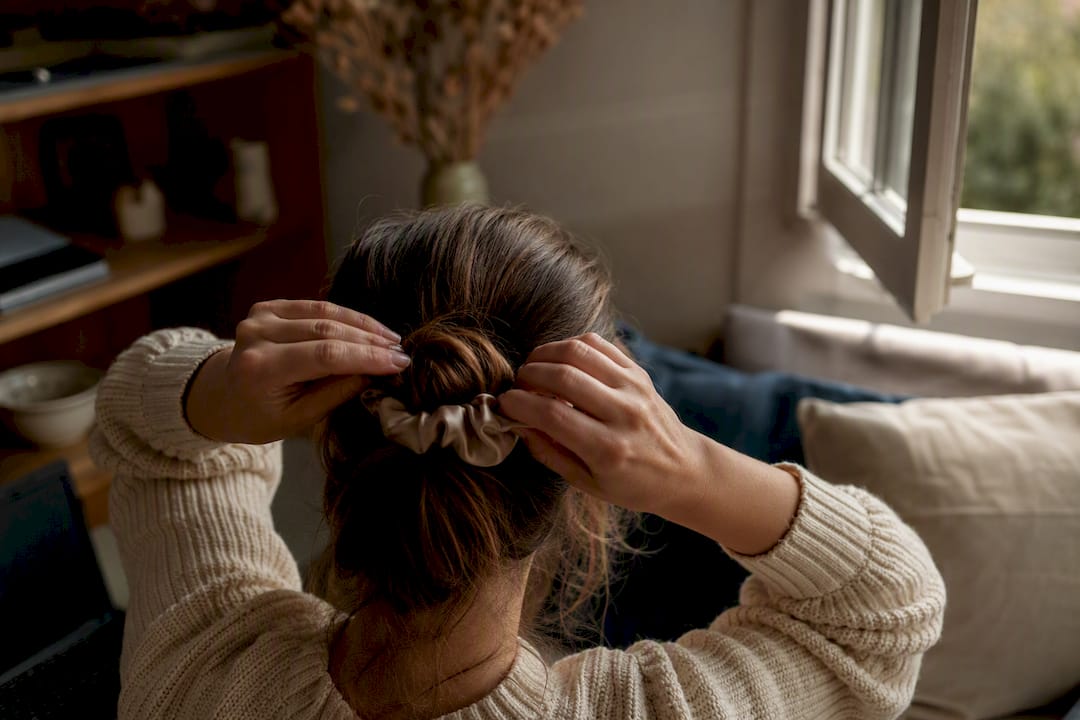
Pro Tip: Swap metal-clasp elastics for silk scrunchies or coil ties. The difference in snag and breakage over a month is noticeable.
Heat and Chemical Exposure: What to Change Right Away
Cut back on frequent heat styling and harsh chemical processing, and apply heat protectant every single time you use a hot tool. That one habit change reduces thermal damage to the hair shaft more than switching brands or buying a pricier flat iron ever will, according to WebMD's guidance on hair growth factors.
A few adjustments that keep your styling options open without frying your ends:
- Lower the tool's temperature setting; most hair doesn't need the highest heat
- Reduce heat styling to two or three times a week instead of daily
- Space bleach or lightening services out by several months
- Try heatless curls or braids overnight instead of a curling iron
- Ask your colorist about lower-damage techniques like balayage over full bleach
Lifestyle Contributors: Stress, Sleep, Exercise, and Medications
Stress, poor sleep, smoking, extreme dieting, and certain medications all raise your risk of shedding, so the fastest lifestyle fix is usually prioritizing sleep and finding a real outlet for stress. Hair follicles cycle between growth and rest phases, and chronic stress pushes more follicles into the resting phase at once, which shows up as a noticeable shed two to three months later.
Oxidative stress and inflammation are linked to hair-follicle aging in several published studies, which is part of why stress management and antioxidant-rich foods keep coming up alongside the more obvious washing and styling advice.
- Aim for sufficient sleep most nights
- Add light to moderate exercise several times a week
- Cut down or quit smoking
- Review any new medication with your prescriber if shedding started after you began taking it
When to See a Dermatologist for Hair Loss
See a dermatologist sooner rather than later if shedding is sudden or patchy, your hairline is visibly receding, or shedding has persisted for more than three months. Waiting until thinning is obvious narrows your options.
A specialist will typically run bloodwork, examine the scalp under magnification, and identify whether the pattern points to genetics, a deficiency, or something else entirely. Common early treatments include topical minoxidil and, in some cases, oral medications, both of which have clinical trial support for reducing thinning, though they require ongoing use to hold results. The Cleveland Clinic's guidance also covers gentler daily habits alongside medical options.
Red flags worth a same-month appointment, not a "wait and see":
- A widening part or visible scalp you haven't noticed before
- Clumps of hair on your pillow or in the shower drain
- Round or patchy bald spots
- Shedding that hasn't slowed after three months of habit changes
Pro Tip: Take a photo of your part line under the same light before your appointment. It gives your dermatologist an easy before-and-after reference.
How Long Until You See Results, and How to Track Progress
Expect gradual change, measured in months, not days. Set a checkpoint at 6 to 12 weeks for early signs and 4 to 6 months for a real assessment of density and length retention.
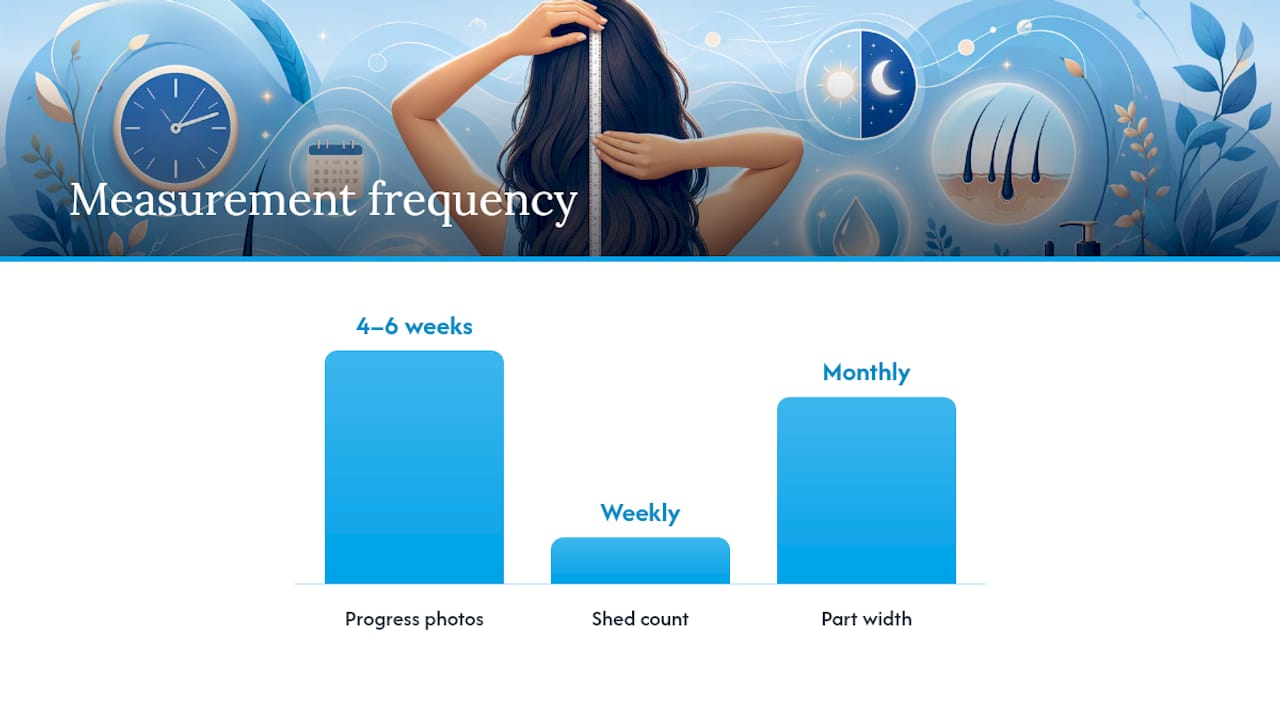
Standardized photos under the same lighting, a monthly note on part width, and a rough weekly shed count give you something concrete to compare instead of guessing.
| Metric | Frequency to Measure | What to Expect |
|---|---|---|
| Progress photos | Every 4 to 6 weeks | Same angle, same lighting, same part |
| Shed count | Weekly | Normal daily shedding involves some hair loss each day |
| Part width | Monthly | Look for narrowing or widening over time |
A Smart Weekly Habit Plan for Hair Retention
The routine that works is boring on purpose: a 5 to 10 minute daily check, plus 30 to 60 minutes of dedicated care once a week. Consistency, not intensity, is what makes it stick.
A simple 7-day version:
- Days 1 to 2: Wash and condition (scalp-first), blot dry, detangle ends-up
- Day 3: Low-manipulation style, no heat, protein-forward meals
- Day 4: Scalp massage for a few minutes while watching TV
- Day 5: Wash if needed, heat protectant if styling with tools
- Day 6: Check part width, snap a progress photo
- Day 7: Rest day for the hairline, no tight styles, review sleep and stress from the week
If you want a data-driven version of this, an AI hair scan gives you a more objective baseline than eyeballing your part in the mirror.
Why Small, Consistent Habits Beat Miracle Cures
The temptation is always the dramatic fix, the expensive serum, the supplement stack. What actually moves the needle is duller: showing up for the same scalp wash, the same gentle detangling, the same protein target, week after week. Miracle cures fail because they're one-off; hair cycles aren't. If you want to know whether your habits are working rather than guessing, tracking with something like MyHair's scan-based tracking turns a vague feeling into a number you can actually watch move.
Sources
- Tips for healthy hair - American Academy of Dermatology (AAD)
- Foods for hair growth - Healthline
- Best Ways To Stop Hair Thinning and Falling Out - Cleveland Clinic
- PMC article on oxidative stress and hair (NCBI)
- Do hair growth supplements really work? - Cleveland Clinic Newsroom
FAQ
What Helps With Hair Length Retention?
Gentle detangling, scalp-first washing, adequate protein intake, and limiting heat and chemical damage are the habits with the strongest backing for preserving length, according to dermatology-based guidance.
What Is the Chinese Secret for Long Hair?
There's no single verified "secret." Traditional practices often cited include scalp massage, rice-water rinses, and low-manipulation styles, but none of these have the clinical backing that basic habits like gentle detangling and protein intake do.
What Is the 3-Rule for Hair Length?
Definitions of this rule vary online and it isn't a standardized dermatology guideline. If you've heard a specific version, treat it as general styling advice rather than an evidence-based framework.
What Are the Big Three for Thinning Hair?
Most dermatology sources point to gentle daily care (scalp-first cleansing and detangling), nutrition (adequate protein and correcting deficiencies), and, when needed, medical treatment such as topical minoxidil as the three pillars, per Cleveland Clinic.
How Long Does It Take to See Results From Better Hair Habits?
Expect early signs around 6 to 12 weeks and a clearer picture of density and retention by 4 to 6 months, since hair growth cycles are gradual by nature.