
Stress can trigger three distinct, diagnosable hair-loss conditions: telogen effluvium, trichotillomania, and alopecia areata. Most stress-related shedding is temporary, with telogen effluvium typically starting two to three months after a major stressor and usually resolving within several months once the trigger resolves. See a clinician promptly if you notice patchy bald spots, shedding that lasts longer than six months, or hair loss paired with fatigue, weight change, or other systemic symptoms.
TL;DR:
- Most stress-related hair shedding, especially telogen effluvium, begins two to three months after a triggering event and usually resolves within three to eight months.
- Diffuse thinning across the entire scalp indicates telogen effluvium, while patchy bald spots suggest alopecia areata or trichotillomania, which require different treatments.
- Elevated cortisol levels from chronic stress impair hair follicle stem cell cycling by reducing GAS6 protein secretion, leading to increased resting phase hair accumulation.
- Monitoring hair density objectively over time helps determine if regrowth is occurring and if treatments like minoxidil or corticosteroids are necessary for persistent or patchy loss.
- Persistent shedding beyond six months, patchy baldness, or accompanying systemic symptoms like fatigue and weight change should prompt immediate medical consultation.
Table of Contents
- Types of Stress-Related Hair Loss and How to Tell Them Apart
- How Stress Biologically Leads to Hair Shedding: The Current Evidence
- Timeline and Symptoms: When Shedding Starts and How Recovery Looks
- Diagnosis and Red Flags: What Clinicians Will Check
- Treatment and Management: Evidence-Based Steps and Practical Tips
- How Objective Tracking Supports Recovery Monitoring
- A Straight Answer for Anyone Losing Sleep Over Losing Hair
- Track Your Regrowth Instead of Guessing at It
- Sources
- FAQ
Types of Stress-Related Hair Loss and How to Tell Them Apart
Not all stress-related hair loss looks or behaves the same way, and the differences matter for treatment.
Telogen effluvium is the most common form. It causes diffuse shedding across the whole scalp rather than in one spot, usually triggered by surgery, illness, childbirth, crash dieting, or a major emotional event. Hair typically comes out in the resting (telogen) phase, and shedding often peaks in the shower or on a hairbrush rather than falling out in clumps while touched.
Trichotillomania is a compulsive hair-pulling behavior, often linked to anxiety or stress as a coping mechanism. It shows up as localized patches with hairs broken at different lengths, rather than smooth bald skin, and frequently responds better to behavioral therapy than to any topical treatment.
Alopecia areata is an autoimmune condition where the immune system attacks hair follicles, producing round, well-defined bald patches. Stress is considered a possible trigger or aggravator, though the underlying cause is immune dysfunction rather than stress hormones alone.
A few quick ways to sort out which one you might be dealing with:
- Diffuse vs. patchy: Telogen effluvium thins hair all over; alopecia areata and trichotillomania create localized patches.
- Hair shaft appearance: Broken hairs of uneven length point toward pulling; smooth bald skin points toward alopecia areata.
- Timing: Shedding that started two to three months after a specific stressful event lines up with telogen effluvium.
How Stress Biologically Leads to Hair Shedding: The Current Evidence
Chronic stress activates the HPA axis, the body's central stress-response system, flooding the bloodstream with cortisol. Cortisol is useful in short bursts. Sustained at high levels, it starts interfering with tissue-level maintenance work the body considers nonessential, and hair growth falls into that category.
The clearest mechanistic finding comes from preclinical research on dermal papilla cells, the structures at the base of each follicle that control the growth cycle. Elevated cortisol reduces their secretion of a protein called GAS6, and without enough GAS6, follicle stem cells stay stuck in a resting phase instead of cycling back into active growth, according to NIH-funded research.
Other proposed contributors include:
- Neuroimmune signaling around the follicle that promotes local inflammation
- Mast cell activation near hair follicles
- Mitochondrial stress affecting the energy supply follicle cells need to divide
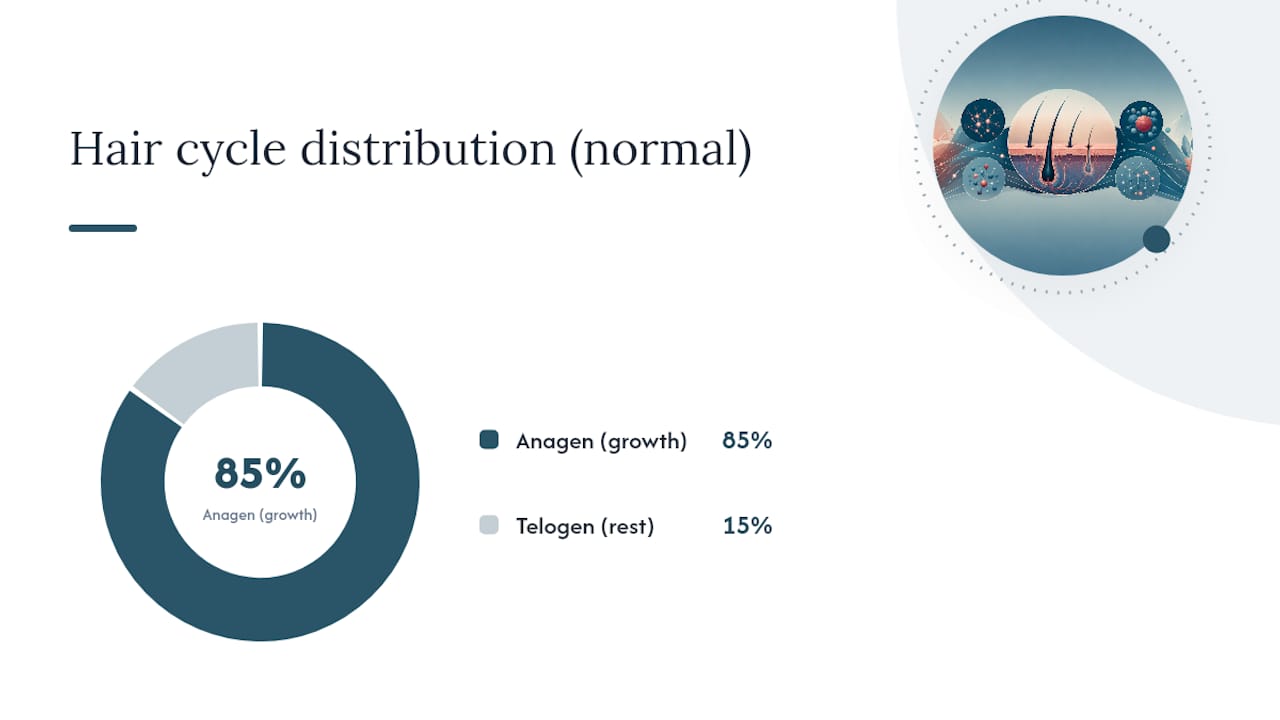
The normal hair cycle runs roughly 85% anagen (active growth) and 15% telogen (resting) at any given time. Under severe stress, that balance can shift dramatically, with as much as 70% of actively growing hair pushed prematurely into the resting phase, which is what produces the wave of shedding weeks later.
Most of this mechanistic work comes from cell and animal models. Human causation is plausible and increasingly well supported, but it's also complicated by the fact that hair loss itself generates stress, creating a loop that's hard to untangle in real patients.
Timeline and Symptoms: When Shedding Starts and How Recovery Looks
Telogen effluvium doesn't show up right away. Hair pushed into the resting phase during a stressful event typically doesn't shed for two to three months, which is why people often can't connect the dots between a stressful spring and hair loss that starts in summer.
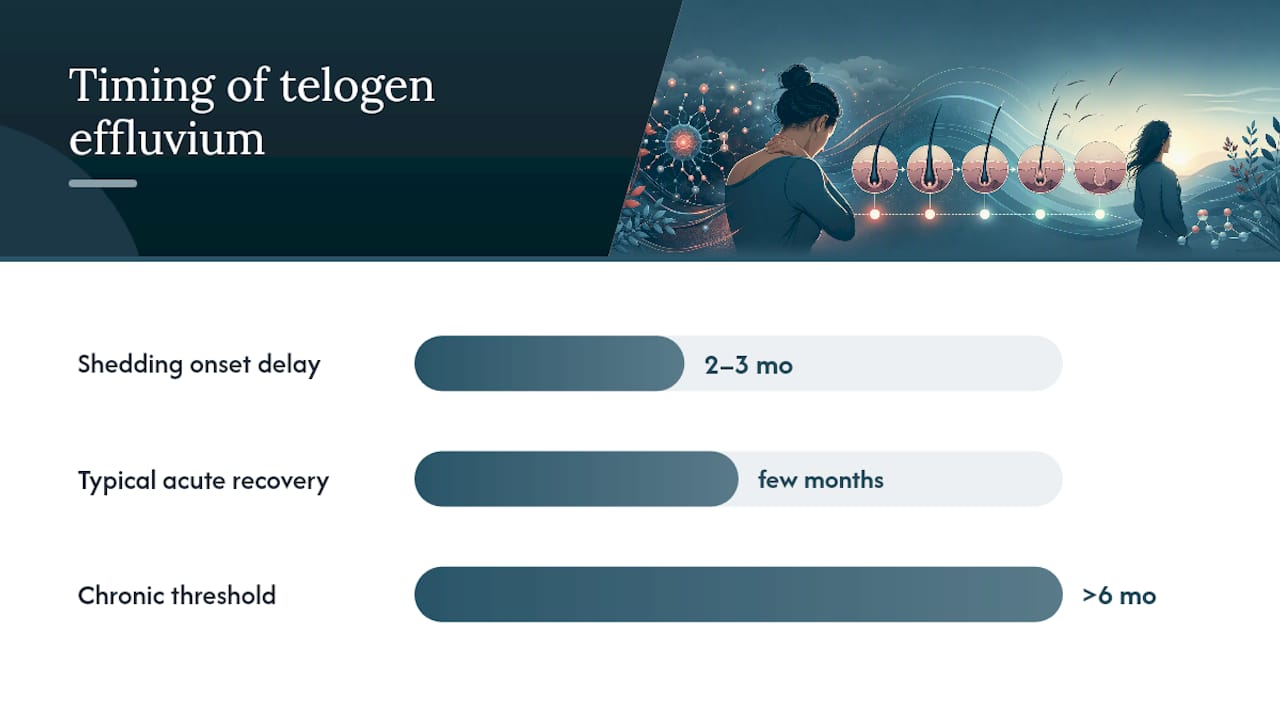
The good news: the majority of acute cases resolve within a few months once the trigger is gone. Shedding that continues past six months is classified as chronic telogen effluvium and deserves a closer look for other contributing causes.
Watch for these signs:
- More hair than usual on your pillow, in the shower drain, or in your brush
- A part that looks noticeably wider than it used to
- A ponytail that feels thinner in your hand
- Diffuse thinning across the whole scalp, as opposed to one or two distinct bald spots
Regrowth is gradual. Fine, shorter hairs typically appear along the hairline and part first, and it can take several more months beyond initial regrowth before density looks the way it did before the shedding started.
Diagnosis and Red Flags: What Clinicians Will Check
A clinician evaluating stress-related hair loss usually works through a short, structured process:
- Detailed history covering recent illness, surgery, medication changes, diet, and major life stressors in the past three to six months.
- Hair-pull test, where a clinician gently tugs a small section of hair to see how many strands release, which helps quantify active shedding.
- Scalp exam and dermoscopy to check for patchy loss, scarring, redness, or broken hair shafts consistent with pulling.
- Targeted labs, including thyroid function tests, ferritin/iron levels, and a complete blood count, since thyroid disease and iron deficiency both mimic stress-related shedding.
- Autoimmune workup, ordered only if the pattern suggests alopecia areata rather than diffuse telogen effluvium.
See a doctor promptly if you notice sudden patchy loss, shedding of body hair beyond the scalp, or hair loss alongside fatigue, unexplained weight change, or other symptoms that suggest a broader medical issue.
Treatment and Management: Evidence-Based Steps and Practical Tips
For garden-variety stress-induced telogen effluvium, the first move isn't a prescription. It's identifying and, where possible, removing the trigger, whether that's an illness, a crash diet, or an ongoing stressful situation. From there:
- Prioritize sleep and regular exercise, both of which help regulate cortisol over time.
- Address nutrition gaps, since the body deprioritizes hair growth during prolonged stress, and low protein, iron, or overall calorie intake slows recovery further. Reviewing your vitamin intake for stress-related hair loss is a reasonable place to start.
- Consider CBT or mindfulness-based stress reduction, particularly if the stressor is ongoing rather than a one-time event.
When the diagnosis points elsewhere, treatment shifts. Alopecia areata often responds to corticosteroid injections or, in more extensive cases, systemic immune-modulating medications. Trichotillomania is best addressed with behavioral therapy, sometimes alongside habit-reversal training, since topical treatments do nothing for a pulling behavior. Topical minoxidil is commonly used across several hair-loss patterns to encourage regrowth once the underlying trigger is under control, and a specialist referral is warranted when shedding persists past six months or the pattern doesn't fit classic telogen effluvium.
While you wait for regrowth, gentle styling and avoiding tight hairstyles or heat damage reduce added strain on hair that's already vulnerable. For visible patches, temporary camouflage products can help in the interim, and there are practical management tips specifically for coping with bald spots while treatment takes effect.
Pro Tip: Take a photo of your scalp and hairline under the same lighting every four weeks. Shedding fluctuates day to day, so a single bad hair day means little, but a monthly photo series makes real trends, good or bad, obvious in a way memory alone never will.
How Objective Tracking Supports Recovery Monitoring
Because stress-related shedding unfolds over months, not days, the biggest challenge for most people isn't treatment, it's patience paired with uncertainty about whether things are actually improving. MyHair uses AI-powered scans to quantify hair density and pattern changes over time, turning a vague impression of "it seems a little better" into an actual data trend.
That kind of longitudinal tracking gives both patients and clinicians something concrete to work from: whether a treatment is working, whether shedding has genuinely slowed, and whether density is returning to baseline. Objective documentation also helps flag cases where shedding is stalling out past the typical eight-month window, which is exactly when a follow-up medical visit matters most.
A Straight Answer for Anyone Losing Sleep Over Losing Hair
Watching hair collect in the drain while you're already stressed about something else is its own particular kind of miserable, and the anxiety of the shedding itself often makes the underlying stress worse. That feedback loop is real, and it's one reason recovery can feel slower than the biology suggests it should be.
Here's what the evidence actually supports: most stress-related hair loss, especially telogen effluvium, resolves on its own within months once the trigger passes. The exceptions, prolonged shedding, true patches, or compulsive pulling, are identifiable and treatable, but they deserve a clinician's eyes rather than months of guessing.
— Cyriac
Track Your Regrowth Instead of Guessing at It
Waiting out a telogen effluvium recovery window is easier when you can see the trend line instead of squinting at the mirror every morning wondering if it's finally turning around. Myhair gives you that trend line: an AI-powered scan that measures density and pattern change over time, so you know within weeks, not months, whether things are heading the right direction.
If you're currently in the two-to-eight-month window clinicians describe for acute telogen effluvium, a baseline scan now gives you something to compare against later. Start with the hair analysis onboarding to set up your first scan, or go straight to the scanner if you're ready to see where your hair health stands today.
Sources
- Chapter on hair disorders (NCBI Bookshelf)
- Telogen effluvium — Cleveland Clinic
- How stress causes hair loss — NIH
This article is general information, not a substitute for advice from a qualified doctor. Consult a qualified healthcare professional about your own circumstances before acting on anything here.
FAQ
Can stress make your hair fall out?
Yes. Stress can trigger telogen effluvium, trichotillomania, and alopecia areata, with telogen effluvium being the most common and typically temporary form.
How long does it take for hair to start falling out after severe stress?
Shedding usually begins two to three months after a major stressor, since it takes that long for affected hairs to move through the resting phase and shed.
What is telogen effluvium and how does it relate to stress?
Telogen effluvium is diffuse hair shedding caused when stress pushes a large share of hair follicles prematurely into their resting phase. Most acute cases resolve within three to eight months once the trigger passes.
How do I combat stress-related hair loss?
Address the underlying stressor, prioritize sleep and nutrition, and consider tools like MyHair's tracking to monitor regrowth; persistent or patchy loss warrants a medical evaluation for options like minoxidil or corticosteroids.
When should I see a doctor about hair loss?
See a doctor if you notice sudden patchy bald spots, shedding that lasts more than six months, or hair loss accompanied by fatigue, weight changes, or other systemic symptoms.