TL;DR:
- Sunflower oil seals moisture on hair surfaces, fights frizz, and soothes scalp irritation, but it does not penetrate deeply. It works mainly as a lightweight emollient, maintaining hair health and protecting against environmental damage. For best results, apply small amounts to damp mid-lengths and ends, avoiding heavy use on the scalp or before heat styling.
Sunflower oil for hair is a lightweight emollient rich in oleic acid, linoleic acid, vitamin E, and antioxidants that seals moisture into the hair shaft and smooths the cuticle. Unlike coconut oil, which penetrates the hair shaft to reduce protein loss, sunflower oil works primarily on the surface. That distinction matters. It means sunflower oil excels at fighting frizz, adding shine, and protecting hair from environmental damage rather than rebuilding hair from the inside out. Myhair's approach to hair health consistently shows that understanding what an oil actually does is the first step toward using it correctly.
What are the scientifically backed benefits of sunflower oil for hair?
Sunflower oil delivers real, measurable benefits. They just work differently than most people expect.

The oil's oleic and linoleic acids form a lightweight protective film over each strand. That film locks in moisture, reduces friction between hair fibers, and creates visible shine without the heavy, greasy residue that heavier oils leave behind. For anyone who has tried argan or castor oil and found it too thick, sunflower oil is a genuinely lighter alternative.
Scalp health is another area where sunflower oil earns its place. It contains vitamin E and antioxidants with anti-inflammatory and antifungal properties that calm scalp irritation and help reduce dandruff. A balanced scalp microbiome supports healthier hair growth over time. Sunflower oil does not cure scalp conditions, but it does reduce the low-grade inflammation that makes them worse.
Here is a clear breakdown of what sunflower oil does and does not do:
What sunflower oil does well:
- Seals moisture on the hair surface, reducing dryness and brittleness
- Smooths the cuticle layer, cutting frizz and adding shine
- Soothes scalp dryness and mild irritation with its anti-inflammatory properties
- Absorbs quickly without leaving a greasy film, making it suitable for fine hair
- Acts as a protective barrier against heat and environmental stress
What sunflower oil does not do:
- Penetrate the hair shaft deeply to prevent protein loss (that is coconut oil's role)
- Stimulate new hair follicle activity or directly accelerate growth
- Repair chemically damaged hair from the inside
Pro Tip: Always choose cold-pressed sunflower oil over refined versions. Cold-pressed oil retains far more vitamin E and antioxidants, which are the compounds responsible for most of its conditioning and scalp-soothing effects.
How does sunflower oil compare to other popular hair oils?
The comparison between sunflower oil and other natural oils is where most people get confused. Each oil has a specific mechanism, and mixing them up leads to disappointment.
Rele and Mohile's widely cited 2003 research found that sunflower oil lacks deep penetration compared to coconut oil. Coconut oil's small molecular structure allows it to travel inside the hair shaft and bind to proteins, reducing the protein loss that causes breakage. Sunflower oil stays on the surface. That is not a flaw. It is a different job.
| Oil | Primary mechanism | Best for | Penetration level |
|---|---|---|---|
| Sunflower oil | Surface emollient, cuticle sealing | Fine, frizz-prone, or dry hair | Surface only |
| Coconut oil | Shaft penetration, protein loss reduction | Protein-deficient or porous hair | Deep |
| Castor oil | Scalp stimulation, thick coating | Thinning or slow-growing hair | Minimal |
| Rosemary oil | Follicle stimulation (evidence-backed) | Hair growth support | Scalp-level |
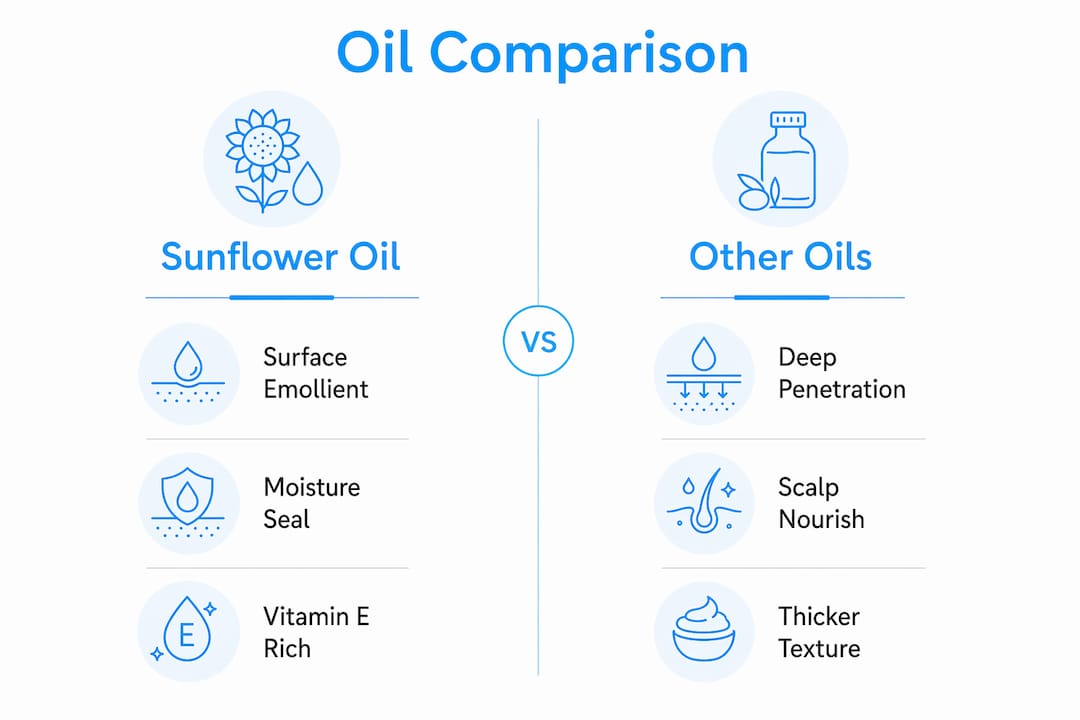
Castor oil, for example, is much thicker and coats the scalp heavily. Products like the CastorLife Organic Hair Wrap are designed specifically for that kind of intensive scalp treatment. Sunflower oil is not trying to compete with that. It is a daily-use, lightweight option that complements heavier treatments rather than replacing them.
For people with fine or easily weighed-down hair, sunflower oil's fast absorption makes it the practical choice. Heavier oils can cause buildup and flatten fine strands within hours. Sunflower oil does not.
Pro Tip: If your goal is hair growth, pair sunflower oil with a clinically supported treatment like rosemary oil or minoxidil. Use sunflower oil to maintain moisture and reduce breakage while the growth treatment does the heavier lifting. Read more about natural oils for hair growth to understand which oils have the strongest evidence behind them.
How to use sunflower oil on your hair for best results
Application method matters as much as the oil itself. Using too much, or applying it to the wrong hair state, cancels out most of the benefits.
- Start with damp hair. Apply sunflower oil to hair that is about 70% dry, not soaking wet. Damp hair absorbs the oil more effectively, and the oil seals in the water already present in the shaft.
- Use 2–3 drops only. Excessive sunflower oil attracts dust and causes greasy buildup, which negates the shine benefits entirely. For fine hair, start with 2 drops. For thick or coarse hair, 3–4 drops is the upper limit.
- Focus on mid-lengths to ends. These sections are the oldest and driest parts of the hair. Applying oil directly to the roots on fine hair causes flatness and buildup.
- For scalp use, massage gently. A small amount worked into the scalp with fingertip pressure soothes dryness and supports circulation. Leave it on for 20–30 minutes before washing, or overnight for deeper conditioning.
- Rinse thoroughly if used as a pre-wash treatment. Sunflower oil left on hair without rinsing can accumulate over several days. A clarifying wash once a week keeps the scalp clean.
- Avoid heavy application before heat styling. A light layer is fine as a heat protectant, but thick application before a flat iron or blow dryer can cause uneven heat distribution and potential damage.
Pro Tip: Sunflower oil is an excellent carrier oil for DIY blends with essential oils like peppermint or tea tree. Its neutral scent and light texture make it ideal for mixing. Always patch test any blend on your inner wrist before applying it to your scalp, especially if you have a sunflower seed allergy.
Building a consistent routine around these steps is what separates people who see results from those who do not. A structured oil hair routine makes the difference between occasional benefit and lasting improvement.
What realistic results should you expect from sunflower oil?
Sunflower oil is not a miracle treatment for thinning hair. Setting accurate expectations prevents frustration and helps you use it correctly within a broader routine.
The primary value of sunflower oil is preventing breakage by keeping hair flexible and protected from environmental damage. Hair that breaks less retains length more effectively. Over time, that retention can look like growth, even when the follicle activity itself has not changed.
Here is what consistent use realistically delivers:
- Reduced frizz and smoother texture within the first few applications
- Improved moisture retention over 4–6 weeks of regular use
- Less mechanical breakage from brushing and styling over 2–3 months
- Calmer scalp with reduced flakiness and irritation within a few weeks
- No direct stimulation of new hair growth at any point
Clinical dermatologists are clear that hair growth oils need consistent use over several months before any perceptible change occurs. Stronger clinical evidence exists for treatments like minoxidil and rosemary oil when the goal is actual follicle stimulation. Sunflower oil does not belong in that category.
Consistency matters more than the specific oil you choose. Regular hair and scalp care routines produce better long-term results than any single product used sporadically. Sunflower oil works best as one reliable component in a complete routine, not as a standalone solution.
Key Takeaways
Sunflower oil is a surface emollient that seals moisture, smooths the cuticle, and supports scalp health, but it does not penetrate the hair shaft or directly stimulate hair growth.
| Point | Details |
|---|---|
| Surface emollient, not a penetrating oil | Sunflower oil seals the cuticle and locks in moisture but does not repair hair from within. |
| Cold-pressed quality matters | Unrefined, cold-pressed oil retains more vitamin E and antioxidants for better conditioning results. |
| Less is more in application | Use 2–3 drops on damp mid-lengths to ends to avoid greasy buildup and attract dust. |
| Scalp benefits are real | Anti-inflammatory and antifungal properties help reduce dandruff and soothe scalp irritation. |
| Pair with growth treatments | For hair thinning, combine sunflower oil with clinically supported options like rosemary oil or minoxidil. |
Why I think most people are using sunflower oil wrong
After spending years looking at how people approach natural hair care, one pattern stands out. Most people treat sunflower oil like a growth serum. They apply it heavily to the scalp every day, wait two weeks, see no new growth, and conclude it does not work. That is the wrong frame entirely.
Sunflower oil is a maintenance tool. It keeps what you already have in better condition. Fine hair especially benefits from it because the oil absorbs without weighing strands down. But I have seen people with fine hair drench their roots in it and then wonder why their hair looks flat and dull by noon.
The quality issue is also underappreciated. Refined sunflower oil, the kind sold in grocery stores for cooking, has most of its beneficial compounds stripped out. Cold-pressed, cosmetic-grade sunflower oil is a different product. If you are buying the cheapest bottle available, you are not getting the vitamin E content that makes the oil worth using on hair.
My honest recommendation: use sunflower oil as a finishing step after washing, not as a scalp treatment unless you are doing a dedicated pre-wash mask. Keep the amount small. And if you are dealing with actual hair thinning, do not rely on any carrier oil alone. Get a proper assessment of your hair health before committing to any routine.
— Cyriac
Myhair's AI analysis takes the guesswork out of your hair routine
Understanding exactly what your hair needs is the foundation of any effective care routine, whether you are using sunflower oil, rosemary oil, or a clinical treatment.

Myhair uses AI-powered hair analysis to assess your scalp and hair condition from a simple scan, then delivers personalized product and routine recommendations based on your specific patterns. Instead of applying oils based on general advice, you get guidance built around your actual hair health data. Clinics can also integrate Myhair's tools through the clinic onboarding platform to offer clients detailed, trackable assessments over time. If you want to know whether sunflower oil is the right fit for your hair type, Myhair gives you a data-backed answer.
FAQ
Is sunflower oil good for dry hair?
Sunflower oil is an effective treatment for dry hair because its oleic and linoleic acids form a moisture-sealing film over the cuticle. Apply 2–3 drops to damp ends to lock in hydration without heaviness.
Does sunflower oil help with hair growth?
Sunflower oil does not directly stimulate hair follicles or accelerate growth. It helps retain length by reducing breakage, but clinical growth treatments like minoxidil or rosemary oil have stronger evidence for follicle stimulation.
Can I leave sunflower oil in my hair overnight?
Yes, but rinse thoroughly the next morning with a gentle shampoo. Leaving oil on the scalp for extended periods without cleansing can cause buildup and clog follicles over time.
What type of sunflower oil is best for hair?
Cold-pressed, unrefined sunflower oil retains the most vitamin E and antioxidants. Refined cooking-grade sunflower oil has most of these compounds removed and delivers fewer conditioning benefits.
Is sunflower oil safe for all hair types?
Sunflower oil suits most hair types, with its lightweight texture making it especially good for fine or oily hair. People with sunflower seed allergies should patch test before use and consult a dermatologist if irritation occurs.