TL;DR:
- Sleep quality influences hair health by regulating hormones like cortisol and growth hormone, which affect follicle growth and shedding. Disrupted circadian rhythms and chronic sleep deprivation can lead to temporary hair loss, but improvement in sleep habits often reverses this effect over time. Maintaining consistent, sufficient sleep supports hormonal balance and scalp regeneration, promoting healthier hair growth.
Sleep quality is one of the most underestimated factors in hair health, because it directly regulates the hormones and biological repair systems that determine whether your follicles grow, rest, or shed. The sleep and hair growth connection is not a direct cause-and-effect relationship in the clinical sense. Sleep deprivation is not a recognized primary cause of alopecia. What it does do is disrupt the hormonal environment that your follicles depend on, and that disruption has real, measurable consequences for hair density and scalp health over time.
1. How the sleep and hair growth connection works hormonally
The most important mechanism linking sleep to hair health runs through two hormones: cortisol and growth hormone. Growth hormone secretion peaks during deep sleep, specifically during slow-wave sleep stages, and this is when follicle repair and cellular regeneration happen most efficiently. Cut that window short night after night, and your follicles get less of the biological signal they need to stay in the active growth phase.
Cortisol works in the opposite direction. Poor sleep raises cortisol levels, and elevated cortisol reduces scalp blood flow, weakening the nutrient supply to hair roots. Chronically high cortisol also promotes systemic inflammation, which can push follicles prematurely into the telogen (resting and shedding) phase of the hair cycle.
- Growth hormone: Released primarily during deep sleep; supports follicle repair and active growth phase maintenance.
- Cortisol: Rises with poor sleep; restricts scalp circulation and accelerates follicle entry into the resting phase.
- Inflammation: Chronic high cortisol triggers inflammatory pathways that disrupt normal hair cycling.
- Immune regulation: Sleep deprivation lowers growth hormone and disrupts immune regulation, compounding follicle stress.
Pro Tip: Prioritizing deep sleep, not just total hours, matters most for hormonal balance. Alcohol and late-night screen use both suppress slow-wave sleep stages, reducing the growth hormone window even when total sleep time looks adequate.
2. Circadian rhythms and their role in scalp health
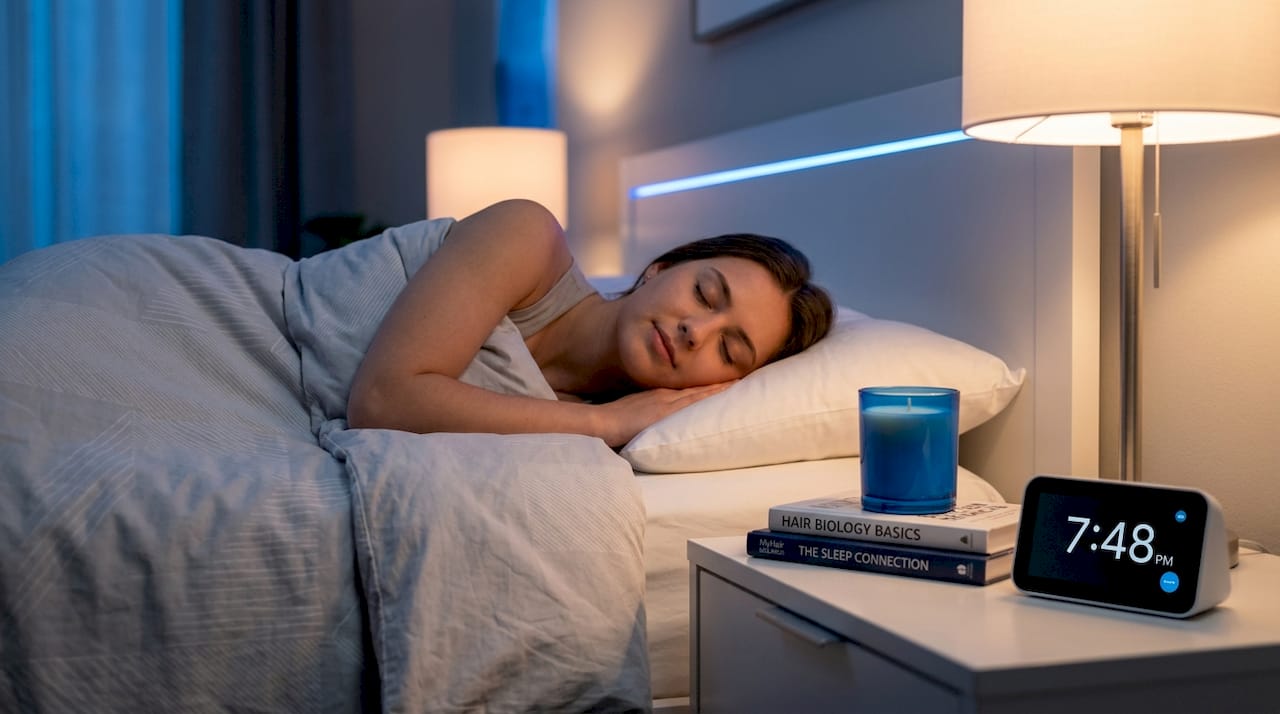
Your hair follicles operate on a biological clock. Circadian rhythm disruptions through inconsistent sleep schedules impair hair follicle cycling and compound shedding when combined with other stressors. This means shift workers, frequent travelers crossing time zones, and anyone with highly irregular sleep patterns face a compounded risk to hair health that goes beyond simple sleep quantity.
The scalp itself is affected by sleep quality in more immediate ways. Poor sleep can cause the scalp to become either excessively dry or overproductive of sebum, depending on how cortisol and other stress hormones fluctuate. Neither extreme is good for follicle health. Dry scalp compromises the protective barrier around follicles, while excess oil can clog follicle openings and contribute to inflammation.
Here is how disrupted circadian signaling affects the hair cycle in sequence:
- Irregular sleep schedules destabilize the body's internal clock, reducing the precision of biological timing signals.
- Follicle cycling, which depends on circadian cues, loses synchronization between growth and rest phases.
- More follicles enter the telogen phase simultaneously, setting the stage for diffuse shedding.
- Scalp skin repair, which normally occurs during sleep, becomes less efficient, weakening the follicle environment.
- Reduced melatonin production from disrupted sleep may also affect follicle antioxidant protection, though research here is still developing.
"Hair follicles show circadian signaling involvement; stable rhythms favor hair regeneration." — Purality Health
For anyone working on scalp health improvement, stabilizing sleep timing is as important as any topical treatment. The scalp cannot repair itself optimally if the biological clock driving that repair is constantly reset.
3. Telogen effluvium: the delayed hair loss pattern linked to poor sleep
Telogen effluvium is the clinical term for diffuse, temporary hair shedding triggered by a physiological stressor. It is the most likely hair loss pattern connected to chronic poor sleep, and understanding its timing is critical. Shedding typically appears 2 to 3 months after the triggering event, not immediately. This delay is why many people fail to connect their hair loss to a period of poor sleep or high stress that happened months earlier.
The practical implication is significant. If you notice increased shedding today, the relevant question is not "how did I sleep last night?" but rather "what was happening in my life 2 to 3 months ago?" Evaluating suspected shedding requires examining stressor windows from prior months, not recent changes, to correctly identify contributing factors.
| Hair loss type | Cause | Onset timing | Reversibility |
|---|---|---|---|
| Telogen effluvium | Physiological stressor (poor sleep, illness, stress) | 2 to 3 months after trigger | Usually fully reversible |
| Androgenetic alopecia | Genetic and hormonal (DHT sensitivity) | Gradual, progressive | Partially manageable, not reversible |
| Alopecia areata | Autoimmune | Variable | Variable; often recurs |
The good news about sleep-related hair loss is that it falls squarely in the reversible category. Once sleep quality improves and systemic stress is managed, many hair loss cases are reversible. Recovery is not instant, but the follicles themselves are not permanently damaged by telogen effluvium.
Pro Tip: If you are tracking hair shedding, keep a simple log noting both current shedding levels and any significant stressors from 2 to 3 months prior. This pattern recognition is far more useful than reacting to daily fluctuations.
4. The postpartum case study: what sustained sleep loss does to hair
A study of over 76,000 Indian mothers found that 53% experienced severe sleep loss linked to hair thinning and postpartum telogen effluvium peaking 3 to 4 months after delivery. This is one of the most concrete real-world illustrations of how sustained sleep disruption, combined with hormonal shifts and physical stress, produces measurable hair loss at scale.
What makes the postpartum case instructive is the compounding effect. New mothers face simultaneous drops in estrogen, chronic sleep fragmentation, nutritional depletion, and elevated stress. Nutritional depletion during periods of chronic stress and poor sleep disproportionately affects hair growth because the body prioritizes vital organ function over follicle maintenance. Hair, from a survival standpoint, is expendable.
For new mothers, sustaining recovery-focused sleep through the postpartum months is the single most impactful step toward reversing this pattern. The hair loss is real, but it is also predictable and temporary when the underlying stressors are addressed. Understanding the stress and hair loss link in this context helps set realistic expectations for recovery timelines.
5. Practical sleep strategies that support hair health
Getting better sleep for hair health does not require a complete lifestyle overhaul. It requires consistency and a few targeted habits that stabilize the hormonal environment your follicles depend on.
- Target 6 to 9 hours nightly. The recommended adult sleep duration of 6 to 9 hours supports hormonal regulation and follicular repair. Both extremes, too little and too much, are associated with elevated cortisol.
- Keep consistent sleep and wake times. Going to bed and waking at the same time every day, including weekends, stabilizes circadian signaling. This is the single most effective habit for improving sleep quality over time.
- Consider CBT-I for chronic insomnia. Cognitive behavioral therapy for insomnia, known as CBT-I, is recommended for chronic insomnia and improves the hormonal environment disrupted by poor sleep. Apps like Sleepio and programs through the Cleveland Clinic offer structured CBT-I access without requiring in-person therapy.
- Manage stress as a parallel priority. Sleep and stress are bidirectional. Poor sleep worsens stress reactivity, and high stress worsens sleep quality. Practices like progressive muscle relaxation, mindfulness-based stress reduction (MBSR), and regular aerobic exercise all reduce cortisol and improve sleep architecture.
- Prioritize nutrition that supports both sleep and follicles. Iron, zinc, biotin, and vitamin D deficiencies impair both sleep quality and hair growth. A diet rich in leafy greens, eggs, nuts, and fatty fish addresses multiple deficiencies simultaneously. For broader healthy hair growth strategies, nutrition and sleep work as a system, not in isolation.
- Limit alcohol and caffeine after midday. Both suppress deep sleep stages, reducing growth hormone output even when total sleep time is adequate.
Pro Tip: The most overlooked nighttime routine for hair health is simply keeping your bedroom cool and dark. Core body temperature drop is a key trigger for deep sleep onset, and light exposure suppresses melatonin. These environmental changes cost nothing and improve sleep quality measurably.
Key takeaways
Sleep supports hair health primarily by regulating cortisol and growth hormone, and disruptions to this hormonal balance are the main mechanism behind sleep-related hair thinning.
| Point | Details |
|---|---|
| Sleep affects hair indirectly | Poor sleep raises cortisol and reduces growth hormone, disrupting follicle health over time. |
| Telogen effluvium has a delay | Hair shedding from sleep-related stress typically appears 2 to 3 months after the trigger, not immediately. |
| Circadian consistency matters | Irregular sleep schedules impair follicle cycling; consistent timing stabilizes biological hair growth signals. |
| Sleep-related hair loss is reversible | Most cases linked to poor sleep and stress recover once sleep quality and stress levels improve. |
| 6 to 9 hours is the target | This range supports hormonal regulation and follicular repair according to current clinical guidance. |
Why I think we're asking the wrong question about sleep and hair loss
Most people who come to this topic are asking "is my sleep causing my hair loss?" That is the wrong frame. The better question is: "Is my sleep quality degrading the biological environment my hair needs to thrive?"
I have spent years reading the research on hair health, and the pattern that stands out is how rarely any single factor explains hair loss on its own. Sleep is a genuine contributor, but it operates as part of a system that includes genetics, nutrition, stress, hormonal status, and scalp health. When someone fixates on sleep as the sole explanation for their shedding, they often miss the other variables that are equally or more important.
What I find genuinely useful about the sleep angle is the reversibility argument. Unlike genetic hair loss, which requires ongoing management, sleep-related telogen effluvium is one of the few hair loss patterns where the fix is largely within your control. Improving sleep quality, reducing cortisol, and giving your follicles 3 to 6 months to recover is a realistic plan. The stress hair loss remedy framework applies directly here: address the root stressor, support recovery, and track the response over time.
The delay between cause and effect is what trips people up most. You will not see results from better sleep in two weeks. You will see them in three to five months. That timeline requires patience and a tracking system, not just optimism.
— Cyriac
See how your hair is actually responding to your lifestyle
If you have been working on your sleep and stress habits but are not sure whether your hair is responding, objective tracking makes the difference between guessing and knowing.
Myhair's AI hair analysis scanner gives you a detailed, personalized assessment of your hair health based on actual scan data, not self-reported symptoms. You can track changes over time and see whether lifestyle improvements like better sleep are producing measurable results at the follicle level. For anyone who wants to move beyond anecdotal observation, the MyHair app onboarding walks you through setting up ongoing hair tracking in minutes. Personalized data is the fastest way to connect your sleep habits to your hair outcomes.
FAQ
Does poor sleep directly cause hair loss?
Poor sleep is not a recognized direct cause of hair loss. It contributes indirectly by raising cortisol, reducing growth hormone, and promoting inflammation, which together can push follicles into a shedding phase over time.
How long after poor sleep does hair loss appear?
Hair shedding linked to sleep-related stress typically appears 2 to 3 months after the triggering period, not immediately. This delay is characteristic of telogen effluvium, the most common sleep-related hair loss pattern.
Can improving sleep reverse hair thinning?
Yes, in most cases. Sleep-related hair thinning is typically temporary and reversible once sleep quality improves and systemic stress is managed. Recovery generally takes 3 to 6 months after the stressor is resolved.
How many hours of sleep does hair growth require?
Current clinical guidance recommends 6 to 9 hours of quality sleep per night for adults. This range supports the hormonal regulation and follicular repair processes that contribute to healthy hair growth.
Does sleep quality matter more than sleep quantity for hair health?
Both matter, but sleep quality, specifically reaching deep slow-wave sleep stages, is where growth hormone secretion peaks and follicle repair occurs. Total hours without adequate deep sleep stages provides less benefit to hair health.