TL;DR:
- A consistent bedtime hair care routine helps prevent damage, frizz, and tangles overnight. Proper detangling, drying, moisturizing, and protective styles are crucial to maintaining healthy hair. Using silk or satin pillowcases and loose styles reduces tension and friction, promoting hair retention and growth.
A bedtime hair care routine is defined as the set of protective steps taken each night to reduce breakage, friction, and moisture loss while you sleep. Most people focus their hair care on morning styling, but the hours between lights out and waking up are when the most preventable damage occurs. Consistent nightly protection reduces breakage, frizz, and tangles visibly within 14 days. The top bedtime hair care tips covered here follow the American Academy of Dermatology's guidance on minimizing mechanical stress and are informed by Myhair's AI-powered hair analysis standards.
1. Detangle gently before you sleep
Detangling dry hair from ends to roots is the single most effective way to prevent overnight knots from turning into breakage. Wide-tooth combs and flexible bristle brushes are the right tools for this step. Stiff paddle brushes force through tangles and snap strands, especially on dry or textured hair.
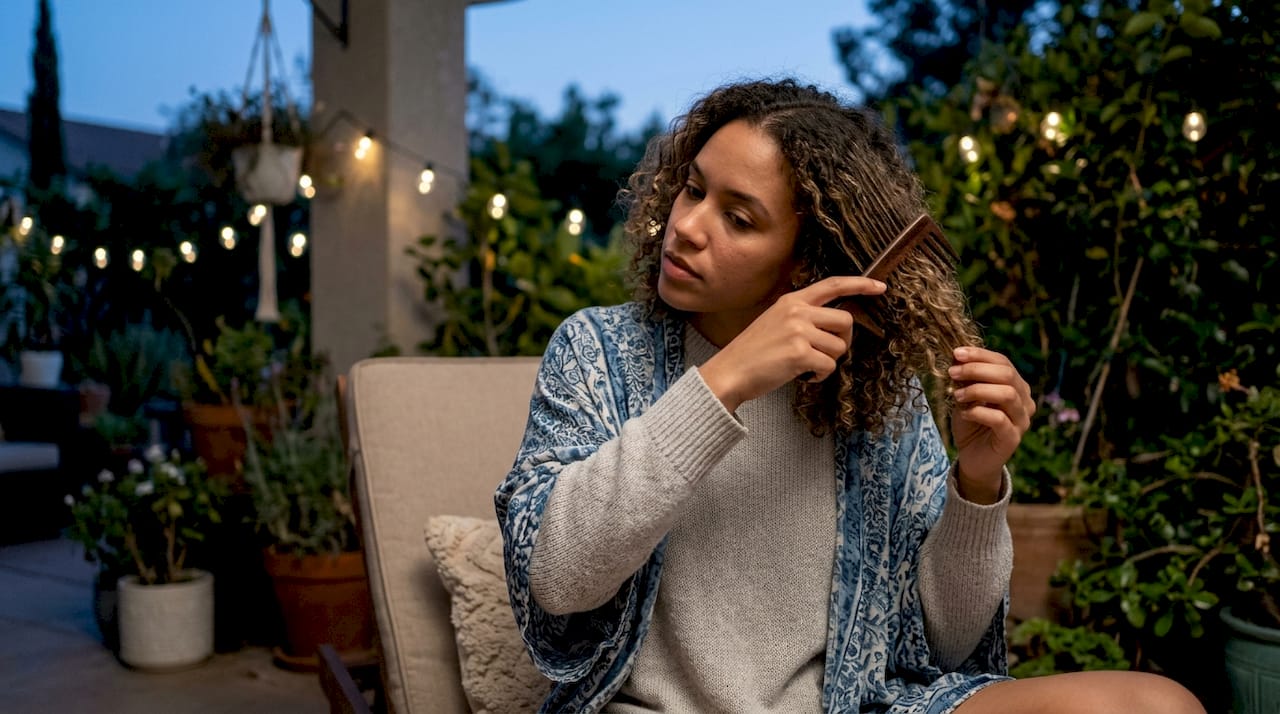
Work in sections. Start at the ends, remove small knots, then move upward toward the roots in short strokes. This approach prevents you from dragging a tangle the full length of the shaft.
Common mistakes to avoid:
- Detangling soaking wet hair, which is at its most fragile state
- Using a fine-tooth comb on curly or coily hair
- Rushing through the process with long, aggressive strokes
- Skipping detangling entirely and relying on morning brushing to fix overnight knots
Pro Tip: For fine hair, use a flexible bristle brush with widely spaced pins. For thick or coily hair, a wide-tooth comb with rounded tips prevents scalp scratching and shaft splitting.
2. Make sure your hair is dry enough before bed
Wet hair has flexible hydrogen bonds that make each strand significantly more fragile than dry hair. Sleeping on wet hair means hours of friction against a pillow while strands are at their weakest. The standard recommendation is to reach at least 80% dryness before lying down.
You do not need to blow-dry until bone dry. Air drying to near-dry, then finishing with a diffuser on low heat for two to three minutes, gets you to a safe level without heat damage.
Key points on drying before bed:
- Microfiber towels absorb water faster than terry cloth and cause far less friction
- Avoid wrapping hair tightly in a regular towel, which creates tension and frizz
- A cool or warm air setting on a blow dryer is safer than high heat for finishing
- Sleeping with sopping wet hair also raises the risk of scalp fungal issues over time
3. Moisturize hair at the right spots
The mid-lengths and ends of your hair are the oldest, driest parts of each strand. Applying a light leave-in conditioner or a few drops of argan or jojoba oil to those sections before bed gives them hours to absorb without the product sitting on your scalp.
Scalp buildup from overnight products is a real concern. Keep any oil or cream from the roots unless your scalp is clinically dry. A pea-sized amount of product is usually enough for fine hair. Coarse or high-porosity hair may need slightly more.
Budget-friendly options that work well:
- Jojoba oil: closely mimics the scalp's natural sebum and absorbs without greasiness
- Argan oil: lightweight, high in vitamin E, and effective on frizz-prone ends
- Aloe vera gel: a water-based option that adds moisture without weight for fine hair
- Fragrance-free leave-in conditioners: widely available and suitable for sensitive scalps
Pro Tip: After applying your leave-in or oil, spend five minutes doing a scalp massage with your fingertips. This increases blood circulation to the follicles and helps distribute any product you applied near the roots.
4. Choose a protective hairstyle that fits your hair type
Loose protective styles like a loose pineapple, a single soft braid, or a low bun reduce friction and prevent overnight tangling without pulling at the roots. The guiding principle from salon professionals is "containment without tension." Your hair should be gathered enough to stay in place, but never tight enough to feel any pull at the hairline.
"Containment without tension" means your hair is secured enough to prevent friction and tangling overnight, but never tight enough to stress the follicle or hairline. This principle applies to every style, accessory, and bonnet you use at night.
Tight elastics and rubber bands are the most common cause of preventable hairline damage. Satin or silk scrunchies hold hair in place without the sharp edge that cuts into the shaft. For people with longer or thicker hair, a loose plait down the back is often the most practical option.
Tips by hair type:
- Fine hair: A loose, low bun secured with a satin scrunchie keeps strands from tangling without adding volume-robbing creases
- Curly or coily hair: A loose pineapple on top of the head preserves curl pattern and prevents compression
- Long straight hair: A single loose braid prevents the sheet-tangling that happens when long hair spreads across a pillow
- Short hair: A satin bonnet or cap is the most practical option when hair is too short to style up
5. Protect your hair from tight bonnets and elastics
Tight bonnets and elastics cause tension alopecia, a form of gradual hair loss driven by repeated mechanical stress on the follicle. The damage is cumulative. A bonnet that feels only slightly snug every night can thin the hairline over months.
The fit of a bonnet matters as much as the material. Too tight causes tension. Too loose means it falls off during sleep and provides no protection. Look for bonnets with a wide, soft elastic band that sits at the nape rather than the hairline.
Satin-lined caps are a practical alternative for people who find bonnets uncomfortable. They stay on more securely and cover the hairline without pressing against it. For people who use hair accessories to secure styles, soft, well-fitted bands are the standard recommendation for reducing tension alopecia risk.
6. Optimize your sleep environment for hair health
Bedroom humidity directly affects how much moisture your hair retains overnight. Dry indoor air pulls water from the hair cuticle, leaving strands brittle by morning. Optimal bedroom humidity is 40%–50%, and a basic humidifier in the $40 price range is enough to maintain that level in most rooms. That single change can noticeably reduce morning frizz within a week.
The surface your hair rests on matters just as much. Silk or satin pillowcases reduce friction and moisture loss compared to cotton. At a microscopic level, cotton acts like sandpaper against the hair cuticle, roughing up the surface and drawing out moisture over hours of contact. Silk and satin allow hair to slide rather than snag.
| Sleep environment factor | Cotton or standard setup | Silk or satin setup |
|---|---|---|
| Friction on hair cuticle | High, causes frizz and breakage | Low, preserves cuticle smoothness |
| Moisture retention | Poor, cotton absorbs hair's moisture | Good, fabric does not absorb moisture |
| Hairline stress | Higher with rough fabric | Lower with smooth surface |
| Temperature regulation | Less consistent | More consistent for most hair types |
Room temperature and light also affect hair follicle health. Bright lights and warm room temperatures disrupt melatonin production, which plays a role in hair follicle cycling. A cool, dark room supports the hormonal balance your follicles need during the repair phase of sleep.
Pro Tip: If a full silk pillowcase is outside your budget, a satin pillowcase achieves nearly the same friction reduction at a fraction of the cost. Look for 100% polyester satin rather than blended fabrics for the smoothest surface.
Key takeaways
A simple nightly routine of five minutes, done consistently, produces better hair health results than any expensive or complicated regimen done sporadically.
| Point | Details |
|---|---|
| Detangle before bed | Use a wide-tooth comb from ends to roots on dry hair to prevent breakage. |
| Dry to at least 80% | Wet hair is fragile; sleeping on it causes breakage and scalp issues. |
| Moisturize mid-lengths and ends | Apply argan or jojoba oil to the driest sections, not the scalp. |
| Use low-tension styles | Loose braids, pineapples, and satin scrunchies protect without stressing roots. |
| Control your sleep environment | Maintain 40%–50% humidity and switch to a silk or satin pillowcase. |
What I have learned from years of watching people skip the basics
By Cyriac
The most common mistake I see is not the wrong product. It is the wrong order of priorities. People spend $80 on a hair mask they use once a week, then sleep on a cotton pillowcase every night with their hair in a tight elastic. The mask does almost nothing. The nightly friction undoes it.
The second mistake is treating a bedtime routine as optional. Your hair spends roughly a third of its life pressed against a surface, tangled in fabric, or compressed under a bonnet that does not fit. That is not a minor variable. That is the dominant mechanical force acting on your strands.
What actually works is boring. Detangle. Dry adequately. Add a few drops of oil to the ends. Secure loosely. Sleep on a smooth surface. Repeat every night. The people I have seen with the healthiest hair are not using the most expensive products. They are the most consistent with the simplest steps.
If you are dealing with hair loss or thinning, the nighttime routine matters even more. Follicles in a stressed or inflamed state are more sensitive to mechanical damage. Reducing friction and tension at night is one of the few things you can control completely, at low cost, starting tonight. A night hair care routine for growth does not require a complete overhaul. It requires showing up for five minutes every night.
— Cyriac
How Myhair helps you build a routine that fits your hair
Your hair type, porosity, and scalp condition all determine which bedtime steps matter most for you. A routine that works for fine, straight hair may do nothing for coarse, high-porosity curls. Myhair's AI-powered hair analysis uses photo-based scanning to assess your hair's current condition and identify where the most damage is occurring.

From that scan, Myhair generates a personalized set of product and routine recommendations, including which nighttime steps to prioritize. You can track changes over time to see whether your routine is actually improving your hair's condition. The app onboarding process takes a few minutes and gives you a starting point built around your specific hair, not a generic template. If you are unsure where your nighttime routine is falling short, a Myhair scan is the fastest way to find out.
FAQ
What is the best way to protect hair while sleeping?
Sleep on a silk or satin pillowcase and secure hair in a loose style with a satin scrunchie. These two steps reduce friction and tension, the two main causes of overnight breakage.
Should I detangle wet or dry hair before bed?
Detangle dry hair before bed. Wet hair has weakened hydrogen bonds and breaks far more easily under mechanical stress than dry hair does.
How dry should my hair be before I go to sleep?
Hair should be at least 80% dry before you sleep. Sleeping on soaking wet hair increases breakage risk and can contribute to scalp fungal problems over time.
Does a silk pillowcase actually make a difference for hair?
Silk and satin pillowcases reduce friction against the hair cuticle and do not absorb moisture the way cotton does. The result is less frizz, fewer tangles, and less breakage by morning.
Can sleeping with hair in a bun cause hair loss?
A tight bun causes tension on the follicle and can lead to traction alopecia over time. A loose, low bun secured with a soft satin scrunchie is safe and protective.