Hair breaks mainly for three reasons: external shaft damage from heat, chemicals, and friction; internal weakness from poor nutrition or health issues; and everyday habits that quietly stack the odds against you. Most people are dealing with two or three of these at once, not just one.
The highest-impact causes to check first:
- Heat styling (flat irons, blow dryers used daily or at high temperatures)
- Chemical processing (bleach, relaxers, permanent color)
- Dryness from sun, hard water, or dry indoor air
- Mechanical tension (tight ponytails, brushing wet hair, rough towel drying)
- Nutrient gaps (protein, iron, zinc, biotin)
- Stress or an undiagnosed medical issue
If you flat-iron daily, drop the temperature and add a heat protectant tonight. If your hair went brittle out of nowhere with no change in routine, that's worth a basic lab check or a dermatologist visit rather than another deep conditioner. MyHair's AI scan tool can help narrow down which of these categories is actually driving your specific damage, since the mechanisms behind "dry ends" and "traction damage" call for completely different fixes.
Key Takeaways
Hair breakage almost always traces back to a combination of shaft damage from heat, chemicals, or friction and insufficient internal support from diet, stress, or an underlying health issue.
| Point | Details |
|---|---|
| Identify your dominant cause | Match your symptoms to mechanical, chemical, heat, or nutritional damage before choosing a fix. |
| Space chemical services | Wait at least six to eight weeks between bleach, relaxer, or color treatments. |
| Fix wet-hair habits first | Switch to microfiber towels and wide-tooth combs since wet hair breaks far more easily. |
| Balance protein and moisture | Use the strand stretch test to decide which one your hair needs before treating it. |
| Watch for medical red flags | Sudden, widespread brittleness with scalp symptoms warrants a doctor's evaluation, not another product. |
Table of Contents
- The Top Causes of Damaged Hair, One by One
- How to Stop Breakage Before It Starts
- When Breakage Signals a Medical Problem
- Repairing Damaged Hair: What Actually Works
- Getting a Personalized Read on Your Hair
- What the Research Actually Supports
- Sources
- FAQ
The Top Causes of Damaged Hair, One by One
Each of these causes attacks the hair shaft differently. Knowing the mechanism tells you what will actually fix it, instead of guessing with another bottle of conditioner.
-
Bleach and chemical relaxers. Lightening and relaxing treatments break disulfide bonds inside the cortex, the protein structure that gives hair its strength. Signs: hair feels gummy when wet or snaps with almost no tension. Action: skip any additional chemical service for at least six to eight weeks and add a bond-building treatment.
-
High-heat styling tools. Repeated exposure above 300°F boils the water inside the hair shaft, creating bubble hair and cuticle cracks. Signs: sudden dullness, "bubbly" texture under magnification, ends that fray rather than break clean. Action: drop your tool's temperature by 25 to 50 degrees and never skip a heat protectant.
-
Overwashing with high-pH shampoo. Alkaline shampoos give hair a negative surface charge that increases friction between strands, which lifts the cuticle and speeds up breakage, according to Medical News Today. Signs: hair feels rough even right after washing. Action: switch to a shampoo labeled pH-balanced or sulfate-free and stretch washes by a day.
-
Sun, hard water, and dry air. UV rays and chlorinated or mineral-heavy water strip the hair's protective lipid layer fast, according to Acibadem's dermatology guidance. Signs: hair that feels straw-like within hours of swimming or a beach day. Action: rinse with clean water immediately after exposure and wear a hat on high-UV days.
-
Brushing or toweling wet hair. Wet hair stretches far beyond its normal elastic limit before it snaps, which is exactly what happens during rough brushing, according to the American Academy of Dermatology. Signs: clumps of short broken pieces in the shower drain. Action: swap your towel for a microfiber wrap or old t-shirt and detangle only with a wide-tooth comb, working from the ends up.
-
Tight styles and hair ties. Constant pulling from ponytails, braids, and extensions causes traction damage and, over time, can contribute to thinning at the hairline, according to research on traction alopecia. Signs: breakage concentrated around the temples or part line, small bumps at the follicle. Action: alternate tight styles with looser ones and skip the elastic on rest days.
-
Product buildup and alcohol-heavy sprays. Silicone and alcohol buildup coats strands and adds weight, which increases the tension needed to snap already-weak hair. Signs: hair looks fine wet but feels stiff and brittle once dry. Action: use a clarifying shampoo regularly and check spray labels for high alcohol content.
-
Skipping trims. A split end left alone travels up the shaft, since there's no natural "stop point" once the cuticle splits. Signs: forked ends, tangling that starts mid-shaft rather than at the tips. Action: book a trim every 8 to 12 weeks even if you're growing length.
-
Nutrient deficiencies. Low protein, iron, zinc, or biotin intake starves the hair matrix of raw material, and deficiencies here are a documented driver of brittle hair, according to Everyday Health. Signs: hair that's thin in diameter, not just short. Action: track your protein intake for a week before adding supplements.
-
Stress and telogen effluvium. Chronic stress can push a large share of hair follicles into the shedding phase at once, which is a different problem than shaft breakage. Signs: hair coming out at the root with excessive shedding rather than snapping mid-strand. Action: distinguish shedding from breakage using the tug test before assuming it's a styling issue.
How to Stop Breakage Before It Starts
Prevention comes down to reducing tension, heat, and chemical load while keeping the shaft properly moisturized and reinforced.
- Heat: Cap tool use at 2 to 3 times a week, keep temperatures under 350°F, and never skip a heat protectant spray, even for a quick touch-up.
- Chemical services: Space color, bleach, or relaxer appointments at least two months apart, and ask your stylist to assess damage before layering on another lightening round.
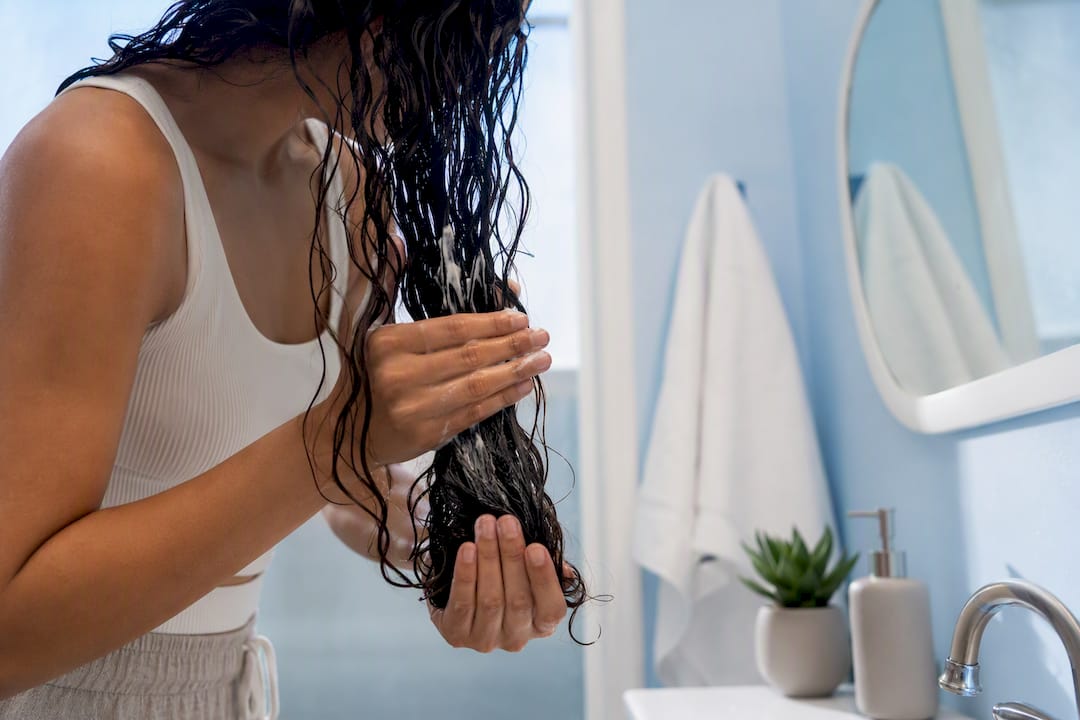
- Daily detangling: Comb from the ends first, use a wide-tooth comb on wet hair, and dry with a microfiber towel instead of rough terrycloth.
- Cleansers: Choose a sulfate-free, lower-pH shampoo, and cut back to washing every two to three days if your scalp allows it.
- Bond-repair products: Treat these as temporary reinforcement, not a cure, and rotate them with moisture-focused masks rather than using them nonstop.
Pro Tip: If your hair snaps but doesn't stretch first, it usually needs protein. If it stretches like gum before it breaks, it needs moisture. Fixing the wrong one makes breakage worse, not better.
Straight hair typically needs lighter protein treatments and more frequent clarifying washes. Wavy hair does well with a leave-in and infrequent trims. Curly and coily hair usually needs the most moisture, minimal heat, and protective styles with zero added tension. Myhair's prevention guide breaks down routines by texture in more depth.
When Breakage Signals a Medical Problem
Most breakage is fixable with a routine change. A smaller share points to something happening inside the body, and that's worth ruling out early.
- Sudden, widespread brittleness with no change in styling habits
- Scalp itching, flaking, or visible redness alongside the breakage
- Fatigue, cold sensitivity, or weight changes appearing at the same time
Hypothyroidism slows hair growth and weakens the shaft. Iron deficiency and severe caloric restriction, including eating disorders, starve follicles of what they need to build strong strands. Certain medications, from retinoids to some blood thinners, list hair thinning as a side effect. A doctor or dermatologist may order a TSH panel, ferritin and iron studies, a complete blood count, and sometimes vitamin B12 or folate levels. Myhair's guide to medical causes covers what each test result usually means.
Repairing Damaged Hair: What Actually Works
A strand that has already snapped cannot heal itself; hair has no living cells past the follicle. What treatments do instead is temporarily reinforce what's left and buy time until healthier growth replaces the damaged sections, according to Vogue's reporting on hair repair science.
- Salon bond-building treatments chemically relink weakened protein chains inside the cortex, acting as scaffolding rather than a cure.
- At-home hydrolyzed protein treatments offer a lighter version of the same reinforcement and work best rotated with moisture, not used every wash.
- Trims remain non-negotiable for split ends, since no product reverses a shaft that has already forked.
Pro Tip: Do a strand test before choosing a treatment: wet hair that snaps back with some bounce likely needs moisture first; hair that stretches and stays limp needs protein first. Myhair's breakage solutions article walks through sequencing both.
Getting a Personalized Read on Your Hair
A photo-based scan can flag which of the causes above are actually driving your damage, rather than leaving you to guess between ten possibilities. Myhair's AI-powered hair analysis scores shaft condition, dryness, and breakage patterns from a scan, then tracks changes over time.
- Get product recommendations matched to what your scan actually shows, not generic advice
- See whether your routine is improving or worsening breakage between scans
- Catch early warning signs before damage becomes visible to the eye
Myhair's hair score breakdown explains exactly what each metric measures.
What the Research Actually Supports
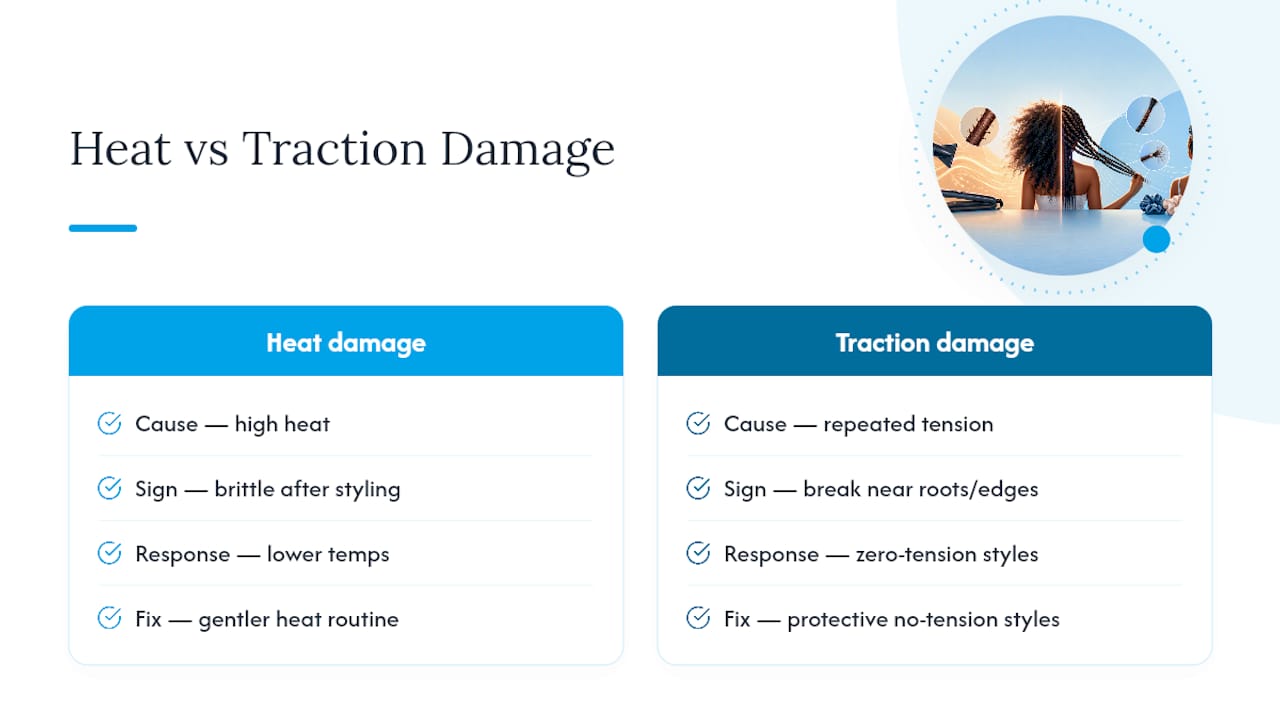
Most breakage advice treats every cause the same way: moisturize more, use gentler products, hope for the best. That's backwards. Heat damage and traction damage need opposite responses, one calls for lower styling temperatures, the other for zero tension styles, and lumping them into one generic routine is why so many people stay stuck.
The bigger gap is in how casually people dismiss sudden, unexplained brittleness as "just dry hair." When breakage shows up out of nowhere with no styling change behind it, that's a pattern worth checking against bloodwork, not another deep conditioner. Iron and thyroid issues show up in hair before they show up anywhere else for a lot of people.
If you take one thing from this: stop treating breakage as a single problem with a single fix. Identify which mechanism is actually happening on your head, mechanical, chemical, or internal, and treat that one first. A tool that reads your actual hair condition beats another round of guessing.
Sources
- What causes hair breakage and how to prevent it — Medical News Today
- Why is my hair dry and falling out? — Everyday Health
- What causes hair breakage — Vogue
- Brittle hair: What patients need to know — Acibadem
FAQ
Why is my hair breaking?
Hair typically breaks from a combination of shaft damage (heat, chemicals, friction) and weakened internal structure from poor nutrition, stress, or an untreated health issue.
How do I fix breakage in my hair?
Identify whether the damage is mechanical, chemical, or nutritional, then match the fix: gentler detangling and lower heat for mechanical damage, spaced-out chemical services for processing damage, and a protein or iron check for nutritional causes.
What vitamin deficiency causes hair breakage?
Low protein, iron, zinc, or biotin intake is commonly linked to brittle, breakable hair, according to Everyday Health, though megadosing certain vitamins can also backfire.
Why did my hair suddenly start breaking?
Sudden breakage with no change in styling habits often points to a health shift, such as thyroid changes, iron deficiency, high stress, or a new medication, and is worth mentioning to a doctor if it persists.