TL;DR:
- Most bald spots on the side of the head are treatable, often with early medical intervention.
- Accurate diagnosis and monitoring are critical for selecting effective treatments like corticosteroid injections or topical options.
- Personalized assessments and AI tools help guide targeted, data-driven hair loss solutions for better results.
Noticing a bald spot on the side of your head can feel alarming, but here's something most people don't realize: a large number of these cases are completely treatable, and many reverse on their own with the right intervention. The problem is that most people either panic and try random products or assume nothing can be done. Neither approach works. This article breaks down what actually causes lateral bald spots, how to assess what you're dealing with, and which treatments have real clinical data behind them so you can move from confusion to a clear, actionable plan.
Table of Contents
- Understanding the causes of bald spots on the side of the head
- How to assess your bald spot: Signs, symptoms, and what to look for
- Evidence-based medical treatments: What works and why
- Non-medical strategies: Covering and reducing the visibility of bald spots
- Why personalized assessment—and not panic—is essential
- Get a personalized hair loss analysis today
- Frequently asked questions
Key Takeaways
| Point | Details |
|---|---|
| Common causes are varied | Bald spots on the side of the head can result from several reversible conditions, not always permanent loss. |
| High regrowth rates | Evidence shows 42-90% of cases see major hair regrowth within about 12 weeks using effective therapies. |
| Self-assessment guides treatment | Careful inspection and pattern tracking help determine the best solution and when to consult a specialist. |
| Combine medical and cosmetic steps | Day-to-day confidence is possible by blending concealment techniques with ongoing therapy. |
| Personalized analysis beats guesswork | Tailored data-driven hair analysis improves outcomes over panic-driven experimentation. |
Understanding the causes of bald spots on the side of the head
Not every bald spot tells the same story. A patch on the side of your head can stem from several distinct conditions, each with different causes, timelines, and treatment responses. Knowing which one you're dealing with changes everything about how you should respond.
Here are the most common causes to consider:
- Alopecia areata (AA): An autoimmune condition where the body mistakenly attacks hair follicles, creating smooth, round patches. It can appear suddenly, often on one side.
- Traction alopecia: Caused by repeated mechanical stress on the hair, such as tight ponytails, braids, cornrows, or headbands that pull the hair along the temples and sides.
- Tinea capitis: A fungal infection of the scalp, more common in children, that produces scaly, sometimes itchy bald patches.
- Androgenetic alopecia (AGA): While this typically affects the top and crown, it can cause recession at the temples and sides, particularly in men.
- Temporal triangular alopecia (TTA): A rare, often overlooked condition. TTA affects roughly 0.11% of the population and is notably unilateral, meaning it shows up on just one side of the head.
One thing many people get wrong is assuming that any bald spot on the side of the head is permanent. That simply isn't accurate. Conditions like alopecia areata and traction alopecia are highly responsive to treatment when caught early. Even TTA, which is congenital (meaning present from birth or early childhood), can be managed with the right cosmetic or medical approach.
"The location, shape, and timeline of a bald spot are often more diagnostic than any single lab test. A sudden, smooth, coin-sized patch on the side of the head is almost textbook alopecia areata until proven otherwise." This kind of pattern recognition is what separates an informed response from a panicked one.
Tracking your bald spot matters enormously. How long has it been there? Is it growing or stable? Does it come with itching, scaling, or tenderness? These details are not just helpful for a dermatologist. They're the difference between getting a precise diagnosis quickly and spending months trying the wrong treatments.
If you want a broader picture of what causes bald patches in different locations, the bald spot on side guide covers this in detail, and comparing it with what causes a bald patch on top causes can help you map your own pattern more accurately.
For those who want clinical context around alopecia solutions, the range of options available today is far broader than most people realize, which we'll get into shortly.
How to assess your bald spot: Signs, symptoms, and what to look for
Understanding what causes your bald spot leads directly to the right way to check and monitor it. The good news is that you don't need a medical degree to gather the right information before seeing a specialist.
Start with these observable features:
- Shape: Round or oval patches suggest alopecia areata. Irregular, hairline-following patches lean toward traction alopecia or AGA.
- Texture of the scalp: Is the skin smooth and normal-looking? Scaling or redness points toward tinea capitis or inflammation.
- Size and borders: Sharp, well-defined edges are characteristic of AA. Gradual thinning with no clear edge is more typical of AGA.
- Symptom check: Does the area itch, burn, or tingle? AA is often symptom-free. Tinea capitis usually itches. Traction alopecia may feel sore at the hairline.
- Timeline: Did the patch appear suddenly over days, or has it crept up over months or years? Sudden onset strongly suggests an autoimmune or inflammatory cause.
For androgenetic alopecia specifically, dermatologists use the Norwood scale for progression to track how far the condition has advanced. While the Norwood scale was designed for male pattern baldness, it provides a useful reference framework for understanding how gradual loss progresses over time and whether intervention is urgent or still early-stage.
Before you see a specialist, collect the following information:
- Photos taken in consistent lighting from the same angle every two weeks
- A written log of when you first noticed the patch and any changes since
- A list of any hair tools, products, or styles that regularly contact that area
- Notes on any recent illness, stress, or dietary changes (these can trigger AA)
- Any family history of hair loss
Pro Tip: Use your smartphone's portrait mode or a dedicated hair scanning app to capture high-resolution, consistent images over time. Small changes in a bald spot are nearly impossible to track accurately by eye alone, but side-by-side image comparisons reveal patterns that can guide both your own understanding and your dermatologist's diagnosis.
For a practical walkthrough of what treatments work once you've identified your issue, check out hair bald spot solutions, which pairs assessment guidance with specific next steps.
Evidence-based medical treatments: What works and why
Once you've identified the likely cause, choosing a proven treatment method is the next step. Let's talk about what the research actually shows, not just what sounds plausible.
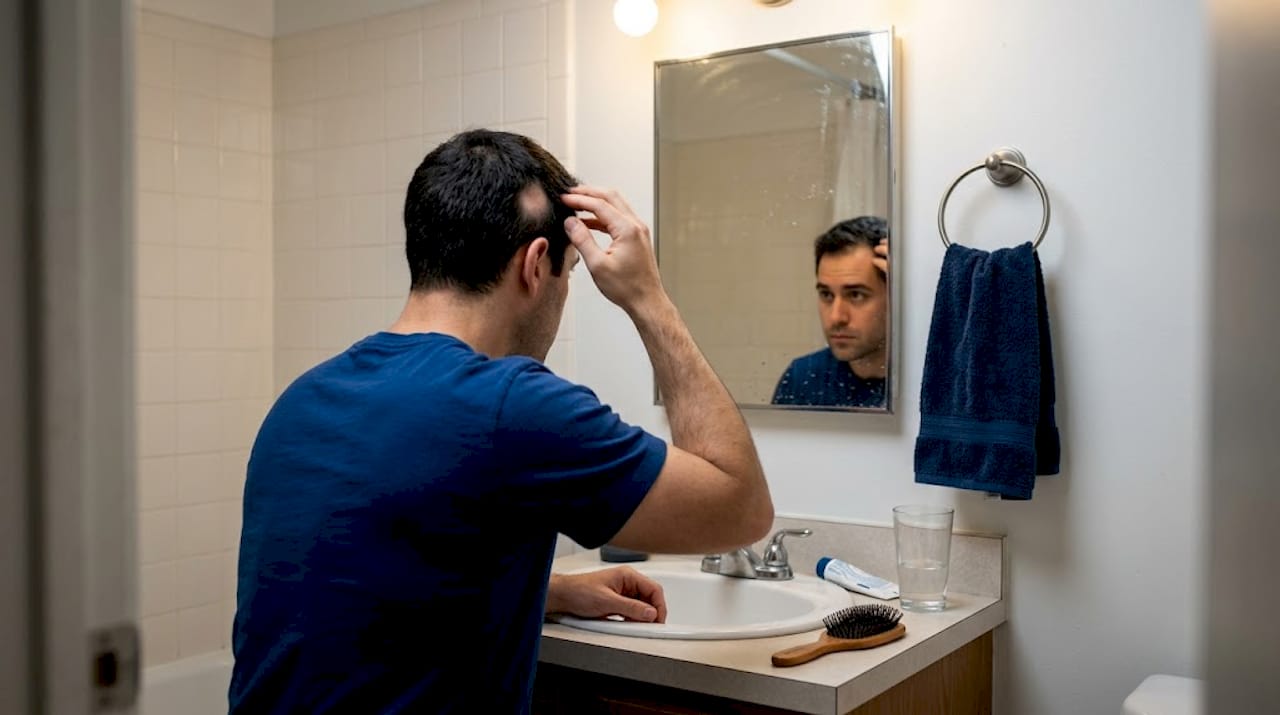
Intralesional corticosteroids are currently the gold standard for treating alopecia areata on the side of the head. Triamcinolone acetonide, injected directly into the bald patch at concentrations of 5 to 10 mg/ml every three to six weeks, has a strong track record. Higher concentration acts faster: patients receiving 10 mg/ml achieved more than 75% regrowth in a mean of 2.47 sessions, compared to 3.83 sessions at lower concentrations.
Here's a quick comparison of the main treatment options:
| Treatment | Concentration/Dose | Sessions to 75% Regrowth | Complete Regrowth Rate |
|---|---|---|---|
| Intralesional triamcinolone (10 mg/ml) | 10 mg/ml every 3 to 6 wks | ~2.47 sessions | Higher than topical |
| Intralesional triamcinolone (5 mg/ml) | 5 mg/ml every 3 to 6 wks | ~3.83 sessions | Moderate to high |
| Topical minoxidil | 2 to 5% solution or foam | Varies (weeks to months) | 20 to 61% |
| Topical corticosteroids | Daily or alternate day | Slower than IL | 20 to 61% |
| JAK inhibitors (baricitinib) | Oral, for severe/refractory cases | Varies | High in severe AA |
The regrowth rates across AA treatments are more encouraging than most people expect: intralesional steroids achieve more than 75% regrowth in 42% to 90% of patients within just 12 weeks. That's a wide range because individual response varies, but even the lower end of that range is substantial.
Topical treatments like minoxidil and topical corticosteroids are often a good starting point when injections aren't accessible or when the patch is small. Complete regrowth with topicals runs between 20% and 61%, which is meaningful for mild to moderate cases.
JAK inhibitors like baricitinib represent a newer category, approved specifically for severe alopecia areata where other treatments haven't worked. They work by blocking the immune pathway that drives hair follicle attack. They're not a first-line option, but they're a genuine breakthrough for people who have struggled with resistant AA for years.
Pro Tip: Higher concentration corticosteroids work faster, but they also carry a greater risk of skin atrophy (thinning of the scalp skin). A step-down approach, where your dermatologist starts higher and reduces over time, gives you speed without long-term side effects.
If you want to understand how exploring bald hair solutions fits into a broader strategy, or need detail on androgenetic alopecia treatments specifically, both resources offer condition-specific guidance that goes deeper than a general overview.
For those exploring clinical interventions, hair loss treatments provided by aesthetic professionals can complement what your dermatologist prescribes.
Non-medical strategies: Covering and reducing the visibility of bald spots
In addition to medical treatments, simple day-to-day steps can help you feel more comfortable and confident while you wait for regrowth. These strategies aren't just cosmetic vanity. Research consistently shows that appearance-related confidence affects mental health, social behavior, and even treatment adherence. Feeling better about how you look can directly support your recovery process.
Here's a practical numbered approach to effective concealment:
- Apply hair fibers first: Keratin-based fiber sprays attach to existing hair near the bald spot, creating instant visual density. Apply to slightly damp hair for best adherence.
- Set with a finishing spray: Without this step, fibers shift throughout the day, especially in wind or humidity.
- Style with purpose: A side part that moves away from the bald area, or a slightly looser hairstyle around the temples, reduces visual contrast without looking forced.
- Consider a scalp concealer: Tinted powders or liquids matched to your hair color reduce the skin-to-hair contrast that makes bald spots visible.
- Use hair patches only for larger areas: For patches above a certain size, adhesive hair pieces or toppers provide coverage that fibers can't match.
Here's a quick comparison of the main concealment approaches:
| Method | Coverage Level | Durability | Cost | Best For |
|---|---|---|---|---|
| Hair fibers/sprays | Moderate | One day (weather-dependent) | Low | Small to medium patches |
| Scalp concealers | Moderate | Half-day to full day | Low | Close-cut hair, smaller spots |
| Hair toppers/patches | High | Until removed | Medium to high | Larger or more visible patches |
| Creative styling | Low to moderate | All day | None | Mild or early-stage thinning |
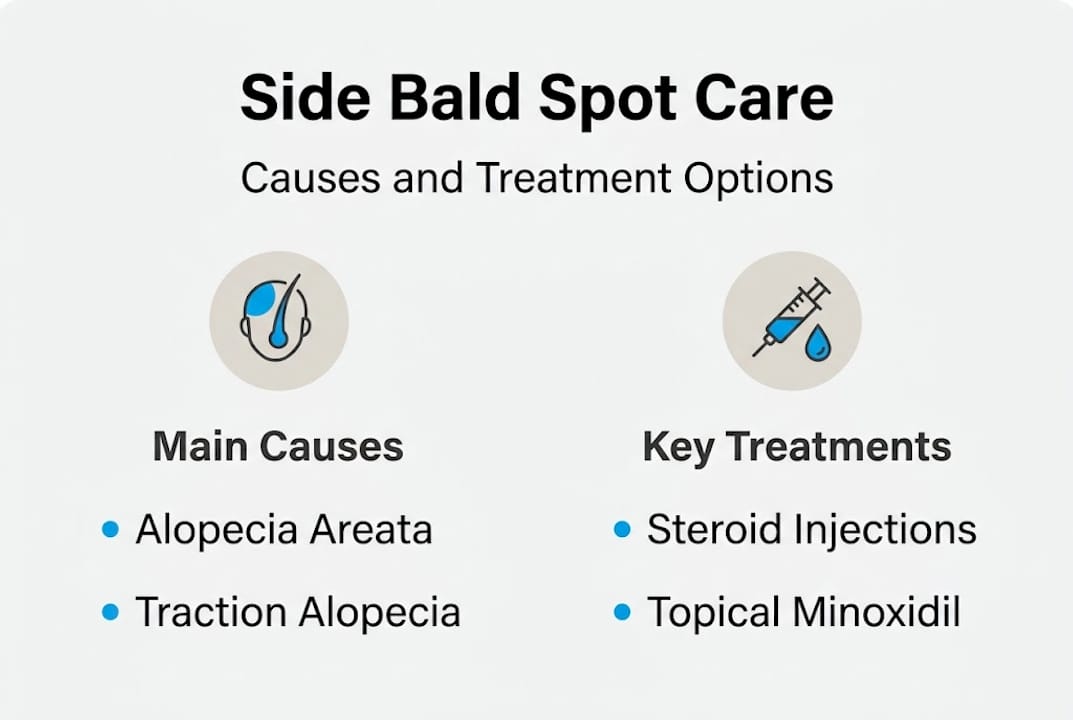
The psychological dimension here is real. Because IL steroids achieve regrowth at 42 to 90% at 12 weeks, many people are in a waiting period of weeks to months before they see results. Using cosmetic strategies during this window helps maintain confidence and reduces the distress that can come from daily focus on the bald spot.
For more specific guidance on everyday strategies, the covering bald spots tips resource is comprehensive and practical. If patches are a preference, hair patches solutions walks through selection and application. And if your bald spot is creeping toward the front, front hairline spot solutions adds targeted advice for that area.
Why personalized assessment—and not panic—is essential
We've explored both treatment and camouflage, but strategy matters as much as the tools themselves. Here's what we've seen repeatedly: people who panic when they notice a bald spot often cycle through half a dozen over-the-counter products before ever getting a proper diagnosis. That's months of wasted time, money, and emotional energy spent on interventions that were never matched to their actual condition.
The most important shift is moving from reactive to intentional. That means documenting your pattern, understanding your likely diagnosis, and then selecting a treatment protocol that matches the evidence. Most people skip the documentation step entirely, which means they have no baseline to measure progress against. Without a baseline, even effective treatment feels uncertain.
Personalized hair loss solutions work precisely because they account for individual variation. Two people with alopecia areata can have completely different timelines, severity levels, and responses to the same treatment. What works for a neighbor's hair loss may be the wrong choice entirely for yours.
The science is genuinely encouraging right now. JAK inhibitors, refined injection protocols, and AI-powered monitoring tools are giving people options that simply didn't exist a decade ago. Patience paired with the right data-driven approach is far more powerful than urgency paired with guesswork.
Get a personalized hair loss analysis today
If you're ready to bring science and data into your recovery journey, here's your path forward.
Trying to self-diagnose from online photos and general articles gets you only so far. What actually moves the needle is understanding your specific pattern, which is where AI-powered tools change the game entirely.
MyHair.ai's AI hair analysis lets you scan your scalp from home and receive a detailed, personalized assessment based on your actual images, not generic templates. The platform tracks changes over time, flags patterns worth discussing with a specialist, and matches you with products suited to your specific condition. You can get started with the MyHair app in minutes, and your personal hair score gives you a clear starting point so every future decision is grounded in data, not guesswork.
Frequently asked questions
What does a bald spot on the side of my head usually mean?
A bald spot on the side of your head is often caused by conditions like alopecia areata, traction alopecia, or less commonly, tinea capitis or temporal triangular alopecia, which has a TTA prevalence of 0.11% and frequently appears on just one side.
Can bald spots on the side of the head regrow hair?
Yes, many cases respond well to medical therapies, and over 75% of patients with alopecia areata achieve significant regrowth within 12 weeks with properly administered intralesional corticosteroids.
How long does it usually take for treatment to work?
Most evidence-supported treatments show visible regrowth in as little as 2.47 to 3.83 sessions, roughly corresponding to 12 weeks, for over 75% of patients receiving intralesional triamcinolone.
Should I use topical or injected treatments for a side bald spot?
Injected corticosteroids act faster and tend to produce higher regrowth rates than topical options, but the right choice depends on your specific diagnosis, so always consult a dermatologist before starting any treatment protocol.