
Figuring out why your hair is thinning can feel like solving a puzzle with missing pieces. You might notice more strands in the shower drain or a widening part, but pinpointing the exact cause remains frustratingly unclear. Traditional visual assessments often miss critical details about your scalp and follicle health that explain what's really happening. Tricho analysis changes this by using AI-powered imaging to reveal what's invisible to the naked eye, providing personalized insights that guide effective treatment. This guide explains what tricho analysis is, how it works, and how you can use it to achieve healthier, fuller hair.
Table of Contents
- What is tricho analysis and why it matters for hair health
- How AI enhances tricho analysis accuracy and personalization
- Comparing traditional hair analysis and tricho analysis methods
- How to use tricho analysis results to improve your hair care routine
- Discover AI-powered personalized hair solutions with MyHair
- FAQ
Key takeaways
| Point | Details |
|---|---|
| Precise imaging | Tricho analysis uses AI technology to capture detailed hair and scalp data beyond visual observation. |
| Early detection | It identifies miniaturized hairs and scalp conditions before they become visibly severe. |
| Personalized plans | Results enable customized treatment strategies tailored to your specific hair health profile. |
| Ongoing monitoring | Regular scans track progress and allow timely adjustments to your care routine. |
What is tricho analysis and why it matters for hair health
Tricho analysis is a diagnostic technique that examines hair density, thickness, follicle health, and scalp condition using specialized imaging technology. Unlike a quick glance in the mirror or a basic scalp check, this method captures high-resolution images that AI algorithms analyze to detect thinning areas, miniaturized hairs, and scalp irritations you can't see yourself. The technology measures precise metrics like hair count per square centimeter, follicle diameter variations, and scalp inflammation markers.
This level of detail matters because hair loss rarely announces itself with obvious symptoms until significant damage has occurred. By the time you notice visible thinning, you may have already lost 50% of hair density in that area. Tricho analysis catches problems at their earliest stages, when intervention is most effective and reversible. It reveals whether your hair loss stems from genetic factors, hormonal imbalances, nutritional deficiencies, or scalp conditions that require different treatment approaches.
Understanding your precise hair and scalp data transforms guesswork into strategy. Instead of trying random products and hoping for results, you get a clear picture of what's actually happening beneath the surface. This diagnostic precision helps dermatologists and hair specialists create treatment plans that address your specific issues rather than applying generic solutions. The data also establishes a baseline for measuring progress, so you know whether your chosen treatments are working or need adjustment.
Pro Tip: Schedule your first tricho analysis at the earliest sign of hair changes, even if thinning seems minor. Early intervention prevents irreversible follicle miniaturization that becomes much harder to treat once established.
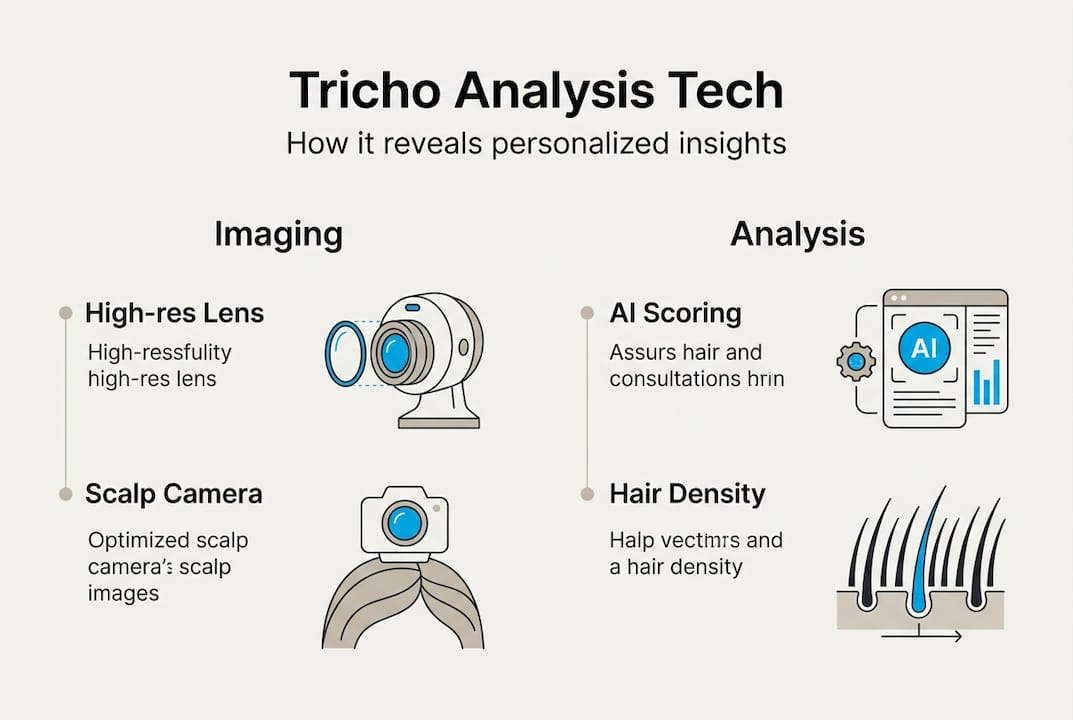
The technology behind tricho analysis combines optical imaging with computational analysis. Specialized cameras capture your scalp from multiple angles under controlled lighting conditions. Software then processes these images to count individual hairs, measure their thickness, assess growth phases, and evaluate scalp health indicators. This automated approach eliminates human error and subjective interpretation that plague traditional visual assessments.
How AI enhances tricho analysis accuracy and personalization
Artificial intelligence transforms tricho analysis from simple imaging into a sophisticated diagnostic tool. AI systems process thousands of hair images to compute accurate hair density scores, scalp health metrics, and follicle vitality indicators that would take humans hours to calculate manually. These algorithms can detect patterns and correlations that even experienced specialists might miss, identifying subtle changes that signal emerging problems.
The AI creates a comprehensive hair health profile by scoring multiple parameters simultaneously. It evaluates hair density distribution across your scalp, identifying specific zones of concern. It measures scalp redness levels that indicate inflammation, assesses oiliness that might suggest seborrheic conditions, and tracks follicle miniaturization patterns that reveal androgenetic alopecia progression. Each metric contributes to an overall assessment that guides treatment selection.
Personalization happens when the AI matches your analysis results with treatment protocols proven effective for similar profiles. The system learns from thousands of cases, understanding which interventions work best for specific combinations of hair loss patterns, scalp conditions, and demographic factors. This data-driven approach replaces trial and error with targeted recommendations backed by statistical evidence.
Traditional vs AI-Enhanced Tricho Analysis
| Feature | Traditional Method | AI-Enhanced Analysis |
|---|---|---|
| Hair count accuracy | Estimated ranges | Precise counts per cm² |
| Analysis time | 15-30 minutes | 2-3 minutes |
| Scalp condition detail | Visual observation | Quantified inflammation, oil, health scores |
| Treatment matching | Experience-based | Data-driven personalization |
| Progress tracking | Subjective comparison | Objective metric changes |
The speed advantage of AI matters more than you might think. Faster analysis means you can get scans more frequently without consuming excessive appointment time. This enables better progress monitoring and quicker treatment adjustments when needed. The consistency of AI evaluation also means your results are comparable across different sessions and even different providers using the same technology.
Pro Tip: When choosing a hair clinic or platform, ask specifically about their AI capabilities. Systems using validated algorithms and large training datasets deliver more reliable diagnoses and better treatment outcomes than basic imaging alone.
AI-powered tricho analysis also excels at detecting early-stage changes that predict future hair loss. By identifying follicle miniaturization trends before visible thinning occurs, the technology enables preventive interventions. You can start treatment when it's most effective rather than waiting until damage becomes obvious and harder to reverse.
Comparing traditional hair analysis and tricho analysis methods
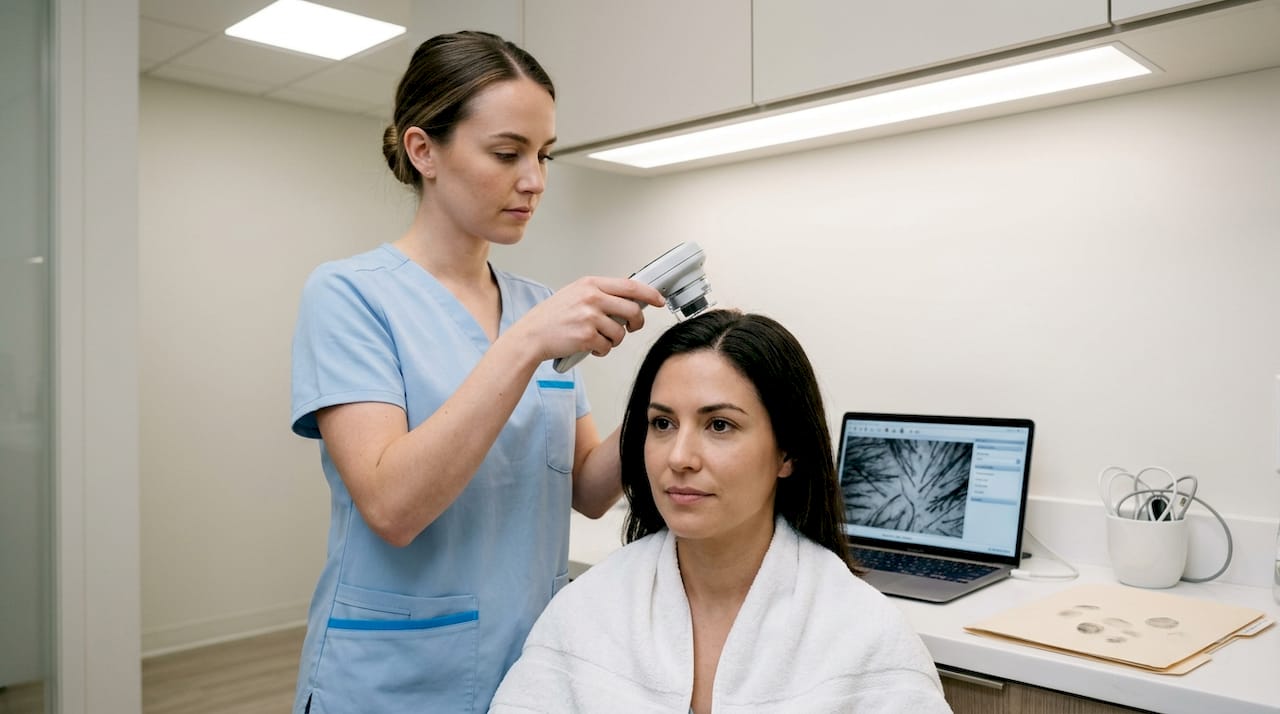
Traditional hair analysis typically relies on manual scalp examination and subjective observation by a practitioner. A specialist parts your hair in various locations, looks at your scalp under magnification, and estimates density and health based on visual cues and experience. While this approach can identify obvious problems, it misses subtle changes that signal emerging conditions or treatment effects.
Tricho analysis uses high-resolution imaging plus AI to quantify hair metrics objectively. Instead of estimates, you get exact hair counts, precise measurements of follicle diameters, and numerical scores for scalp health parameters. This quantification eliminates the variability that comes from different examiners or even the same examiner on different days. Your results are reproducible and comparable across time.
Traditional vs Tricho Analysis Comparison
| Criteria | Traditional Examination | AI Tricho Analysis |
|---|---|---|
| Detection detail | Visible thinning only | Microscopic follicle changes |
| Objectivity | Examiner-dependent | Standardized algorithms |
| Personalization | General recommendations | Data-matched treatment plans |
| Early diagnosis | Often delayed | Catches problems early |
| Documentation | Written notes, photos | Quantified metrics, trend graphs |
Traditional methods have several significant drawbacks:
- Inconsistency between different examiners leads to conflicting assessments
- Late diagnosis occurs because problems must be visually obvious before detection
- Limited baseline data makes tracking subtle changes over time difficult
- Subjective severity ratings complicate treatment decisions and progress evaluation
- Less tailored care results from applying standard protocols rather than personalized plans
Tricho analysis addresses these limitations by providing objective, quantified data that removes guesswork. The technology catches hair loss in its earliest stages, when follicles are just beginning to miniaturize but haven't yet produced visible thinning. This early intervention window is critical because once follicles shrink below a certain threshold, reversing the damage becomes extremely difficult or impossible.
The documentation capabilities of tricho analysis also matter significantly. You get detailed reports with numerical values, comparison charts, and visual heat maps showing density distribution. These records create a comprehensive history of your hair health that supports informed decision-making. When you switch providers or seek second opinions, you have concrete data rather than just verbal descriptions of your condition.
How to use tricho analysis results to improve your hair care routine
Your tricho analysis report contains specific metrics that translate directly into actionable care strategies. Understanding how to interpret each section empowers you to personalize your treatment approach for maximum effectiveness. The report typically includes hair count data, scalp health indicators, follicle vitality scores, and identified risk factors for continued hair loss.
Here's how to translate your analysis into practical steps:
- Review your hair density scores across different scalp zones to identify areas needing targeted treatment. Apply minoxidil or other topical therapies specifically to thinning regions rather than your entire scalp.
- Check scalp inflammation markers to determine if you need anti-inflammatory shampoos or treatments before addressing hair growth. Inflamed scalps don't respond well to growth stimulants until the underlying condition improves.
- Examine follicle miniaturization patterns to assess whether you need DHT-blocking treatments for androgenetic alopecia or different interventions for other hair loss types.
- Look at oil production scores to select appropriate cleansing frequency and product types. Oily scalps need different care than dry, flaky ones.
- Use the risk assessment to decide on preventive measures like nutritional supplements, stress management, or lifestyle modifications that address your specific vulnerabilities.
- Set a follow-up scan schedule based on your condition severity. Active hair loss requires monitoring every 3 months, while maintenance phases allow 6-month intervals.
Your report might reveal that your hair loss concentrates in the crown area with moderate follicle miniaturization and elevated scalp inflammation. This combination suggests starting with an anti-inflammatory treatment regimen for 4-6 weeks, then adding a DHT blocker like finasteride or natural alternatives, followed by minoxidil application specifically to the crown. This sequenced approach addresses root causes before stimulating growth.
Nutritional adjustments become more targeted when you understand your specific deficiencies. If your analysis indicates poor follicle vitality despite normal density, this might signal inadequate protein intake, iron deficiency, or insufficient biotin levels. Blood work combined with tricho analysis results guides precise supplementation rather than taking random vitamins.
Pro Tip: Schedule your follow-up tricho analysis exactly 12 weeks after starting new treatments. This timing allows enough growth cycles to show measurable changes while preventing wasted months on ineffective approaches.
Ongoing monitoring transforms your hair care from static to dynamic. As your scalp responds to treatment, your needs change. What worked initially might need adjustment as inflammation resolves or density improves. Regular scans catch these shifts early, allowing you to optimize your routine continuously rather than sticking with the same products indefinitely.
Discover AI-powered personalized hair solutions with MyHair
Taking control of your hair health starts with understanding what's really happening beneath the surface. MyHair offers an AI-powered tricho analysis platform that brings professional-grade diagnostics to your fingertips through advanced scanner technology and an intuitive app interface. Whether you're experiencing early thinning or managing ongoing hair loss, the platform provides the precise data you need to make informed treatment decisions.
Getting started is straightforward. The app onboarding process walks you through capturing proper scalp images using your smartphone, ensuring the AI receives quality data for accurate analysis. Within minutes, you receive a comprehensive report detailing your hair density, scalp health scores, and personalized treatment recommendations based on your unique profile. For clinics looking to integrate advanced tricho analysis into their practice, the professional onboarding program provides everything needed to deliver cutting-edge hair diagnostics to patients.
FAQ
What is tricho analysis and how does it help with hair loss?
Tricho analysis is a diagnostic technique that uses specialized imaging technology to evaluate hair density, follicle health, and scalp condition with precision that visual examination cannot achieve. It helps identify specific causes of hair loss like follicle miniaturization, scalp inflammation, or density reduction patterns that might be invisible during standard checks. This detailed assessment enables targeted treatment planning rather than generic approaches, and allows you to monitor whether your chosen therapies are actually working through objective measurements over time.
How often should I get a tricho analysis done?
The ideal frequency depends on your hair loss severity and treatment phase. If you're actively experiencing hair loss or just started new treatments, schedule scans every 3 months to track progress and catch problems early. This interval aligns with hair growth cycles, giving treatments enough time to show measurable effects. Once your condition stabilizes or you enter a maintenance phase, extending to 6-month intervals works well for ongoing monitoring without excessive testing.
Can tricho analysis detect scalp conditions besides hair loss?
Yes, tricho analysis reveals multiple scalp health issues that affect hair growth and overall comfort. The imaging captures inflammation markers indicating dermatitis or psoriasis, assesses oil production levels that might signal seborrheic conditions, and detects folliculitis or other infections affecting follicle function. Early detection of these conditions supports comprehensive treatment approaches that address both scalp health and hair growth simultaneously. The research behind the technology continues expanding its diagnostic capabilities for various dermatological concerns.
Is tricho analysis suitable for all hair types and ages?
Tricho analysis works effectively across all hair types, textures, curl patterns, and ages because it measures fundamental biological parameters rather than relying on visual standards. Whether you have fine straight hair, thick coarse strands, or tightly coiled textures, the AI algorithms quantify density, follicle diameter, and scalp health objectively. The personalized insights adapt recommendations to your specific characteristics, ensuring treatments match your unique needs rather than applying one-size-fits-all protocols that ignore individual variation.