
Dandruff affects around 50% of the population, and it can be more than just an aesthetic concern. Those white or grayish flakes falling onto your shoulders can cause embarrassment and discomfort in social situations. Surprisingly, the solutions are often simpler than people think, and understanding the root causes can lead to effective relief. Whether you’re dealing with dry scalp or oily flakes, breaking down the different types of dandruff and their treatments opens the door to lasting solutions.
Dandruff Basics and Common Causes
Dandruff is a common scalp condition affecting approximately 50% of the population and characterized by white or grayish flakes on the scalp and hair. These flakes often fall onto shoulders, causing embarrassment and discomfort for many sufferers. While dandruff isn't serious or contagious, understanding the different types of dandruff and treatment options can help manage this persistent condition effectively.
What Causes Dandruff?
Several factors contribute to the development of dandruff:
-
Malassezia Fungus: This naturally occurring yeast-like fungus lives on most adults' scalps. Studies show a direct correlation between Malassezia density on the scalp and dandruff severity. When overgrowth occurs, it can irritate the scalp and accelerate skin cell turnover.
-
Seborrheic Dermatitis: An inflammatory skin condition that causes oily, red, and scaly patches on the scalp. This is one of the most common types of dandruff and treatment often requires medicated solutions.
-
Dry Skin: Simple dry skin, especially during winter months, can cause flaking and itching. This type of dandruff typically produces smaller, non-oily flakes.
-
Product Sensitivity: Many people develop dandruff due to sensitivity to certain hair care ingredients. This contact dermatitis can trigger flaking and irritation as different types of hair dandruff.
-
Infrequent Shampooing: Not washing your hair regularly can lead to oil and skin cell buildup, creating an ideal environment for dandruff development.
According to research from CeraVe, additional factors that can influence dandruff include stress, seasonal changes, and underlying skin conditions like eczema or psoriasis. Understanding these causes is crucial for identifying the specific types of dandruff and treatment approaches that will work best for your situation.
Key Takeaways
| Takeaway | Explanation |
|---|---|
| Dandruff Affects Many People | Approximately 50% of the population experiences dandruff, making it a widespread issue. |
| Identify the Type for Effective Treatment | Different types of dandruff require specific approaches for effective treatment, such as medications and hair care routines. |
| Common Causes Involve Fungal Growth and Sensitivity | Factors such as the Malassezia fungus, seborrheic dermatitis, and product sensitivity are major contributors to dandruff. |
| Regular Shampooing is Key | Infrequent shampooing can exacerbate dandruff by allowing oil and skin cell buildup, so maintaining a regular washing schedule is essential. |
Identifying Different Dandruff Types
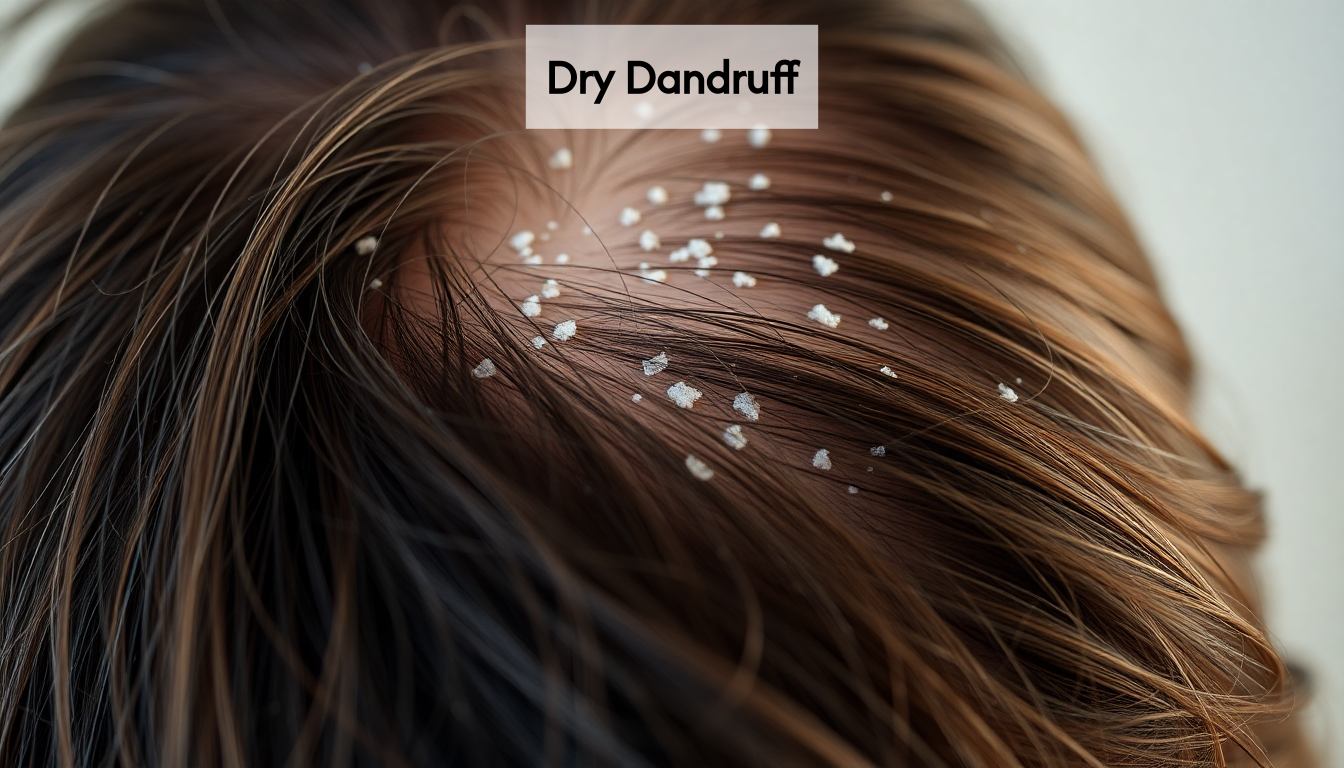
Understanding the different types of dandruff is crucial for effective treatment. Each type has distinct characteristics and requires specific approaches. Here's how to identify the main types of dandruff and treatment considerations for each:
Dry Skin Dandruff
This is one of the most common types of hair dandruff, especially during winter months.
Key characteristics:
- Small, white flakes that easily brush away
- Mild itching sensation
- Flakes appear dry rather than oily
- Often worsens in cold, low-humidity environments
- May be accompanied by dry skin elsewhere on the body
Dry skin dandruff typically results from a lack of moisture in the scalp, which can be caused by weather changes, dehydration, or using harsh shampoos that strip natural oils.
Oily Dandruff (Seborrheic Dermatitis)
This type of dandruff is related to excess oil production on the scalp.
Key characteristics:
- Larger, yellowish flakes that may stick to the scalp and hair
- Greasy or waxy appearance
- Flakes often cluster together
- Redness and significant itching
- Can appear on other oily areas of the body (face, chest, back)
According to Verb Products, oily dandruff occurs when your sebaceous glands produce excessive sebum, creating an ideal environment for Malassezia fungus to thrive.
Fungal Dandruff
Caused by an overgrowth of the Malassezia fungus that naturally lives on your scalp.
Key characteristics:
- Yellowish or white scales
- Persistent itching that can be intense
- Inflamed, red patches on the scalp
- Often resistant to regular shampoos
- Can spread to hairline and behind ears
Product-Induced Dandruff
This type develops as a reaction to hair care products.
Key characteristics:
- Flaking appears after using specific products
- May be accompanied by redness or burning
- Often localized to areas where product accumulates
- Improves when trigger products are discontinued
Many people wonder,
Frequently Asked Questions
What are the main causes of dandruff?
Dandruff can be caused by several factors, including the overgrowth of Malassezia fungus, seborrheic dermatitis, dry skin, sensitivity to hair care products, and infrequent shampooing. Other contributing factors can include stress and seasonal changes.
How can I identify the type of dandruff I have?
You can identify your dandruff type by observing the characteristics: dry skin dandruff presents small white flakes, oily dandruff shows larger yellowish flakes, fungal dandruff often has intense itching and inflammation, and product-induced dandruff appears after using specific hair products.
What treatments are effective for different types of dandruff?
Treatment varies by type: dry skin dandruff may improve with moisturizing shampoos, oily dandruff often requires medicated solutions like ketoconazole or salicylic acid, fungal dandruff might need antifungal treatments, and product-induced dandruff typically improves when avoiding the triggering products.
How often should I wash my hair to prevent dandruff?
To prevent dandruff, it's important to maintain a regular washing routine, ideally at least 2-3 times a week, depending on your hair type and scalp condition. Frequent washing helps reduce oil and skin cell buildup that can lead to dandruff.
Unlock Your Hair's Potential with Precision Solutions
If you're one of the 50% of people struggling with dandruff, you know the frustration of dealing with those pesky flakes—be it the dryness from winter air or excess oil disrupting your routine. Understanding the types of dandruff and their specific causes is only the first step on your journey to a healthier scalp. But what if you could get personalized insights tailored to your unique hair needs?
!
Take control NOW! At Myhair.ai, our AI-powered platform scans and analyzes your hair to uncover the root causes of issues like dandruff, hair loss, and more. Our innovative technology doesn’t just stop at diagnosis; we provide you with personalized product recommendations and the opportunity to consult with certified hair specialists who can guide you through effective treatments. Regain confidence and clarity in your hair care routine. Don’t wait—discover the unique solutions waiting for you today at Myhair.ai. Your journey to gorgeous, flake-free hair starts here!