
Most scalp problems fall into four buckets: scaly and inflammatory conditions like dandruff and psoriasis, infections and parasites like ringworm and lice, hair loss disorders ranging from pattern baldness to autoimmune alopecia, and contact reactions to dyes or styling products. The tell is usually in the combination of symptoms: itching plus greasy yellow flakes points one way, while sudden bald patches point another entirely. This guide breaks down each category by its hallmark signs, walks through what treats it, and flags when self-care needs to stop and a dermatologist visit needs to start.
TL;DR:
- Mild dandruff involves dry, white flakes with little redness, while seborrheic dermatitis presents greasy, yellowish scale with more inflammation.
- Infections like tinea capitis require oral antifungals, and lice nits are best treated with nit combs and repeated topical treatments.
- Patterned thinning from androgenetic alopecia can be managed with topical minoxidil, but scarring alopecias need urgent dermatologist intervention to prevent permanent hair loss.
- Contact dermatitis from hair products causes burning and swelling, and stopping the suspected product is essential; severe reactions need immediate medical care.
- Monitoring scalp changes with regular photos and professional consultation are key to effective treatment and preventing permanent damage.
Table of Contents
- What Are the Common Scalp Conditions? A Quick Reference
- Scaly and Inflammatory Conditions: Dandruff, Seborrheic Dermatitis, and Psoriasis
- Infections and Parasites: Ringworm, Lice, and Folliculitis
- Hair Loss Disorders: Reading the Pattern Before It's Permanent
- Contact and Allergic Reactions From Hair Products
- Getting a Diagnosis: What a Dermatologist Visit Actually Involves
- How to Treat Scalp Conditions Without Making Them Worse
- Tracking Scalp Changes Between Doctor Visits
- A Practical Sequence: From Self-Check to Specialist
- Track Your Scalp Alongside Whatever Your Dermatologist Recommends
- Sources
- FAQ
What Are the Common Scalp Conditions? A Quick Reference
Before diagnosing yourself off a symptom or two, it helps to see the full field. Clinical references group scalp disorders into a handful of recurring categories, and knowing the name of what you're dealing with makes every next decision easier, from which shampoo aisle to stand in to whether you need an appointment at all.
Here's the shortlist worth knowing, drawn from how DermNet NZ catalogs common follicular and scalp disease:
- Dandruff (pityriasis capitis): white, dry flakes with mild itching and no significant redness.
- Seborrheic dermatitis: dandruff's more inflamed cousin, with greasy yellowish scale, redness, and itching that often spreads to eyebrows or the sides of the nose.
- Scalp psoriasis: thick, silvery scaling plaques with well-defined borders, often extending past the hairline.
- Tinea capitis (ringworm): patchy scaling with broken hairs, common in children, usually contagious.
- Folliculitis: small pustules or bumps around hair follicles, often itchy or tender.
- Head lice: intense itching, visible nits stuck to hair shafts, and sometimes small red bite marks.
- Androgenetic alopecia: gradual, patterned thinning at the crown or temples with no scalp inflammation.
- Alopecia areata: sudden, smooth, coin-shaped bald patches with an otherwise normal-looking scalp.
- Traction or scarring alopecia: hair loss tied to tight hairstyles or chronic inflammation, sometimes with a shiny, follicle-free scalp.
- Contact or allergic dermatitis: redness, burning, and swelling that show up shortly after a new dye, shampoo, or styling product.
- Lichen planopilaris: an uncommon scarring condition causing redness around follicles and permanent hair loss if untreated.
Each of these has overlapping symptoms with at least one neighbor on the list, which is exactly why the next few sections separate them by what actually distinguishes one from another.
Scaly and Inflammatory Conditions: Dandruff, Seborrheic Dermatitis, and Psoriasis
The scale itself is often the biggest clue. Dry, white, powdery flakes with minimal redness usually mean garden variety dandruff. Greasy, yellowish scale clinging to reddened skin, especially near the hairline or eyebrows, points to seborrheic dermatitis. Thick, silvery, tightly adherent plaques with sharply defined edges suggest psoriasis, which can also show up on elbows, knees, or nails.
What causes each one:
- Dandruff and seborrheic dermatitis both involve Malassezia yeast interacting with skin oil, essentially the same underlying process at different severity levels.
- Psoriasis is an immune-driven condition where skin cells multiply far faster than normal, piling up into plaques.
- Stress, cold weather, and hormonal shifts can flare any of the three.
Dermatologists generally recommend a trial-and-error approach with over-the-counter medicated shampoos containing ketoconazole, zinc pyrithione, selenium sulfide, coal tar, or salicylic acid, used two to three times weekly and left on the scalp for five minutes before rinsing. If flaking, itching, or redness persists past four to six weeks of consistent use, that's the signal to see a dermatologist for a prescription-strength topical steroid or antifungal.
Pro Tip: Alternate between two different medicated shampoo actives (say, ketoconazole one wash, zinc pyrithione the next) rather than sticking to one. Malassezia yeast can adapt to a single active ingredient over months of steady use.
What many people casually call dandruff is, technically, a mild form of seborrheic dermatitis. The distinction matters less for labeling and more for expectations: this is a condition you manage rather than cure.
Infections and Parasites: Ringworm, Lice, and Folliculitis
Infectious scalp problems tend to announce themselves fast and often need more than a shampoo swap to clear.
- Tinea capitis (ringworm). Look for patchy scaling, broken hairs at the scalp surface, and sometimes a boggy, tender swelling called a kerion. This fungal infection almost always requires an oral antifungal prescribed by a doctor. Topical treatments alone rarely clear it because the fungus lives inside the hair shaft.
- Head lice. Live lice move quickly and are hard to spot, but nits, their tiny egg cases, cling firmly to hair shafts close to the scalp and don't brush off easily. CDC guidance recommends a fine-toothed nit comb on wet, conditioner-coated hair, combined with an over-the-counter pediculicide, repeated after seven to nine days to catch any newly hatched lice.
- Folliculitis. Small, itchy, sometimes tender pustules cluster around individual hair follicles, often after heavy sweating, tight hats, or shaving. Mild cases respond to an antibacterial or antifungal wash; deeper or spreading cases need oral antibiotics.
Hair Loss Disorders: Reading the Pattern Before It's Permanent
The shape of the loss tells you almost everything. Gradual, symmetrical thinning at the crown or temples over months or years is the signature of androgenetic alopecia, the hereditary form that affects both men and women. A sudden, smooth, round bald patch with no scaling or redness usually means alopecia areata, an autoimmune condition that attacks hair follicles directly. Constant pulling from tight braids, weaves, or ponytails causes traction alopecia, visible as thinning right along the hairline.
The pattern that deserves the most urgency is scarring. If the scalp in a bald area looks shiny and smooth, with no visible follicle openings at all, that's a red flag for lichen planopilaris or another scarring alopecia, where the follicle itself has been destroyed.
- Patterned, gradual thinning: androgenetic alopecia, generally the least urgent, treatable with topical minoxidil or oral finasteride.
- Sudden round patches, smooth skin: alopecia areata, sometimes resolves on its own but often needs corticosteroid injections.
- Hairline recession tied to hairstyle habits: traction alopecia, reversible early, permanent if ignored for years.
- Shiny, follicle-free patches with redness at the edges: scarring alopecia, needs a dermatologist fast.
Low-dose oral minoxidil requires medical supervision: it can cause fluid retention, a faster heart rate, and lowered blood pressure, so clinicians typically monitor blood pressure and ask about heart conditions before prescribing. It is not recommended during pregnancy or breastfeeding. Discuss these risks with a physician before starting.
Finasteride is FDA-indicated for men only. Women who are or may become pregnant must not handle crushed or broken finasteride tablets, due to the risk of harm to a male fetus. It can also cause sexual side effects (reduced libido, erectile dysfunction) in a minority of men, which usually resolve after stopping treatment. Discuss these risks with a physician before starting.
Pro Tip: Take a dated photo of any new bald patch the day you notice it. Scarring alopecias can destroy follicles permanently within months, and a documented timeline helps a dermatologist judge how fast it's progressing.
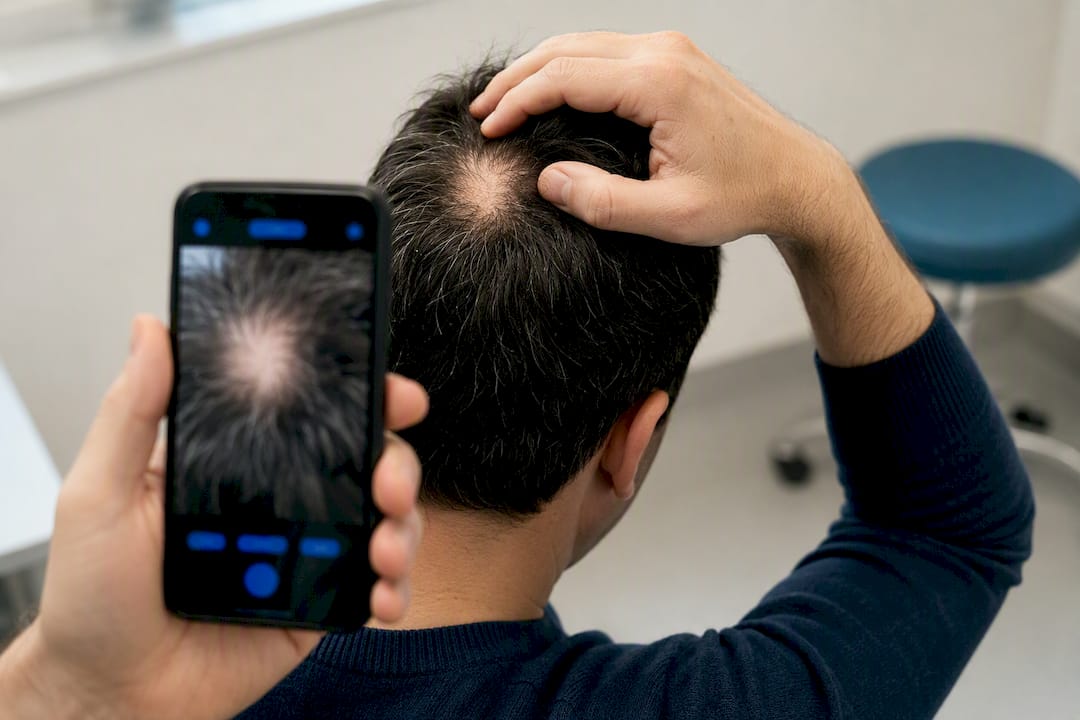
Non-scarring hair loss carries a reasonable chance of regrowth with the right treatment. Scarring hair loss does not; once a follicle is gone, DermNet NZ notes it isn't coming back, which is exactly why fast referral changes the outcome here more than almost anywhere else on this list.
Contact and Allergic Reactions From Hair Products
Hair dye, particularly ingredients like PPD (paraphenylenediamine), fragrance additives, and sulfates in some shampoos, are the most frequent triggers of scalp contact dermatitis. Reactions typically show up as burning, redness, and swelling within hours to a couple of days of applying a new product, sometimes with blistering at the hairline or behind the ears.
- Stop using the suspected product immediately and rinse thoroughly with cool water.
- A short course of over-the-counter hydrocortisone cream can calm mild redness and itching.
- Patch testing with a dermatologist identifies the specific allergen if reactions keep recurring with different products.
- Severe swelling, blistering, or symptoms lasting more than a week warrant a dermatology visit rather than more trial and error.
Getting a Diagnosis: What a Dermatologist Visit Actually Involves
Because so many scalp conditions share the same basic playbook of itching, redness, and flaking, diagnosis usually starts with a conversation, not a test.
- History first. Expect questions about how long symptoms have lasted, recent product changes, family history of hair loss, and any recent illness or stress.
- Exam beyond the scalp. Dermatologists often check behind the ears, eyebrows, and elbows, since psoriasis and seborrheic dermatitis frequently overlap and show telltale signs elsewhere on the body.
- Targeted testing. A KOH prep or fungal culture confirms tinea capitis; dermoscopy examines individual hair shafts and follicle openings; a scalp biopsy is reserved for suspected scarring alopecia where follicle destruction needs direct confirmation.
Bring photos tracking how the area has changed, a list of every product used in the past month, and a rough timeline. Seek care promptly if you notice pain, pus, fever, rapidly spreading patches, or any sign of scarring.
How to Treat Scalp Conditions Without Making Them Worse
Matching the active ingredient to the condition is where most self-treatment goes wrong. Ketoconazole and zinc pyrithione target the yeast behind dandruff and seborrheic dermatitis. Salicylic acid and coal tar help lift the thick plaques of psoriasis. Antifungal shampoos alone won't touch a true fungal infection like tinea capitis, which needs an oral prescription to work from the inside of the hair shaft outward.
- Use medicated shampoo consistently for four to six weeks before judging whether it's working.
- Switch to a fragrance-free, sulfate-free formula if you're managing sensitive or reactive skin alongside a scalp condition.
- Loosen tight hairstyles and rotate part lines to reduce traction on already-thinning areas.
- Avoid scratching inflamed areas; broken skin invites secondary bacterial or yeast infection that can mask the original problem entirely.
Pro Tip: If a medicated shampoo seems to stop working after a few months, it's often not resistance. It's usually a sign the underlying condition has shifted (dandruff sliding into seborrheic dermatitis, for instance) and needs a different active ingredient.
Most of these conditions are chronic rather than curable. Dermatologists tend to frame success as control and long-term management, not a one-time fix, which changes how you should judge whether a treatment is "working."
Tracking Scalp Changes Between Doctor Visits
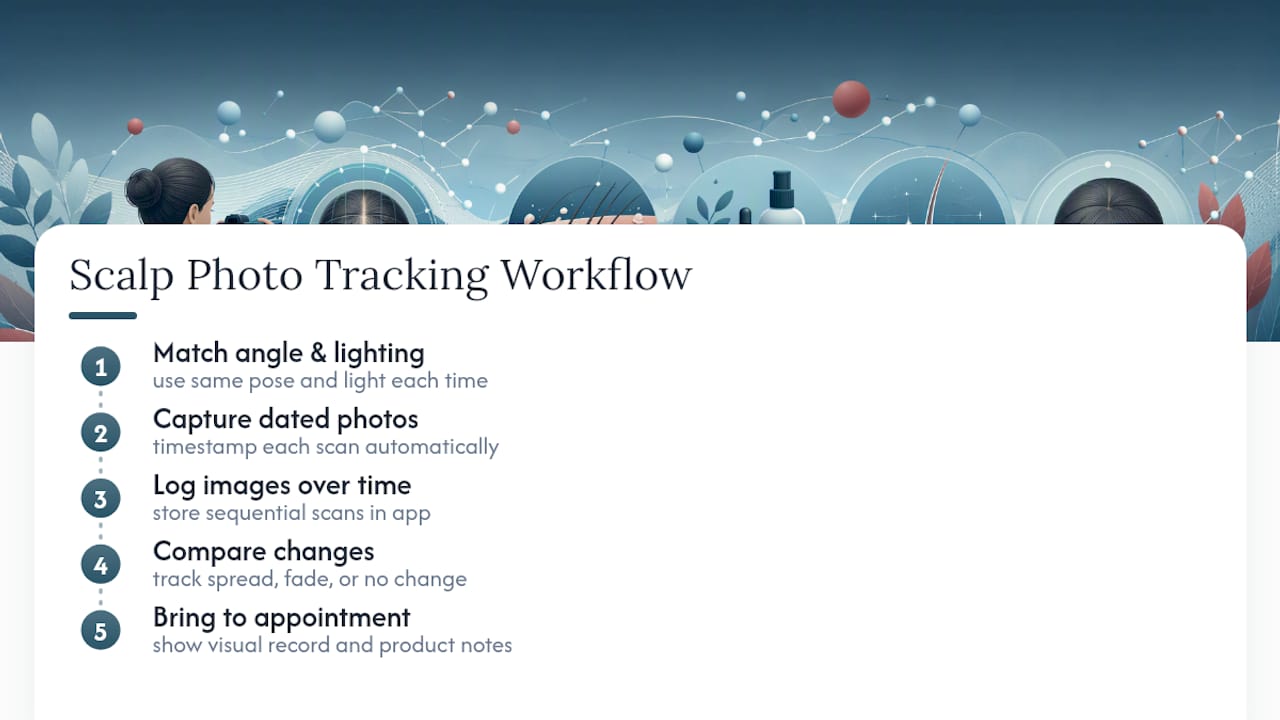
A scan-based tool can fill a real gap here: consistent, dated photos of the same angle and lighting, which most people forget to take on their own. A scan-and-track feature can log those images over time, so you walk into a dermatology appointment with an actual visual record of how a patch has spread, faded, or stayed put, plus product suggestions to discuss alongside whatever your clinician prescribes. Explore the Myhair behind the approach for more detail.
A Practical Sequence: From Self-Check to Specialist
Start with a weekly photo self-check in the same lighting. Give an OTC medicated shampoo a genuine four-to-six-week trial before switching. Book a dermatologist the moment you see scarring, rapid spread, or no improvement, and bring your tracked photos with you.
— Cyriac
Track Your Scalp Alongside Whatever Your Dermatologist Recommends
Buying another medicated shampoo off a drugstore shelf and hoping it's the right match is how most people waste six weeks on the wrong treatment. Some AI-driven tools promise a faster feedback loop: scan your scalp, get a read on what's changing, and get product suggestions built around your scan results rather than a guess in the shampoo aisle.

This isn't a diagnosis tool and it won't replace a dermatologist for anything that looks like scarring, infection, or sudden patchy loss. What it does well is the in-between work: tracking whether last month's regimen actually calmed the redness, and giving you a dated visual record to bring to an appointment instead of a vague memory of "it's been getting worse." Myhair offers a free plan to start scanning right away, with monthly subscription access at $9.99 per month for ongoing tracking, plus a clinic directory if your scan results point toward needing an in-person specialist. Start with a scan today and see what your scalp's actual pattern looks like over the next month.
Sources
- Seborrheic dermatitis - Symptoms and causes - Mayo Clinic
- Head lice - CDC
- SCALP SKIN CONDITIONS & DISORDERS - ISHRS
- Follicular disorders - DermNet NZ
This article is general information, not a substitute for advice from a qualified doctor. Consult a qualified healthcare professional about your own circumstances before acting on anything here.
FAQ
What Is the Most Common Scalp Disorder?
Dandruff and its more inflamed relative, seborrheic dermatitis, are the most frequently reported scalp conditions, affecting people of nearly every age. Both involve the same Malassezia yeast process at different severity levels, which is why treatment often starts with the same medicated shampoos before escalating.
How Can I Tell Psoriasis Apart From Seborrheic Dermatitis?
Psoriasis produces thick, silvery, well-defined plaques, while seborrheic dermatitis shows greasier, yellowish scale with less sharply bordered redness. Checking secondary sites like the elbows, knees, and behind the ears helps, since overlap between the two conditions is common and can change which treatment works.
When Should I See a Doctor for a Scalp Problem?
See a dermatologist if flaking or itching doesn't improve after four to six weeks of consistent medicated shampoo use, or immediately if you notice sudden bald patches, scarring, pain, pus, or fever. Rapid referral matters most for scarring alopecias, since follicle loss there can become permanent.
Can MyHair.ai Diagnose My Scalp Condition?
No. Myhair's scan tools track visible changes over time and offer product suggestions, but they don't replace a clinical diagnosis. Use the free plan to build a photo record you can bring to an actual dermatology appointment.
What Ingredients Should I Look for in a Medicated Shampoo?
Ketoconazole, zinc pyrithione, and selenium sulfide target the yeast behind dandruff and seborrheic dermatitis, while salicylic acid and coal tar help lift thicker psoriasis plaques. ISHRS guidance notes that severe or scarring conditions typically need prescription treatment instead of OTC options alone.