
Many people assume a bald spot at the hairline signals irreversible hair loss. That belief is misleading. With accurate diagnosis and timely action, various causes of hairline bald spots respond well to treatment. This guide walks you through causes, dispels myths, and introduces personalized assessments to help restore your hairline health effectively.
Table of Contents
- Introduction to bald spots at the hairline
- Understanding the causes of bald spots at the hairline
- Common misconceptions about bald spots at the hairline
- Comparative framework of hairline bald spot causes and treatments
- Role of technology and personalized assessment in hairline bald spots
- Lifestyle and environmental factors influencing hairline hair loss
- Taking action: personalized strategies to manage and improve hairline bald spots
- Discover personalized AI solutions for hairline bald spots
- Frequently asked questions about bald spots at the hairline
Key takeaways
| Point | Details |
|---|---|
| Hairline bald spots have diverse causes requiring tailored approaches | Androgenetic alopecia, traction alopecia, and temporary shedding each demand different treatments for success. |
| Not all hairline hair loss is permanent | Conditions like telogen effluvium and early-stage traction alopecia often reverse with proper intervention. |
| AI-powered tools enhance personalized diagnosis and monitoring | Digital platforms improve diagnostic accuracy up to 85% and enable continuous treatment tracking. |
| Treatment success depends on cause, method, and adherence | Results vary widely based on underlying factors and how consistently patients follow recommended plans. |
| Lifestyle and hairstyle modifications significantly impact hairline health | Avoiding mechanical stress, maintaining scalp hygiene, and balanced nutrition support follicle strength. |
Introduction to bald spots at the hairline
Bald spots at the hairline affect both men and women, though patterns differ markedly between sexes. Men typically see a receding hairline with sharp temple loss, while women experience more diffuse thinning across the frontal scalp. Early signs include localized thinning, miniaturized hairs that appear finer and shorter, or patchy areas where density decreases noticeably. Recognizing these symptoms quickly matters because timely intervention limits progression and improves treatment outcomes.
Up to 50% of men by age 50 experience androgenetic alopecia including hairline bald spots. Women also face significant hairline challenges, especially as hormonal changes occur with aging. Understanding evidence-based hair loss facts helps set realistic expectations and guides effective treatment choices.
Common initial symptoms to watch for include:
- Receding hairline edges with increasing forehead exposure
- Patchy thinning spots at temples or frontal hairline
- Miniaturized hairs that grow thinner and lighter over time
- Increased shedding during washing or brushing
- Visible scalp through hair at the hairline
Early identification enables you to pursue treatments before follicles shrink beyond recovery. Delaying action risks permanent loss as miniaturization advances.
Understanding the causes of bald spots at the hairline
Multiple biological and mechanical factors contribute to hairline bald spots. Identifying the specific cause shapes your treatment strategy and expected outcomes.
Androgenetic alopecia is the most common culprit. This hereditary condition involves follicle miniaturization influenced by genetics and androgen receptor variants. Hair follicles gradually shrink, producing thinner strands until they stop growing altogether. Men typically develop a receding M-shaped hairline, while female pattern hair loss causes diffuse thinning often less defined than typical male patterns.
Mechanical stress from tight hairstyles causes traction alopecia. Hairstyles like tight ponytails, braids, or extensions pull hair follicles repeatedly, leading to inflammation and eventual hair loss. Traction alopecia from tight hairstyles significantly contributes to hairline bald spots, especially in African American women who frequently wear protective styles. Catching this early and modifying hairstyles can reverse damage before scarring occurs.
Stress and telogen effluvium trigger temporary shedding. Severe physical or emotional stress pushes hair follicles prematurely into a resting phase, causing widespread shedding months later. Unlike permanent loss, this condition usually resolves once the stressor diminishes. Understanding genetic causes of hairline bald spots versus temporary triggers helps you choose appropriate interventions.
Key causes to distinguish:
- Androgenetic alopecia: genetic, progressive, follicle shrinking
- Traction alopecia: mechanical stress, reversible if caught early
- Telogen effluvium: stress-induced, temporary, resolves naturally
- Hormonal changes: thyroid issues, pregnancy, menopause affecting hair cycles
Pro Tip: Take clear photos of your hairline monthly to track changes objectively. Visual documentation helps identify patterns and measure treatment effectiveness over time.
Exploring effective hairline bald spot treatments tailored to your specific cause maximizes recovery potential.
Common misconceptions about bald spots at the hairline
Widespread myths about hairline bald spots lead to poor treatment decisions and unnecessary anxiety. Clarifying these misunderstandings helps set realistic expectations.
One major misconception is that all hairline bald spots indicate permanent hair loss. Many conditions, especially telogen effluvium-induced hair loss, are temporary and resolve within 6 months if the stressor is removed. Traction alopecia caught early also reverses when mechanical stress stops. Assuming permanence may cause people to skip effective early interventions.
Another myth suggests one treatment works universally for all hairline bald spots. Different causes require different approaches. Minoxidil helps androgenetic alopecia but does little for traction alopecia, where hairstyle changes matter most. Understanding treatment effectiveness explained based on cause prevents wasted time and money.
Many believe hairline bald spots only affect men. Women experience hairline loss too, often with different patterns than men. Female pattern hair loss presents as diffuse thinning rather than sharp recession. Ignoring this gender difference delays appropriate diagnosis and treatment for women.
Stress is often blamed for permanent bald spots. While stress triggers temporary shedding, it rarely causes permanent loss unless combined with other factors. Learning stress-related hair loss facts helps separate temporary conditions from chronic ones.
Common myths debunked:
- Myth: All hairline bald spots are permanent. Fact: Many are reversible with timely intervention.
- Myth: One treatment fits all causes. Fact: Treatments must match the underlying cause for effectiveness.
- Myth: Only men get hairline bald spots. Fact: Women experience hairline loss with distinct patterns.
- Myth: Stress causes permanent hairline damage. Fact: Stress-induced shedding usually reverses after six months.
"Understanding the difference between temporary shedding and permanent follicle miniaturization is essential for choosing the right treatment path and avoiding unnecessary panic."
Clearing these misconceptions empowers you to make informed decisions and pursue treatments that genuinely address your specific hairline concerns.
Comparative framework of hairline bald spot causes and treatments
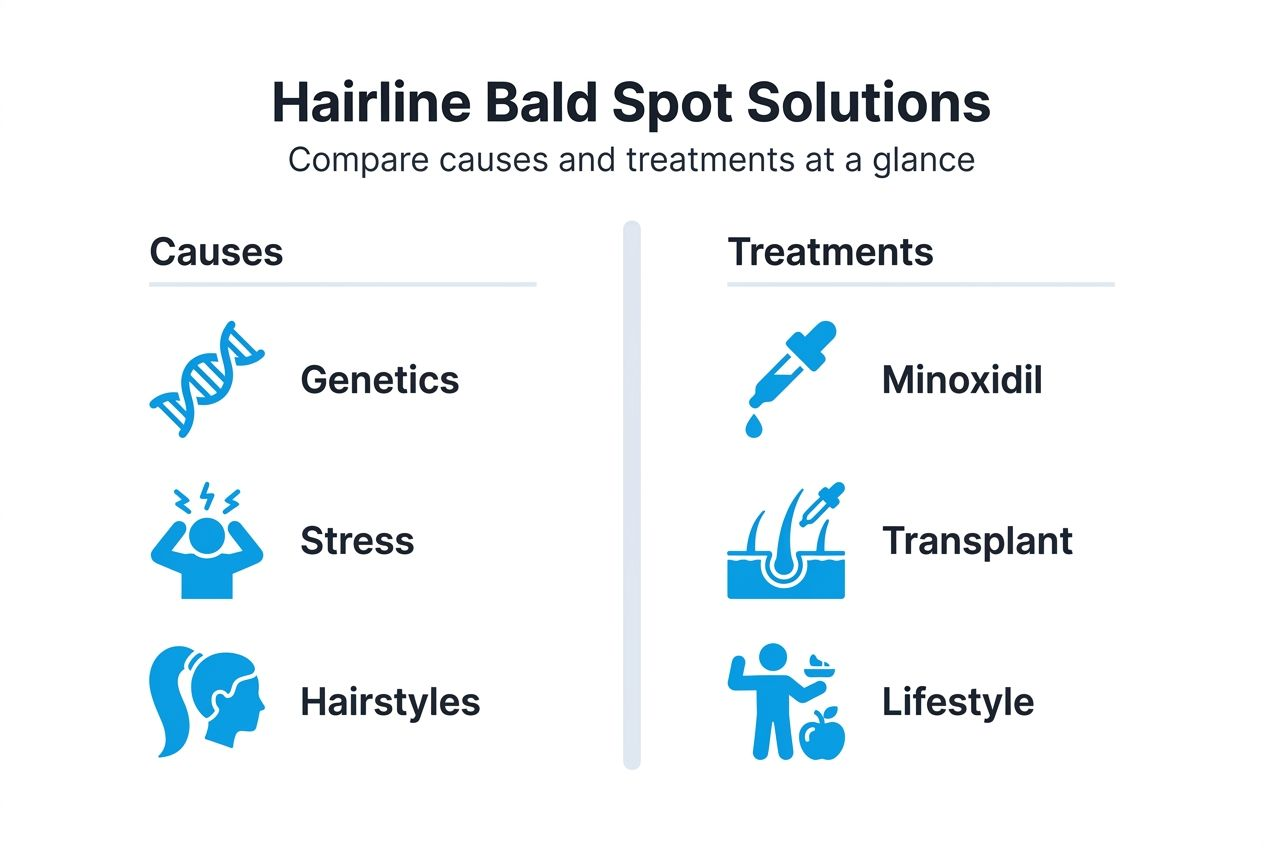
Different hair loss types demand distinct treatment approaches with varying success rates and timelines. This comparison clarifies what works for each cause.
| Cause | Primary Treatment | Effectiveness | Timeline | Invasiveness |
|---|---|---|---|---|
| Androgenetic alopecia | Minoxidil, finasteride | Moderate (60-70% see improvement) | 6-12 months | Low (topical/oral) |
| Traction alopecia | Hairstyle modification | High if caught early (80-90% reversal) | 3-6 months | None |
| Telogen effluvium | Stress management, nutrition | High (resolves naturally) | 3-6 months | None |
| Advanced androgenetic alopecia | Hair transplant | Very high (90%+ success rate) | 12-18 months for full results | High (surgical) |
Minoxidil is FDA-approved and non-invasive, applied topically to stimulate follicles. It works moderately well for androgenetic alopecia, with 60-70% of users seeing some improvement. Results take at least six months to become visible, and stopping use causes hair loss to resume.
Hair transplant surgery offers a permanent solution. Hair transplant surgery has success rates above 90% for restoring hairline bald spots. Surgeons relocate healthy follicles from donor areas to bald regions. The procedure is costly, invasive, and requires 12-18 months for full results, but provides lasting restoration.
Lifestyle changes and managing mechanical factors can reverse early-stage loss. For traction alopecia, simply loosening hairstyles and reducing tension yields 80-90% recovery if intervention happens before scarring. Nutritional support and stress reduction aid recovery from telogen effluvium.
Expected timelines vary widely by treatment and cause. Temporary conditions like telogen effluvium resolve naturally within six months. Topical treatments need 6-12 months to show results. Surgical options require over a year for full growth.
Key considerations:
- Match treatment to cause for best results
- Early intervention improves outcomes significantly
- Permanent solutions cost more and involve surgery
- Lifestyle modifications offer low-cost, effective options for certain causes
Pro Tip: Combine treatments for synergistic effects. Using minoxidil alongside lifestyle changes and stress management often produces better results than single approaches.
Comparing hair loss treatments side by side helps you choose based on your priorities: cost, invasiveness, timeline, and permanence.
Role of technology and personalized assessment in hairline bald spots
AI and digital tools transform how hairline bald spots are diagnosed, monitored, and treated. These innovations improve accuracy and enable personalized care.
AI algorithms provide precise measurements of hair density and follicle health. AI hair analysis platforms improve diagnostic accuracy up to 85% compared to traditional visual assessments. By analyzing high-resolution images, AI detects subtle changes invisible to the naked eye, enabling early intervention before visible thinning occurs.
Digital tools reduce misdiagnosis and enable early intervention. Traditional assessments rely on subjective visual inspection, which misses early-stage loss. AI quantifies density, follicle diameter, and growth patterns objectively, ensuring accurate diagnosis and appropriate treatment selection.
Personalized recommendations improve treatment adherence and outcomes. AI platforms analyze individual hair loss patterns, genetic factors, and lifestyle inputs to suggest tailored treatment plans. Customization increases patient satisfaction and commitment, leading to better long-term results.
Continuous monitoring helps adjust therapies proactively. Regular scans track progress over weeks and months, revealing whether treatments work or need modification. Real-time feedback motivates patients and allows quick pivots if results stall.
Benefits of AI-powered hair assessment:
- Objective, quantified measurements replacing subjective visual inspection
- Early detection of follicle miniaturization before visible thinning
- Tailored treatment plans based on individual hair loss patterns
- Continuous progress tracking enabling proactive therapy adjustments
- Reduced consultation costs and improved accessibility
Exploring AI-powered hair analysis tools empowers you to take control of your hairline health from home. Personalized AI hair care adapts recommendations as your hair changes. Starting with hair health assessment onboarding sets you up for continuous monitoring and optimized outcomes. Understanding AI hair growth therapy clarifies how technology enhances treatment effectiveness.
Leveraging AI in hair loss diagnosis ensures you receive the most accurate, personalized care available in 2026.
Lifestyle and environmental factors influencing hairline hair loss
Modifiable risk factors play a significant role in hairline hair health. Adjusting daily habits can improve or worsen bald spots.
Poor scalp hygiene and inflammation worsen hair loss. Buildup of oils, dead skin, and product residue clogs follicles and triggers inflammation. Regular gentle cleansing removes debris and maintains a healthy scalp environment for hair growth.

Tight hairstyles cause mechanical stress leading to traction alopecia. Pulling hair tightly damages follicles over time, especially at the hairline where tension concentrates. Loosening styles and varying part lines reduces mechanical strain and allows follicles to recover.
Balanced nutrition supports healthy hair follicles and growth. Deficiencies in iron, protein, biotin, and vitamins disrupt hair cycles and weaken strands. Ensuring adequate intake of these nutrients provides follicles with building blocks for robust growth.
Stress management aids recovery from temporary shedding. Chronic stress prolongs telogen effluvium and delays recovery. Practices like meditation, exercise, and adequate sleep reduce cortisol levels and support normal hair cycles.
Actionable lifestyle changes:
- Wash hair regularly with gentle, sulfate-free shampoos
- Avoid tight ponytails, braids, or buns that pull at the hairline
- Eat a balanced diet rich in protein, iron, and vitamins
- Manage stress through relaxation techniques and regular exercise
- Protect hair from excessive heat and chemical treatments
Pro Tip: Rotate hairstyles weekly to distribute mechanical stress evenly across your scalp. This simple habit prevents concentrated tension at the hairline and reduces traction alopecia risk.
Adopting personalized hair care habits tailored to your specific needs maximizes follicle health and complements medical treatments.
Taking action: personalized strategies to manage and improve hairline bald spots
Applying knowledge practically requires clear, actionable steps. This framework guides you from assessment to ongoing maintenance.
-
Use AI or professional evaluations to assess hair loss cause and severity. Start with a digital scan to quantify hair density and follicle health. If patterns suggest genetic or medical causes, consult a dermatologist or trichologist for confirmation. Accurate diagnosis directs all subsequent decisions.
-
Choose treatment aligned with diagnosis. For androgenetic alopecia, consider minoxidil or finasteride. If traction alopecia is the cause, modify hairstyles immediately. Temporary shedding from stress needs no medical intervention but benefits from stress reduction and nutritional support.
-
Modify hairstyles and habits to reduce mechanical stress. Loosen tight styles, vary part lines, and avoid excessive heat or chemical treatments. These changes protect follicles and prevent further damage.
-
Monitor progress regularly and adjust approach as needed. Take monthly photos and use AI tools to track density changes objectively. If improvement stalls after six months, consult a specialist to refine your treatment plan.
-
Maintain realistic expectations and consult specialists early. Most treatments require months to show results. Early consultation prevents irreversible follicle miniaturization and maximizes recovery potential.
Using personalized AI hair monitoring simplifies progress tracking and ensures you catch issues early. Reviewing evidence-based hairline treatments helps you choose options backed by research and clinical success.
Discover personalized AI solutions for hairline bald spots
You now understand hairline bald spot causes, myths, and treatments. Turning knowledge into action requires the right tools and support.
Leverage cutting-edge AI technology for precise hairline assessment at home. MyHair.ai's AI-powered hair analysis tool quantifies density and follicle health with clinical-grade accuracy. Access tailored treatment plans based on your unique hair loss pattern, ensuring recommendations match your specific needs.
Track your progress and adapt strategies with easy-to-use digital tools. Continuous monitoring reveals what works and when adjustments are needed. Join thousands improving their hairline health with expert-backed solutions that combine medical science and personalized care.
Start your journey today by exploring effective hairline bald spot treatments and completing hair health app onboarding to receive a personalized assessment and plan tailored to your goals.
Frequently asked questions about bald spots at the hairline
What early signs indicate a bald spot at the hairline?
Look for receding hairline edges, localized thinning, or spots with miniaturized hairs that appear finer and shorter. Increased shedding during washing or visible scalp through hair also signal early-stage loss. Early detection improves treatment success significantly.
Can stress-related hairline hair loss regrow completely?
Yes, telogen effluvium from stress usually reverses within six months once stress is reduced. Hair follicles exit the resting phase and resume normal growth cycles. Maintaining scalp health and balanced nutrition supports regrowth during recovery.
How soon should I seek professional assessment for a hairline bald spot?
Early consultation, ideally at first noticing thinning or bald spots, maximizes outcomes. Delays risk irreversible follicle miniaturization, especially with androgenetic alopecia. Prompt diagnosis enables timely intervention before damage becomes permanent.
Are hair transplants the only permanent solution for hairline bald spots?
Hair transplants offer a permanent fix, but early-stage hair loss may respond to medical treatments like minoxidil or finasteride. Lifestyle changes also play a key role in reversing traction alopecia and preventing further loss. Surgery is best for advanced cases unresponsive to other therapies.
What lifestyle habits most impact hairline health?
Avoid tight hairstyles that pull at the hairline, maintain scalp hygiene with gentle cleansing, ensure balanced nutrition with adequate protein and vitamins, and manage stress effectively through relaxation techniques. These habits support hair follicle strength and reduce mechanical damage.