
Losing 50 to 100 hairs a day is normal, so if you're finding strands on your pillow, that alone isn't a crisis. Start with three moves: switch to a gentle wash and condition routine, cut back on tight hairstyles and heat tools, and get iron and vitamin D checked before you spend money on supplements. Shedding above that daily range, especially in clumps or with visible thinning, is when it's worth paying closer attention.
- Wash and condition gently. Skip harsh sulfates and scalp scrubbing.
- Ditch tight ponytails, buns, and braids for a few weeks.
- Cut heat styling to once or twice a week, max.
- Detangle wet hair with a wide-tooth comb, not a brush.
- Get a night of real sleep and manage stress where you can.
- Ask a clinician for a ferritin, vitamin D, and B12 panel before supplementing.
- See a dermatologist if shedding is sudden, patchy, or paired with scalp pain.
Quick fact: 50 to 100 hairs shed daily is the normal range; telogen effluvium involves shedding well beyond that, often tied to stress, illness, or hormonal shifts.
Key Takeaways
Reducing hair shedding works best when gentle daily habits, targeted nutrient testing, and consistent tracking are combined rather than treated as separate fixes.
| Point | Details |
|---|---|
| Know your baseline | Fifty to 100 hairs shed daily is normal; well beyond that suggests telogen effluvium or another cause. |
| Fix the routine first | Gentle washing, low heat, loose styles, and dry detangling cut avoidable breakage fast. |
| Test before supplementing | Check ferritin, vitamin D, and B12 with a clinician; excess supplementation can backfire. |
| Give it real time | Stress-related shedding often resolves in six to nine months with consistent care. |
| Track instead of guess | MyHair.ai's scanner standardizes photo tracking and flags trends between dermatologist visits. |
This article is general information, not a substitute for advice from a qualified doctor. Consult a qualified healthcare professional about your own circumstances before acting on anything here.
Table of Contents
- Daily and Weekly Habits That Cut Down Hair Shedding
- What's Behind the Extra Shedding: Medical and Nutritional Causes
- Evidence-Backed Options: From Minoxidil to Herbal Extracts
- A 4 to 12 Week Plan to Track What's Working
- When Shedding Needs a Doctor, Not Just a New Shampoo
- Sources
- FAQ
Daily and Weekly Habits That Cut Down Hair Shedding
Most people over-wash, over-heat, or over-tighten their hair without realizing any of it accelerates shedding. Fixing the routine is the fastest lever you have.
1. Wash smarter, not less. Washing every two to three days with a sulfate-free shampoo removes buildup without stripping the scalp barrier. Apply shampoo to the scalp only, let the lather rinse down through the strands, and apply conditioner from mid-shaft to ends to avoid weighing down roots.
2. Detangle before shedding starts, not after. Wet hair stretches and snaps more easily, so detangle gently with a wide-tooth comb starting at the ends and working up. Save brushing for dry hair, and never rip through knots.
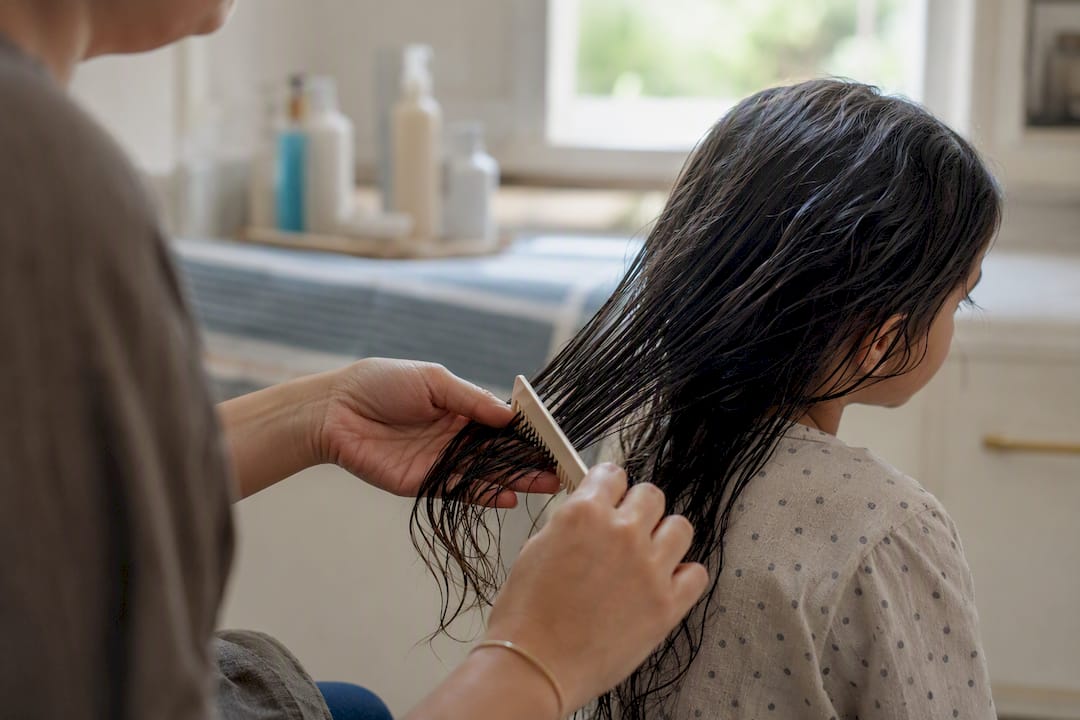
3. Set limits on heat and chemical processing. Blow-dryers, flat irons, and curling wands above 350°F weaken the hair shaft over time. Cap hot-tool use to once or twice weekly, always with a heat protectant, and space out coloring or relaxing treatments by at least six to eight weeks.
4. Treat the scalp like skin, because it is skin. A pH-balanced shampoo, occasional exfoliation, and addressing dandruff or irritation early all reduce inflammation that can interfere with the hair cycle. Scalp massage may modestly boost local blood flow, and while the evidence is limited, it's low-risk enough to work into a nightly routine.
5. Fix the basics: sleep, water, smoking, alcohol. Poor sleep and dehydration show up in hair health before almost anywhere else. Cutting cigarettes and moderating alcohol intake supports circulation, which matters for a follicle that depends on blood supply to function.
Pro Tip: Switch your pillowcase to silk or satin. Cotton grips strands overnight and can cause friction breakage you'll mistake for shedding.
What's Behind the Extra Shedding: Medical and Nutritional Causes
Telogen effluvium is the most common reason people suddenly notice more hair in the shower drain. It happens when a stressor, such as illness, surgery, extreme dieting, or childbirth, pushes a larger-than-usual share of follicles into the resting phase at once, and the shed shows up two to three months later. It's diffuse, affecting the whole scalp rather than one patch, and it typically resolves without treatment.
Androgenetic alopecia is a different animal. Instead of a sudden spike, it's a gradual thinning, usually at the crown or hairline, that progresses over years and needs a different management approach entirely.
Nutrition matters more than most people expect. Iron, vitamin D, and B vitamins are among the most common nutritional contributors to hair loss, and a basic panel, ferritin, vitamin D, B12, and folate, gives a clinician real data to work with. Skip the impulse to self-supplement.
- Iron deficiency, even without full-blown anemia, correlates with shedding.
- Low vitamin D has been tied to hair cycle disruption.
- Over-supplementing certain vitamins, vitamin A in particular, can actually worsen hair loss.
- Thyroid disorders, both hypo and hyper, are frequent, testable culprits.
- Certain medications, including some blood thinners, antidepressants, and retinoids, list shedding as a side effect worth discussing with a prescriber.
Fact worth remembering: normal shedding tops out around 100 hairs a day. Anything routinely well past that, especially alongside fatigue, weight changes, or brittle nails, warrants bloodwork before you try another shampoo.
Evidence-Backed Options: From Minoxidil to Herbal Extracts
Minoxidil remains the most reliably studied over-the-counter option for pattern-related shedding. Applied to the scalp twice daily, it typically needs three to four months of consistent use before you see a difference, and results only hold as long as you keep using it. Common side effects include scalp irritation and, in some cases, temporary shedding increase during the first few weeks as the hair cycle resets, which trips people up because it looks like the opposite of progress. A step-by-step guide to applying minoxidil for a receding hairline covers technique and what to expect week by week.
Herbal and topical alternatives get a lot of attention, and some of it is earned. Systematic reviews and several randomized trials report promising results for rosemary oil, pumpkin seed oil, and green tea polyphenols, though trial sizes tend to be small and endpoints vary from study to study.
Rosemary oil and pumpkin seed oil have shown measurable improvements in hair count in limited trials, but minoxidil and finasteride still carry the strongest clinical backing for androgenetic alopecia. The natural options are a reasonable adjunct, not a replacement.
Finasteride is FDA-indicated for men only. Women who are or may become pregnant must not handle crushed or broken finasteride tablets, due to the risk of harm to a male fetus. It can also cause sexual side effects (reduced libido, erectile dysfunction) in a minority of men, which usually resolve after stopping treatment. Discuss these risks with a physician before starting.
Pilot studies on compound formulas that pair minoxidil with plant-based anti-inflammatories suggest earlier reductions in shedding than minoxidil alone, though the research base is still thin. If you're curious about specific oils, a rundown of top hair growth oils breaks down application methods. Patch test anything new for 48 hours, and check with a clinician before mixing multiple actives.
A 4 to 12 Week Plan to Track What's Working
Days 1 to 7: Switch to a gentle shampoo, drop tight hairstyles, and start nightly scalp massage.
Weeks 2 to 6: Take baseline photos in consistent lighting, do a simple pull test weekly (tug gently on a small section; more than a few hairs releasing easily is worth noting), and review your diet for gaps. Book a clinician visit now if you're seeing red flags.
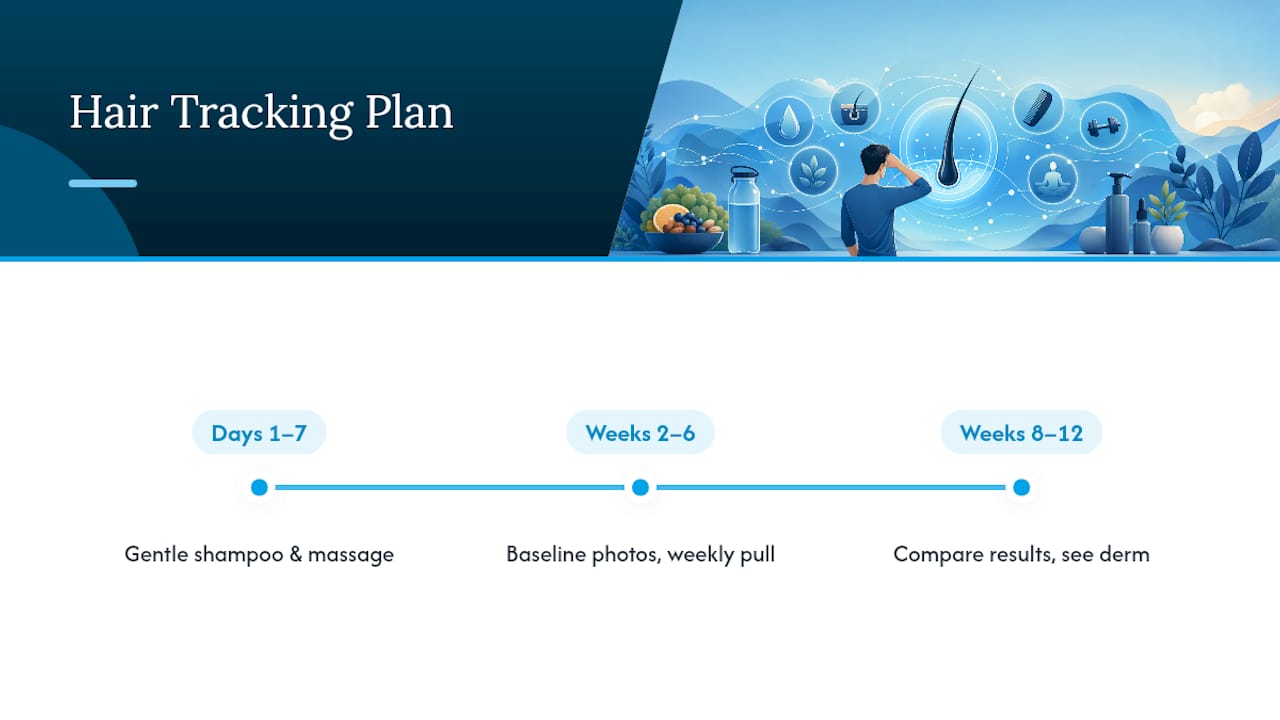
Weeks 8 to 12: Compare photos and pull-test results against your baseline. No improvement, or things getting worse, means it's time for a dermatologist and lab work.
Pro Tip: Photograph the same section of scalp under the same light every two weeks. Apps like MyHair.ai standardize this so you're comparing real change, not lighting differences. Recognizing early signs of improvement helps you know what to look for.
When Shedding Needs a Doctor, Not Just a New Shampoo
Patchy bald spots, scalp pain, redness, or scaling, and shedding that's sudden and widespread all justify moving up your timeline instead of waiting out the 12 weeks.
- Patchy hair loss can signal alopecia areata, an autoimmune condition that often responds to targeted treatment.
- Scalp pain, burning, or visible scaling needs evaluation, not styling changes.
- Systemic symptoms, fatigue, weight shifts, cold intolerance, point toward thyroid involvement.
A dermatologist's workup typically starts with your history, a pull test, and targeted bloodwork, ferritin, TSH, vitamin D, sometimes escalating to a scalp biopsy if the diagnosis isn't clear. Cleveland Clinic guidance emphasizes catching thinning early, since combining medical treatment with the daily habits above produces better outcomes than either alone. A dermatologist-led diagnostic guide walks through what a first visit usually covers.
Patience Pays, But Only If You're Measuring
Real recovery from stress-related shedding often takes several months to resolve, and without consistent photos or notes, that timeline feels endless and progress is easy to miss. Tracking data over months is what separates people who stick with a plan from people who quit at week four out of frustration.
Track Your Shedding Instead of Guessing at It
Guessing whether your hair is actually improving is the hardest part of this whole process, because change happens slowly and memory is unreliable. MyHair's AI scanner solves that by capturing standardized scalp and hair photos over time and scoring changes you'd otherwise miss between appointments.
You get a photo timeline that removes the guesswork of "is this actually different from last month," plus product suggestions matched to what your scans show, rather than generic advice pulled from a shampoo aisle. It's a tracking layer that sits alongside medical care, not instead of it. If your shedding is sudden, patchy, or comes with scalp symptoms, see a dermatologist first. For everyone else running the daily-habit plan above, Myhair and get your baseline scan done this week.
Sources
- American Academy of Dermatology: Shedding
- Healthline: How diet affects hair loss
- Herbal remedies for hair loss: A review of efficacy and safety - PMC
FAQ
What vitamin deficiency causes hair to fall out?
Low iron, vitamin D, and B vitamins like B12 and folate are the most commonly identified nutritional contributors, though testing before supplementing matters since excess vitamin A can worsen shedding.
Is losing a significantly higher number of hairs daily normal?
No. The normal range tops out around 100 hairs a day, so shedding well beyond that suggests telogen effluvium or another underlying cause worth evaluating.
Can hair grow back after heavy shedding?
Yes, in most cases. Telogen effluvium from stress or illness commonly resolves within six to nine months as follicles cycle back to normal growth, though persistent or patchy loss needs a clinician's evaluation.
How do I stop my hair from shedding so much?
Start with gentle washing, low heat styling, loose hairstyles, and a nutrient check for iron and vitamin D, then track changes over weeks using consistent photos, an app like MyHair.ai can standardize that comparison. See a dermatologist if shedding doesn't ease within a few months.