TL;DR:
- Weight loss causes reversible telogen effluvium by physiological stress and nutritional deficits affecting hair follicles. Proper nutrition, gradual weight loss, and targeted supplementation help prevent and address hair shedding, which typically recovers within six to nine months. Severe or persistent hair loss warrants professional evaluation to identify other underlying conditions beyond diet-related causes.
Weight loss and hair loss are directly connected through a physiological process called telogen effluvium, where metabolic stress and nutritional deficits force hair follicles into a premature resting phase. If you've noticed more hair in the shower drain two to four months after starting a diet, you're not imagining it. The shedding is real, it's common, and the good news is that it's almost always reversible. Understanding the biology behind this connection is the first step toward doing something about it.
What causes hair loss during and after weight loss?
Telogen effluvium is the clinical term for the diffuse hair shedding that follows a physical stressor. During rapid weight loss, the body interprets caloric restriction as a survival threat and redirects energy away from non-essential functions. Hair growth is one of the first processes to get deprioritized, pushing a large percentage of follicles from the active growth phase (anagen) into the resting phase (telogen). The result is diffuse shedding that typically becomes noticeable two to four months after the triggering event, not immediately. This delay is one of the most misunderstood aspects of the condition.

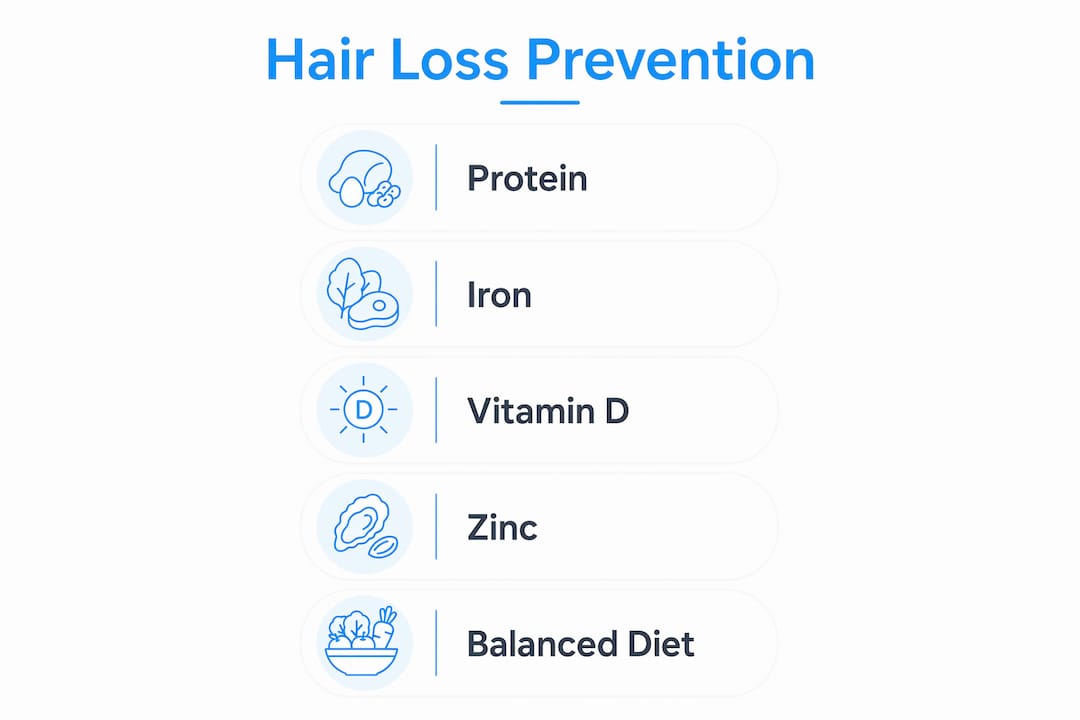
Nutritional deficiencies accelerate the problem significantly. Protein, iron, zinc, and vitamin D are the four nutrients most commonly depleted during calorie-restricted diets, and each plays a direct role in the hair growth cycle. Iron deficiency, for example, reduces oxygen delivery to follicles. Zinc deficiency disrupts the protein synthesis that builds the hair shaft. Vitamin D receptors in follicles regulate cycling, and without adequate levels, follicles stall.
GLP-1 medications like Wegovy and Ozempic add another layer of complexity. Wegovy clinical trials report a 3% incidence of alopecia versus 0.9% in placebo groups, with higher rates in patients who lost 20% or more of body weight. The drug itself does not damage follicles directly. The hair loss stems from the appetite suppression these medications cause, which makes it harder to consume adequate protein and micronutrients even when users are trying.
Key contributing factors to diet-related hair shedding include:
- Rapid caloric restriction triggering metabolic stress and follicle shutdown
- Low protein intake reducing the building blocks for keratin production
- Iron deficiency limiting oxygen supply to hair follicles
- Zinc and vitamin D depletion disrupting follicle cycling and repair
- Hormonal shifts from weight loss, including changes in thyroid and estrogen levels
- GLP-1 drug use causing appetite suppression that compounds nutritional gaps
Pro Tip: If you're using a GLP-1 medication like Wegovy, plan your meals deliberately to hit protein and micronutrient targets despite reduced appetite. Reduced hunger does not mean reduced nutritional need.
How do you tell normal shedding from weight-loss hair loss?
Not every hair in the drain signals a problem. Normal daily shedding runs between 50 and 100 hairs per day, which is part of the natural hair cycle. Telogen effluvium, by contrast, can push that number above 200 hairs per day, often showing up as visible clumps during brushing or showering. The difference matters because the response to each is different.
Here's a practical self-assessment framework to gauge severity:
- Count your shed hairs for three consecutive days. Run your fingers through dry hair and count what comes out. More than 100 consistently is worth monitoring.
- Check for visible thinning at the part line. Telogen effluvium typically causes diffuse thinning rather than bald spots, which distinguishes it from androgenetic alopecia.
- Look for scalp symptoms. Itching, burning, or tenderness on the scalp can signal inflammation or a secondary condition beyond telogen effluvium.
- Track the timeline. If shedding began two to four months after you started your diet or medication, the connection is likely causal.
- Note whether shedding is slowing. If weight has stabilized and nutrition is corrected, shedding should reduce within a few months.
Hair loss that persists six to nine months after weight stabilizes, or any shedding accompanied by scalp symptoms, warrants a dermatologist evaluation. At that point, the issue may involve androgenetic alopecia, thyroid dysfunction, or another condition that requires targeted treatment.
| Shedding type | Daily hair count | Typical pattern | Action needed |
|---|---|---|---|
| Normal shedding | 50 to 100 hairs | Uniform, no visible thinning | None |
| Mild telogen effluvium | 100 to 200 hairs | Slight diffuse thinning | Nutrition review |
| Severe telogen effluvium | 200+ hairs | Visible thinning, clumps | Dermatologist + labs |
| Persistent hair loss | Any level beyond 9 months | Patchy or progressive | Medical evaluation |
Nutritional strategies to prevent hair loss while dieting
The most effective way to protect hair health during weight loss is to treat nutrition as non-negotiable, not optional. The goal is not to stop losing weight but to lose it at a pace and with a diet composition that keeps follicles functioning. Experts recommend a minimum of 60 grams of protein per day during active weight loss, though many dietitians push higher for individuals over 150 pounds. Protein provides the amino acids, particularly cysteine and methionine, that form keratin, the structural protein of hair.
Micronutrient strategy matters just as much as total calories. A well-designed hair loss diet prioritizes iron-rich foods like lean red meat, lentils, and spinach alongside vitamin C sources to improve absorption. Zinc is found in oysters, pumpkin seeds, and beef. Vitamin D is harder to get from food alone, making sunlight exposure and targeted supplementation worth considering.
Key nutritional priorities during weight loss:
- Protein: Minimum 60 grams daily, ideally from complete sources like eggs, chicken, fish, and Greek yogurt
- Iron: Pair non-heme iron sources with vitamin C to maximize absorption
- Zinc: Include shellfish, seeds, or legumes at least three times per week
- Vitamin D: Get levels tested before supplementing; excess vitamin D carries its own risks
- Calorie deficit pace: Aim for no more than one to two pounds of weight loss per week to reduce metabolic stress on follicles
Harvard Health clarifies that severe protein malnutrition causes hair loss, but most people with adequate overall nutrition do not lose hair from protein deficiency alone. This means protein is necessary but not sufficient. Evaluating the full micronutrient picture is what separates effective prevention from guesswork.
Pro Tip: Skip the generic multivitamin and get targeted labs instead. Testing iron, thyroid function, vitamin D, and zinc gives you a specific deficiency profile to address rather than supplementing blindly and potentially overdoing fat-soluble vitamins.
Managing hair loss from weight loss: treatments and regrowth
Once you've addressed the root nutritional causes, several practical strategies can accelerate recovery and minimize visible thinning in the meantime. The most studied topical treatment for telogen effluvium is minoxidil, available over the counter in 2% and 5% formulations. Minoxidil extends the anagen phase and increases follicle size, which can shorten the recovery timeline when used consistently. It works best as a bridge treatment while the underlying nutritional causes are being corrected.
Gentle hair care makes a measurable difference during active shedding. A thickening shampoo adds volume and reduces the visual impact of thinning without treating the cause, but it supports confidence during recovery. Avoid chemical treatments, tight hairstyles, and heat styling during this period. Each of these stresses the follicle at a time when it has limited reserves.
Practical management steps include:
- Use minoxidil consistently if shedding is moderate to severe and nutritional correction alone is too slow
- Switch to a sulfate-free, volumizing shampoo to reduce scalp irritation and add visual fullness
- Avoid tight ponytails and braids that create traction stress on already-weakened follicles
- Manage cortisol levels through sleep, exercise, and stress reduction, since elevated cortisol prolongs the telogen phase
- Track your progress with photos taken in consistent lighting every four weeks to objectively measure regrowth
Hair regrowth typically occurs six to nine months after weight stabilizes and nutritional deficits are corrected. That timeline can feel long, but it reflects the biology of the hair cycle. Follicles that have been in telogen need time to re-enter anagen, and the new hair shaft takes additional months to become visible above the scalp. Patience combined with consistent care produces results.
Weight loss methods compared by hair loss risk
Not all weight loss approaches carry the same risk for your hair. The method and pace of weight loss matter as much as the total amount lost.
| Weight loss method | Hair loss risk | Primary mechanism | Notes |
|---|---|---|---|
| Gradual calorie reduction (1 lb/week) | Low | Minimal metabolic stress | Best approach for hair preservation |
| Crash dieting or VLCD | High | Severe caloric restriction, nutrient depletion | Telogen effluvium most likely here |
| GLP-1 medications (Wegovy, Ozempic) | Moderate | Appetite suppression, rapid weight loss | 3% alopecia incidence in trials |
| Bariatric surgery | High | Malabsorption, rapid post-surgical weight loss | Requires aggressive nutritional monitoring |
| Balanced diet with exercise | Very low | Gradual loss, nutrient-dense food choices | Optimal for hair and metabolic health |
Bariatric surgery carries the highest risk because malabsorption compounds the nutritional deficits that come with rapid weight loss. Patients who undergo procedures like gastric bypass often need lifelong supplementation of iron, B12, zinc, and vitamin D. GLP-1 users face a different but manageable challenge: the appetite suppression that makes the medication effective also makes it harder to eat enough of the right foods. Consulting a registered dietitian alongside a prescribing physician is the most practical safeguard.
Key takeaways
Weight loss causes hair loss primarily through telogen effluvium, a reversible condition driven by metabolic stress and nutritional deficits that resolves within six to nine months when the underlying causes are corrected.
| Point | Details |
|---|---|
| Telogen effluvium is the cause | Metabolic stress from rapid weight loss pushes follicles into a resting phase, causing diffuse shedding. |
| Shedding is delayed | Hair loss appears two to four months after the triggering event, not immediately after weight loss begins. |
| Nutrition is the primary lever | Maintaining at least 60g of protein daily and correcting iron, zinc, and vitamin D deficits prevents most cases. |
| GLP-1 users face added risk | Appetite suppression from drugs like Wegovy compounds nutritional gaps and raises hair loss incidence to around 3%. |
| Regrowth is realistic | Most people see hair recovery six to nine months after weight stabilizes and deficiencies are addressed. |
What I've learned from watching people get this wrong
The most common mistake I see is people blaming the wrong thing. Someone starts a diet in January, stabilizes in April, and notices significant shedding in May. They assume the shedding is caused by whatever changed in April, not the diet itself. That two to four month delay in telogen effluvium is genuinely confusing, and it leads people to stop treatments that are working or start treatments for the wrong condition entirely.
The second mistake is treating protein as the only variable. Yes, protein matters. But I've seen people hit 80 grams of protein daily and still shed heavily because their ferritin was critically low. Protein alone rarely explains the full picture. The people who recover fastest are the ones who get a proper lab panel, identify their specific deficiencies, and correct them with targeted interventions rather than a generic multivitamin.
The third mistake is panic. Telogen effluvium is self-limiting. If you correct the cause, the hair comes back. I've watched people with genuinely alarming shedding, clumps in the shower, visible scalp, regrow a full head of hair within a year. The biology is on your side. What works against you is stopping weight loss entirely out of fear, which trades one health problem for another. The answer is not to stop losing weight. It's to lose weight at a pace your body can handle, with a diet that keeps your follicles fed.
If you're six months past weight stabilization and still shedding, see a hair loss dermatologist. At that point, something else may be driving the loss, and you need a professional assessment, not more supplements.
— Cyriac
Track your hair recovery with Myhair's AI analysis
If you're managing hair loss during or after weight loss, guessing at your progress is one of the most frustrating parts of recovery. Myhair's AI-powered scanner gives you an objective baseline and tracks changes over time, so you can see whether your nutritional corrections and treatments are actually working.
The AI hair analysis uses advanced algorithms to assess hair density, scalp condition, and shedding patterns from a simple scan. You get a personalized hair score, specific product recommendations matched to your condition, and a clear picture of where you stand. For anyone using GLP-1 medications or recovering from rapid weight loss, early detection through the hair analysis onboarding process means you can intervene before shedding becomes severe. Myhair turns the guesswork into data.
FAQ
What is the link between weight loss and hair loss?
Weight loss causes hair loss primarily through telogen effluvium, a condition where metabolic stress and nutritional deficits push hair follicles into a resting phase. The shedding typically appears two to four months after rapid weight loss begins.
Will losing weight always cause hair loss?
No. Gradual weight loss of one to two pounds per week with a nutrient-dense diet carries very low hair loss risk. Hair loss due to dieting is most common with crash diets, bariatric surgery, or GLP-1 medications that cause rapid weight loss.
How much hair shedding is normal during weight loss?
Normal daily shedding is 50 to 100 hairs. Telogen effluvium can push shedding above 200 hairs per day, often noticeable as clumps in the shower or on a brush.
How do I prevent hair loss when losing weight?
Maintain at least 60 grams of protein per day, get labs to check iron, zinc, vitamin D, and thyroid function, and aim for a gradual weight loss pace. Targeted supplementation based on actual deficiencies outperforms generic multivitamins.
How long does hair loss from dieting last?
Hair regrowth typically occurs six to nine months after weight stabilizes and nutritional deficits are corrected. If shedding continues beyond that window, a dermatologist evaluation is recommended to rule out other causes.