TL;DR:
- White hair management involves treatments, supplements, and styling strategies to slow or conceal gray hair. The cause of graying, whether genetic or nutritional, determines suitable remedies, with targeted serums, supplements, or concealment methods used accordingly. Consistent application of clinically supported products and lifestyle changes can slow progression but do not offer a permanent cure.
White hair solutions are scientifically supported treatments, supplements, hair care products, and cosmetic strategies designed to slow, conceal, or manage white and gray hair effectively. Gray hair affects nearly 75% of adults between ages 45 and 65, yet no FDA-approved cure exists to reverse it permanently. That gap between demand and medical reality is exactly where the right combination of topical serums, nutritional support, and smart styling fills in. Products like To The Root® by Arey and the supplement Not Today, Grey represent the current clinical frontier. Understanding your options across all three categories gives you the clearest path forward.
What causes white hair and how does it affect your treatment options?
White hair results from the gradual loss of melanin, the pigment produced by specialized cells called melanocytes inside each hair follicle. When melanocytes slow down or stop producing melanin, new hair grows in without color. The cause determines which remedies for gray hair will actually help you.
Several factors drive this process:
- Genetics. The age at which your hair turns white is largely inherited. If your parents went gray early, you likely will too.
- Age. Melanocyte activity naturally declines over time. This is the most common driver and the hardest to reverse.
- Oxidative stress. Free radical damage accumulates in follicles over years, accelerating melanocyte decline. Smoking, chronic stress, and poor diet all increase oxidative load.
- Nutritional deficiencies. Deficiencies in vitamin B12, iron, copper, zinc, and folate can contribute directly to premature graying. Correcting these through diet or supplementation may slow or partially reverse early pigment loss.
- Environmental damage. UV exposure and heat styling degrade both melanocytes and the hair shaft itself, speeding up visible whitening.
Why does this matter for treatment? If your graying is driven by a correctable deficiency, targeted supplementation can produce real results. If genetics is the primary driver, topical serums and cosmetic concealment become your most reliable tools. Knowing the cause helps you spend money on the right solution instead of the wrong one.
Topical treatments vs. natural remedies: what actually works?

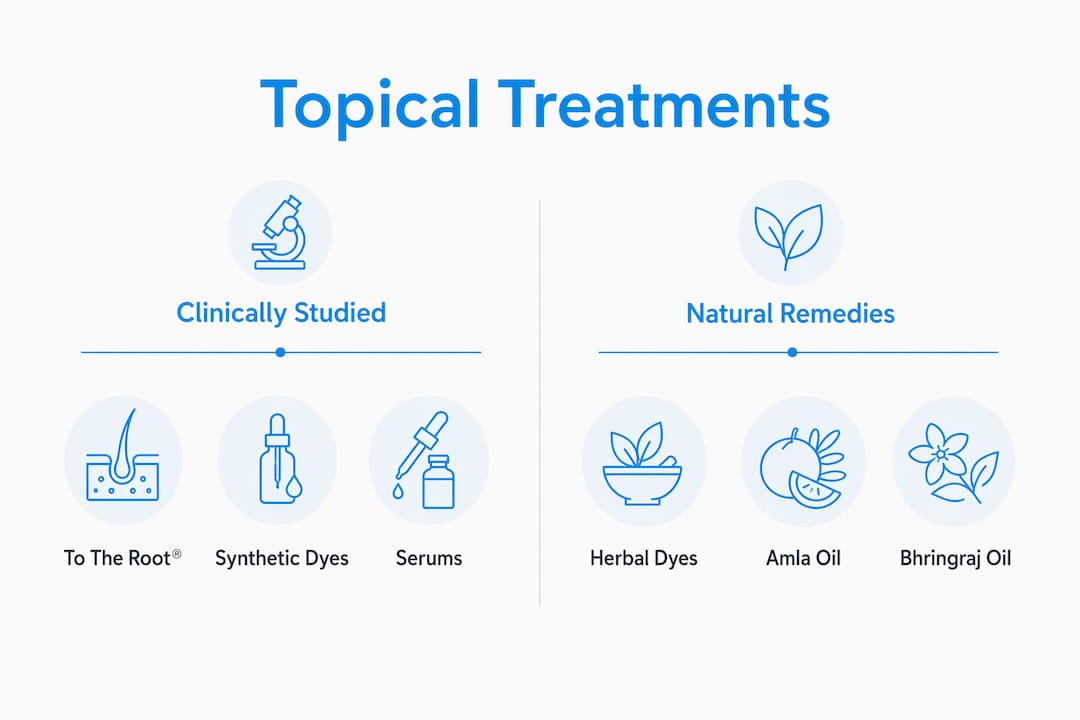
The topical category splits into three distinct groups: clinically studied serums, synthetic dyes, and herbal or natural options. Their effectiveness, safety profiles, and maintenance requirements differ significantly.
| Treatment type | Evidence level | Key benefit | Main limitation |
|---|---|---|---|
| To The Root® scalp serum | Clinical (6-month data) | Reduces new gray growth | Best for early-stage graying |
| Synthetic hair dye | Strong cosmetic evidence | Full, immediate coverage | Chemical exposure, root regrowth |
| Henna and indigo | Moderate cosmetic evidence | Chemical-free coverage | Preparation time, faster fading |
| Amla and bhringraj oils | Weak (traditional use only) | Scalp conditioning | No robust clinical evidence for reversal |
To The Root® by Arey is the most clinically documented topical serum currently available. The serum is oil-free, adds volume, and fits into daily styling routines without disrupting your existing regimen. Clinical results show it works best on hair that is 0–30% gray, meaning early intervention produces the strongest outcomes.
Herbal dyes like henna and indigo offer a chemical-free path to concealing white hair without the ammonia and peroxide found in synthetic dyes. The tradeoff is preparation time and more frequent touch-ups, since herbal pigments fade faster than synthetic ones. If you use henna, plan for a two-step process: henna first for orange-red tones, followed by indigo to achieve brown or black shades.
Amla and bhringraj oils are widely promoted as natural gray hair treatments, but the clinical record does not support their use as reversal agents. They condition the scalp and may reduce breakage, which is genuinely useful, but expecting them to restore pigment sets you up for disappointment.
Pro Tip: Apply To The Root® to a dry scalp before heat styling. The formula is designed for daily use, so consistency over three to six months is what drives results, not a single application.
Do supplements help with gray hair?
Nutritional supplements address white hair from the inside out, targeting the cellular environment where melanin production either thrives or fails. The evidence for specific nutrients is stronger than most people realize.
Key supplements with documented relevance to hair pigmentation include:
- Vitamin B12. Deficiency is directly linked to premature graying. Supplementing corrects the deficiency and may slow further pigment loss in people who are genuinely deficient.
- Biotin (Vitamin B7). Supports overall follicle health and keratin production. Widely used in hair supplements, though its direct effect on pigmentation is indirect.
- Vitamin B5 (Pantothenic acid). Early research suggests a role in supporting adrenal function and reducing stress-related graying.
- Folate (Vitamin B9). Works alongside B12 in cell division and DNA repair within follicles. Deficiency accelerates follicle aging.
- Antioxidants (Vitamins C and E, catalase). Neutralize the oxidative stress that damages melanocytes. Catalase specifically breaks down hydrogen peroxide, which accumulates in follicles and bleaches hair from within.
Not Today, Grey by Arey is the most studied supplement in this category. Combined use of To The Root® and Not Today, Grey showed 88% of users reporting fewer new gray hairs after six months. That figure reflects a combined protocol, not either product alone, which reinforces the value of pairing topical and internal approaches.
The myth side of supplementation is worth addressing directly. Herbal supplements marketed as preventing white hair solutions, including fo-ti (he shou wu) and black sesame, lack strong human clinical trials. Some, like fo-ti, carry documented liver toxicity risks at high doses. Stick to nutrients with established safety profiles and known deficiency links.
Pro Tip: Get a blood panel before starting any supplement protocol. Testing for B12, ferritin, zinc, and folate takes the guesswork out of which deficiencies you actually need to address. You can find evidence-based supplement options reviewed specifically for hair health.
How to cover white hair without damaging it
Concealment is the fastest, most reliable white hair solution available right now. The key is choosing methods that protect the hair shaft rather than weaken it over time.
-
Choose a dye with built-in conditioning. White hair is more porous than pigmented hair, which means it absorbs color unevenly and dries out faster. Look for dyes that include conditioning agents like argan oil or keratin. Garnier Nutrisse and L'Oréal EverPure are widely available options formulated with this in mind.
-
Use a toner between dye sessions. Purple or blue toning shampoos neutralize the yellow cast that white hair develops from UV and heat exposure. Apply a toning shampoo once or twice a week to keep color looking clean between full dye treatments.
-
Apply a root touch-up powder for quick coverage. Colored powders and sprays like those from Rita Hazan or Color Wow Root Cover Up provide instant, washable coverage between salon visits. They work especially well at the hairline and part line where regrowth is most visible.
-
Protect hair from heat before styling. White hair is more susceptible to environmental damage, including brittleness and yellowing from heat tools. Apply a heat protectant spray before using a flat iron or blow dryer. Products with UV filters add an extra layer of protection against sun-induced yellowing.
-
Consider a professional consultation for blending. A skilled colorist can create a natural-looking transition using techniques like balayage or highlights that blend white hair with your base color. This approach, detailed in resources like transitioning to gray naturally, reduces the frequency of full dye applications and minimizes chemical exposure over time.
The best products for gray hair are those that address both color and structural integrity. White hair breaks more easily than pigmented hair, so every styling decision should factor in moisture retention and damage prevention.
Key Takeaways
The most effective approach to managing white hair combines a clinically studied topical serum, targeted nutritional support, and protective styling habits applied consistently over months.
| Point | Details |
|---|---|
| Identify the root cause | Test for B12, iron, zinc, and folate deficiencies before choosing a supplement protocol. |
| Use clinical serums early | To The Root® works best when hair is 0–30% gray; early use produces the strongest results. |
| Pair topical and internal approaches | Combined serum and supplement use showed 88% of people reporting fewer new gray hairs after six months. |
| Protect white hair from damage | White hair yellows and breaks faster; use UV protection, heat protectant, and toning shampoos consistently. |
| Manage expectations on reversal | No FDA-approved treatment permanently reverses gray hair; slowing progression and concealment are realistic goals. |
What I've learned after years of watching people chase the wrong solutions
Most people come to white hair management with one of two unrealistic expectations. Either they want a pill that reverses everything in a month, or they assume nothing works and resign themselves to covering it up forever. Neither position serves them well.
The clinical reality sits in the middle. Long-term consistent application over months is what separates people who see results from those who give up after three weeks. Serums and supplements are not fast-acting cosmetics. They work at the follicle level, and follicle cycles run on their own schedule.
What I find most underappreciated is the role of oxidative stress. Most people focus entirely on genetics and age, but lifestyle factors like chronic stress, poor sleep, and smoking accelerate melanocyte decline in measurable ways. Addressing those factors alongside a good serum and supplement protocol produces noticeably better outcomes than products alone.
Sudden or early graying before age 30 deserves a doctor's attention, not just a product recommendation. Thyroid dysfunction, autoimmune conditions, and severe nutritional deficiencies can all trigger early pigment loss. Treating the underlying condition sometimes slows or partially reverses the graying. Skipping that step and going straight to serums means you are managing a symptom while the cause continues unchecked.
Experimental immunotherapy treatments show genuine promise for repigmentation, but they remain unavailable to the general public as of 2026. That is worth knowing because it sets a realistic horizon. The science is moving forward. The tools available today are meaningful, but they work best when you use them with accurate expectations.
— Cyriac
How Myhair helps you find the right approach for your hair
Choosing the right white hair solution is easier when you know exactly what you are working with. Myhair uses AI-powered hair and scalp analysis to assess your current hair condition, identify patterns of change over time, and match you with products suited to your specific situation.

The AI hair analysis tool scans your scalp and hair health from photos, giving you a detailed assessment without a clinic visit. From there, Myhair generates personalized product recommendations based on your actual hair condition rather than generic advice. For those who want professional guidance alongside the analysis, the clinic onboarding program connects you with specialists who can build a structured treatment plan. You can also review the clinical research behind top-rated serums and supplements directly on the platform.
FAQ
Can white hair be reversed naturally?
White hair caused by nutritional deficiencies can sometimes be partially reversed by correcting those deficiencies, particularly B12 and iron. Genetically driven white hair has no confirmed natural reversal method as of 2026.
How long does it take to see results from anti-gray serums?
Clinical data from To The Root® shows meaningful results after six months of consistent daily use. Products formulated for early-stage graying perform best when started before hair is more than 30% gray.
What vitamins are most important for preventing white hair?
Vitamin B12, folate, biotin, zinc, and copper are the nutrients most directly linked to hair pigmentation. A blood test identifies which deficiencies apply to you before you start supplementing.
Is henna a safe option for covering white hair?
Henna is a chemical-free option that effectively covers white hair without ammonia or peroxide. It requires more preparation time than synthetic dye and fades faster, but it is a strong choice for people with sensitive scalps.
Does stress cause white hair?
Chronic stress increases oxidative damage in hair follicles, which accelerates melanocyte decline. Research confirms the connection, though stress alone rarely causes sudden whitening without other contributing factors.