
TL;DR:
- Argan kernel oil is effective for hydrating and protecting dry, damaged hair but does not promote hair regrowth. Using only high-quality, cold-pressed cosmetic oil in proper storage and application yields the best results. It offers moisture, shine, and damage prevention, but should be paired with other treatments for hair loss concerns.
Argan kernel oil has earned near-mythic status in the natural hair care world, but a lot of what gets said about it is either exaggerated or flat-out wrong. Sourced from the kernels of the Argania spinosa tree native to Morocco, this oil is formally known as argania spinosa kernel oil in cosmetic ingredient lists. It genuinely does remarkable things for dry, damaged, and brittle hair. What it cannot do is regrow hair you have already lost. Understanding that difference upfront saves you money, sets realistic expectations, and helps you actually get results.
Table of Contents
- Key Takeaways
- What argan kernel oil actually is
- Real benefits for hair and scalp health
- How to choose and use it effectively
- How it compares to other natural hair oils
- My honest take after years of working with hair health
- Know your hair before you treat it
- FAQ
Key Takeaways
| Point | Details |
|---|---|
| Oil type matters | Always choose cold-pressed, cosmetic-grade argan kernel oil for hair use, never culinary-grade. |
| Moisture and protection | Argan kernel oil excels at hydrating damaged hair and shielding strands from heat and UV stress. |
| Not a hair growth cure | Strong scientific evidence does not support argan oil as a treatment for hair loss or regrowth. |
| Safe for all scalp types | With a comedogenicity rating of zero, it will not clog follicles or trigger breakouts on the scalp. |
| Storage preserves quality | Keep your oil in a dark glass bottle away from heat to maintain its potency for up to a year. |
What argan kernel oil actually is
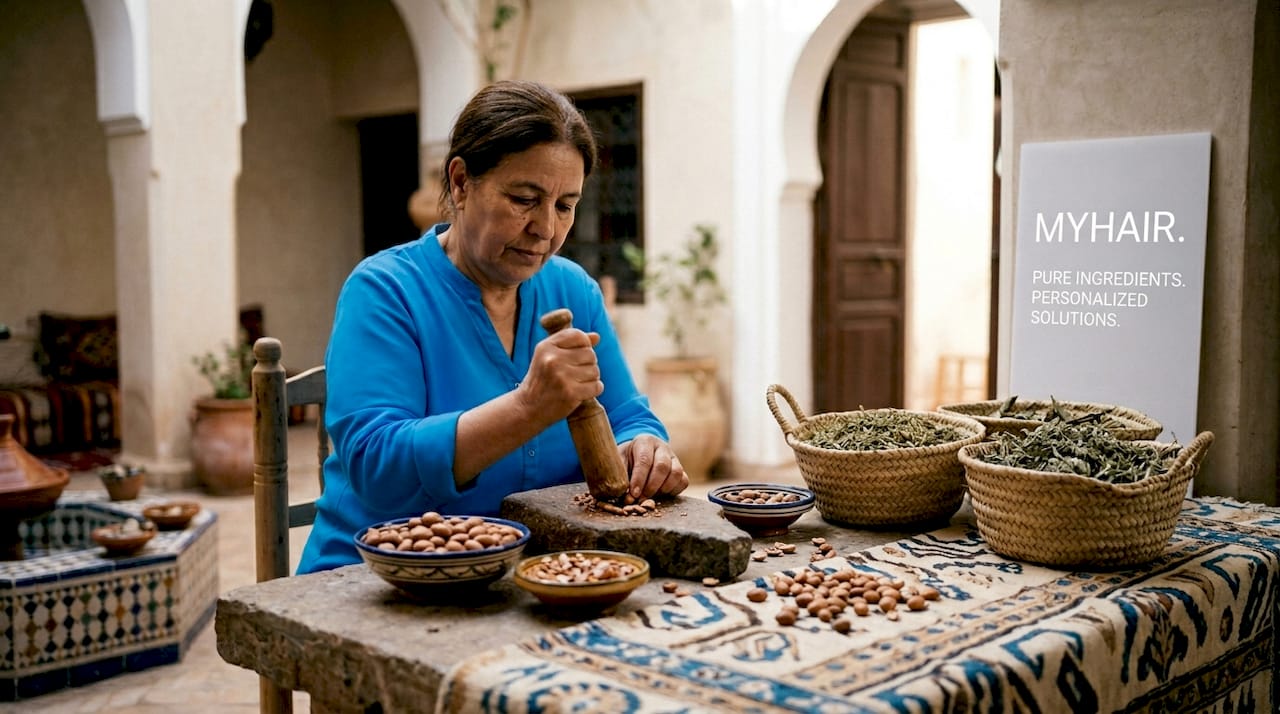
Before spending money on a bottle, you should know exactly what you are buying. Argan kernel oil is extracted from the inner kernel of the argan fruit, which grows almost exclusively in southwestern Morocco. The extraction process matters enormously for quality. Cold-pressed raw kernels produce the cosmetic-grade oil you want for hair and skin, while roasted kernels yield the culinary version used in cooking.
These two products are not interchangeable. Culinary argan oil has a rich, nutty aroma because the roasting changes the oil's chemical profile. Apply it to your hair and you will smell like a Moroccan kitchen all day. Cosmetic-grade oil from raw kernels has a neutral scent and retains the full spectrum of bioactive compounds that benefit your strands.
Here is what makes the cosmetic version so effective for hair:
- Oleic and linoleic acid. The oil is roughly 80% unsaturated fatty acids, which penetrate the hair cortex to restore moisture from the inside out.
- Vitamin E (tocopherols). A potent antioxidant that seals the cuticle and reduces breakage from environmental stress.
- Ferulic acid and polyphenols. These compounds fight oxidative damage from UV light and pollution, both of which accelerate hair aging.
- Squalene. A naturally occurring lipid that mimics the scalp's own sebum, helping condition without a greasy residue.
Pro Tip: Check the ingredient label before buying. You want "argania spinosa kernel oil" listed as one of the first ingredients, not buried at the bottom where concentrations are too low to matter.
Traditional production is labor-intensive and hand-extracted, which explains the price premium. Modern cold-pressing now makes it more widely available without sacrificing quality, but genuine pure argan oil is never cheap. If a price seems too good to be true, the bottle is likely diluted with cheaper carrier oils.
Real benefits for hair and scalp health
Here is where argan kernel oil genuinely delivers, and where it comes up short.
What it does extremely well
Dry, color-treated, or heat-damaged hair is essentially a cuticle that has been stripped of its natural lipid layer. The fatty acids in argania spinosa argan kernel oil fill those gaps, smoothing the cuticle surface and locking moisture in. The result is visibly softer, shinier hair after consistent use. Users particularly notice a dewy, nourished finish that works especially well for dry or mature hair textures.
The oil also protects against oxidative stress from UV radiation and pollution. If you spend time outdoors or live in an urban environment, that protection compounds over time. Think of it as daily sunscreen for your strands, just without the white cast.
One underrated benefit: argan kernel oil is completely non-comedogenic, scoring a zero on the comedogenicity scale. That means you can massage it directly into the scalp without fear of clogging follicles or triggering scalp acne, which is a real concern with heavier oils like coconut oil.
You can learn more about scalp-specific application in the Myhair guide on argan oil for dry scalp, which covers how it addresses flakiness and irritation with consistent use.
The myth you need to stop believing
Argan oil for hair growth is the most overhyped claim in natural hair care. As of 2026, scientific consensus is clear: argan oil is outstanding for cosmetic moisturizing and protection but lacks credible evidence for reversing hair loss. It does not stimulate follicles. It does not reactivate dormant growth cycles.
If you are dealing with thinning hair or significant shedding, argan kernel oil can make your existing hair look and feel better. That is genuinely useful. But it will not replace what you have lost. For growth claims, castor oil has stronger evidence in the research literature, and even that evidence remains limited.
Pro Tip: If you are managing both hair damage and hair loss, use argan kernel oil for hydration and protection while seeking a clinically assessed approach for the loss side. Treating them as the same problem leads to disappointment.
How to choose and use it effectively
Selecting the right product is half the battle.
- Read the label carefully. The INCI name should say argania spinosa kernel oil. If the product lists "argan oil fragrance" or "argan oil complex," that is a red flag.
- Choose cold-pressed, cosmetic-grade oil. Cold-pressed raw kernel oil preserves the full bioactive compound profile that makes it effective. Heated extraction destroys much of the vitamin E and polyphenols.
- Look at the bottle. Genuine, pure argan oil comes in dark glass. Clear plastic bottles mean the oil is exposed to light, which accelerates rancidity.
- Store it correctly. Keep the bottle away from sunlight and heat sources. Proper storage in dark glass maintains efficacy for up to a year. Heat and light break down active compounds within weeks.
- Start with less than you think you need. Argan kernel oil is concentrated. For medium-length hair, three to five drops is enough. Overuse leaves hair greasy rather than glossy.
Application methods that actually work
Pre-shampoo treatment: Warm two to four drops between your palms and work through dry hair, focusing on the mid-lengths to ends. Leave on for 20 to 30 minutes before washing. This protects hair from the drying effect of shampooing while deeply conditioning the cortex.
Leave-in conditioner: Apply one to two drops to towel-dried hair before styling. It reduces frizz, adds shine, and provides a light layer of heat protection before you use a blow dryer or flat iron.
Scalp massage: Two to three times per week, massage three drops into the scalp in circular motions. This addresses dryness and flakiness without the congestion risk you get from heavier oils. The Myhair resource on argan oil hair benefits goes deeper on why this application method supports long-term scalp health.
One caution: if you have a tree nut allergy, patch test first. Reactions are rare but possible. Apply a small amount to your inner wrist and wait 24 hours before full use.
How it compares to other natural hair oils
Argan kernel oil is not always the best tool for every hair concern. Here is how it stacks up against common alternatives.
| Oil | Best for | Comedogenicity | Hair growth evidence | Scent |
|---|---|---|---|---|
| Argan kernel oil | Moisture, shine, damage repair | 0 (none) | Weak | Neutral |
| Castor oil | Scalp stimulation, thickness | 1 (very low) | Moderate | Strong, earthy |
| Rosehip oil | Color-treated, fine hair | 1 (very low) | Weak | Mild, earthy |
| Coconut oil | Deep conditioning | 4 (high) | Weak | Strong, sweet |
| Jojoba oil | Oily scalp balance | 2 (low) | Weak | Nearly neutral |
Argan oil for hydration and barrier repair is genuinely unmatched among these options. Rosehip oil is a strong alternative for fine or color-treated hair that needs moisture without weight. Coconut oil goes deep but can cause protein buildup with overuse and is a poor choice for low-porosity hair.
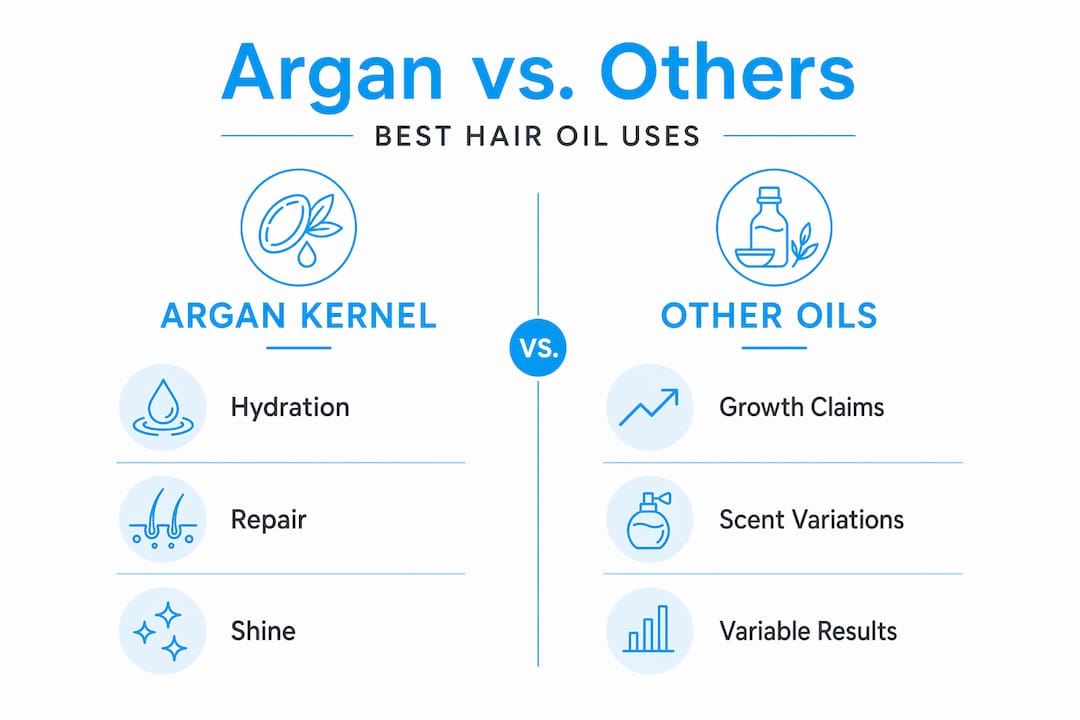
The Myhair article on natural oils for hair growth gives a fuller breakdown of which oils have credible evidence behind specific claims, which is worth reading before you invest in multiple products.
For hair that is dry, brittle, chemically processed, or damaged by heat, argan kernel oil is the most versatile and best-tolerated option in this group. For scalp stimulation goals, a castor oil blend might serve you better.
My honest take after years of working with hair health
I have read a lot of ingredient research and spoken with a lot of people frustrated by products that promised hair regrowth and delivered nothing. Argan kernel oil sits in a strange middle ground in these conversations. Marketers oversell it as a miracle growth treatment. Skeptics dismiss it entirely because it cannot cure hair loss. Both groups miss the point.
What I have found is this: argan kernel oil works best when you use it for what it actually does. If your hair is dry, breaking, dull, or irritated from heat styling or chemical treatments, this oil will make a measurable difference within two to four weeks of consistent use. The improvement in texture and manageability is real, not subtle.
Where I see readers go wrong is expecting it to fix what it was never designed to address. Hair loss has causes: hormones, nutrition, genetics, stress. A topical oil cannot override those. What it can do is protect the hair you still have while you address the underlying issue through other means.
My practical recommendation is to use argan kernel oil as a foundation in your routine, not a solution in itself. Pair it with a real understanding of what is happening on your scalp. That means knowing whether you are dealing with breakage versus actual follicle-level loss, understanding your hair porosity, and not burning through expensive oils on a problem that needs a different kind of attention.
— Cyriac
Know your hair before you treat it
Not every hair concern responds to the same solution. Argan kernel oil can transform dry, brittle strands, but if shedding or thinning is your real issue, you need more than moisture.
Myhair uses AI-powered analysis to give you a detailed picture of your actual hair health, including patterns of loss, scalp condition, and how your hair has changed over time. Instead of guessing which oils or products to try, you get tailored recommendations based on what your specific hair actually needs. The AI hair analysis tool takes minutes to use and gives you a data-backed starting point for building a routine that works. If you want to track whether argan kernel oil or any other treatment is making a real difference, start your hair assessment and see your results clearly over time.
FAQ
What is argan kernel oil used for in hair care?
Argan kernel oil is used primarily for moisturizing dry or damaged hair, adding shine, reducing frizz, and protecting strands from heat and UV damage. It works best as a pre-shampoo treatment or leave-in conditioner.
Does argan kernel oil help with hair loss?
No strong scientific evidence supports argan kernel oil as a treatment for hair loss. It excels at conditioning and protecting existing hair, but topical argan oil does not stimulate new follicle activity.
What is the difference between cosmetic and culinary argan oil?
Cosmetic-grade oil is cold-pressed from raw kernels and has a neutral scent, making it ideal for hair and skin. Culinary argan oil comes from roasted kernels and has a rich, nutty aroma that is pleasant in food but unsuitable for topical use.
How do I know if my argan kernel oil is pure?
Check the INCI label for argania spinosa kernel oil as a primary ingredient. Genuine pure argan oil comes in a dark glass bottle and has a neutral to very mild scent. A low price point is usually a sign of dilution with cheaper filler oils.
How often should I use argan kernel oil on my hair?
For most people, two to three times per week is enough. Daily use on dry hair as a leave-in is fine for very dry or damaged hair types, but using more than five drops per application can leave residue and make hair look greasy rather than healthy.