TL;DR:
- Oily hair products are formulated to regulate excess scalp sebum, cleanse buildup, and promote a fresh look between washes. The effectiveness of these products depends on choosing the right ingredients, such as zinc pyrithione or salicylic acid, and applying them correctly for your scalp condition. Consistent use of appropriate shampoos, dry shampoos, and targeted treatments, combined with proper technique, helps manage oiliness without over-washing or causing scalp issues.
Oily hair products are formulations specifically designed to regulate excess sebum at the scalp, cleanse buildup, and maintain a visibly fresh appearance between washes. If your roots look greasy hours after washing, the problem is not your hygiene. Genetics and hormones drive sebum production, and no amount of willpower changes that. What does change it is choosing the right products, using them correctly, and building a routine that works with your scalp rather than against it. This guide covers the product types, active ingredients, and practical strategies that actually deliver results.
What causes oily hair and how do products target it?
Sebum is the natural oil your scalp produces to protect hair and skin. The amount your scalp produces is primarily controlled by genetics and hormones, not by how often you wash. This matters because many people believe washing less will "train" their scalp to produce less oil. It will not. Avoiding washing only allows sebum, dead skin cells, and product residue to accumulate, which worsens the greasy appearance and can irritate the scalp.
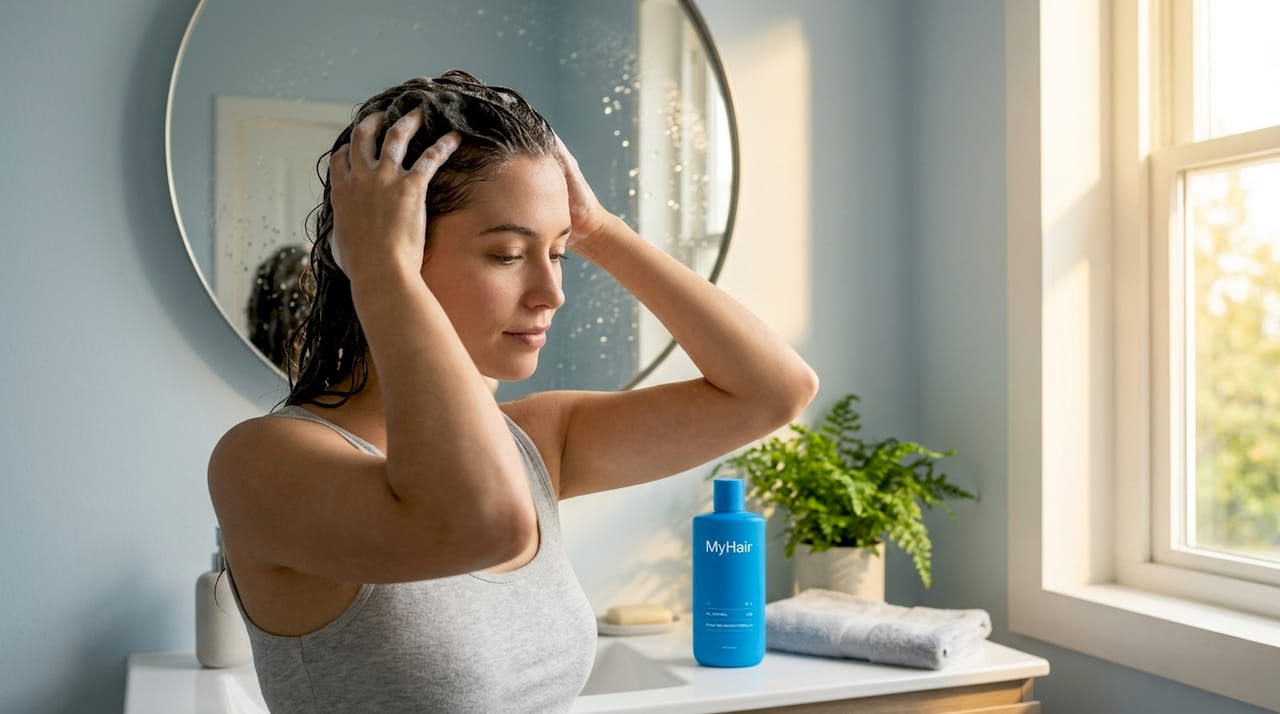
Several factors trigger or worsen oiliness beyond genetics. Hormonal fluctuations during puberty, pregnancy, or stress spike sebum output. Product buildup from silicone-heavy conditioners or styling products coats the scalp and traps oil. Overwashing with harsh sulfate shampoos can strip the scalp so aggressively that sebaceous glands temporarily overproduce oil in response.
Effective oily hair products target these causes through specific active ingredients:
- Rice starch and silica absorb surface oil at the root without adding weight, making them the core ingredients in most dry shampoos.
- Zinc pyrithione controls the yeast-like fungus Malassezia, which contributes to dandruff and oily flaking. Products like Matrix Biolage ScalpSync Antidandruff shampoo use this ingredient.
- Salicylic acid exfoliates the scalp, dissolves dead skin buildup, and helps normalize oil secretion. The INKEY List's salicylic acid scalp treatment uses this mechanism directly.
- Ketoconazole is an antifungal agent found in products like Nizoral that addresses dandruff-related oiliness at the source.
- Sulfate-free surfactants cleanse without over-stripping, making them suitable for daily use on oily scalps that are also sensitive.
Understanding which ingredient targets your specific concern is the fastest way to stop wasting money on products that do not work for your hair type.
Which product types work best for greasy hair?
Not all oily hair treatment solutions work the same way. The product category you choose should match the severity of your oiliness, your hair texture, and whether you have any underlying scalp conditions.
| Product type | Best for | Key ingredients | Usage frequency |
|---|---|---|---|
| Clarifying shampoo | Buildup and heavy oiliness | Surfactants, citric acid | 1-2 times per week |
| Medicated shampoo | Dandruff, seborrheic dermatitis | Zinc pyrithione, ketoconazole, salicylic acid | 2 times per week during flares |
| Sulfate-free shampoo | Daily washing, sensitive scalp | Gentle surfactants | Daily or every other day |
| Dry shampoo | Extending time between washes | Rice starch, silica | Between wash days |
| Scalp exfoliant | Buildup, flaking, oil imbalance | Salicylic acid | 1-2 times per week pre-wash |
| Pre-wash scalp oil | Soothing, pre-cleanse prep | Plant oils, botanicals | Up to twice weekly |
Shampoos for oily scalp divide into three main categories. Clarifying shampoos like the Ethique St. Clements bar are pH-balanced and lift oils effectively, recommended two to three times per week and safe for color-treated hair. Medicated shampoos address scalp conditions driving oiliness. Sulfate-free options suit those who wash daily and need a gentler formula.
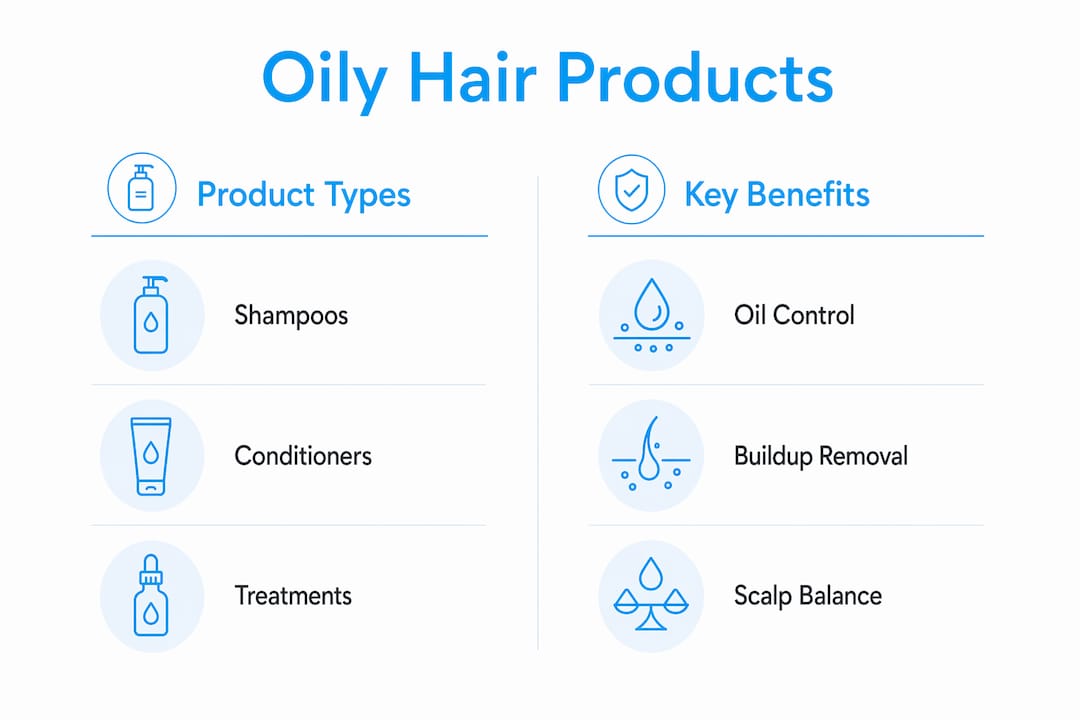
Conditioner for greasy hair requires a different approach than standard conditioning. Apply conditioner only from mid-length to ends, never at the roots. Look for lightweight, silicone-free formulas. Silicones like dimethicone coat the scalp and trap sebum, making roots look oilier faster.
Dry shampoo is the most misunderstood product in this category. The best formulas use rice starch and silica to absorb oil without leaving a white cast. Amika Perk Up Talc-Free Dry Shampoo consistently ranks among the top performers for this reason. Apply it at least six inches from the scalp, let it sit for 60 seconds, then massage and brush through. Spraying directly onto wet-looking roots and immediately brushing out removes the product before it can absorb anything.
Salicylic acid scalp treatments like the one from The INKEY List exfoliate, reduce buildup, and balance scalp oil when applied one to two times per week before shampooing. This pre-wash step is one of the most underused tools for people with persistent oiliness.
Pre-wash oils sound counterintuitive for oily hair, but products like JVN Complete Pre-Wash Scalp Oil can soothe and prep the scalp before cleansing. The critical rule: always shampoo twice after using a pre-wash scalp oil if your scalp still feels oily after the first wash.
How often should you wash oily hair?
The answer is more personal than most guides admit. Daily washing is safe and often beneficial for oily scalps, provided you use a gentle formula. The idea that frequent washing increases oil production is not supported by evidence. Genetics set your sebum baseline, and washing removes the oil that has already been produced.
That said, the right frequency depends on your specific situation. Fine hair shows oil faster than thick hair because there is less surface area for sebum to spread across. People with color-treated hair may prefer every-other-day washing to preserve color vibrancy, using dry shampoo on off days.
For those managing seborrheic dermatitis, a chronic condition causing oily, flaky scalp scales, the routine shifts. Medicated shampoos containing ketoconazole, zinc pyrithione, or salicylic acid are the standard treatment during flares, used multiple times per week alongside regular washing.
Pro Tip: When using a medicated shampoo like Matrix Biolage ScalpSync Antidandruff, leave it on for 1 to 3 minutes before rinsing. Rinsing immediately is the most common reason these shampoos underperform.
Dry shampoo works best as a bridge between wash days, not as a permanent substitute for washing. Using it more than two consecutive days without washing allows product residue to accumulate at the scalp, which can worsen oiliness and cause irritation over time.
How to choose the right products for your scalp and hair type
Matching products to your specific hair type and scalp condition is where most people get stuck. Generic "oily hair" labels on bottles do not account for the real differences between a fine, straight scalp and a thick, curly one.
Here is how to approach the selection:
- Fine hair: Choose volumizing, lightweight shampoos and skip conditioner at the roots entirely. Heavy formulas weigh fine strands down and accelerate the greasy look.
- Thick or coarse hair: You can tolerate slightly richer formulas on the lengths, but the scalp still needs oil-controlling ingredients. Focus clarifying products at the root zone.
- Curly hair: Curls need moisture at the lengths but oil control at the scalp. A sulfate-free shampoo for oily scalp paired with a silicone-free conditioner applied only to the curl pattern works well.
- Color-treated hair: Clarifying shampoos used too frequently strip color. Limit them to once per week and use a gentle, sulfate-free formula for other wash days.
- Acne-prone hairline: Product residue from heavy styling products or conditioners applied too close to the scalp can cause pomade acne along the hairline. If breakouts appear, stop using suspect products for four to six weeks to identify the cause.
For scalp conditions like seborrheic dermatitis, cosmetic shampoos alone are not enough. Medicated options with ketoconazole used twice weekly reduce scaling, itching, and flaking more effectively than any cosmetic formula. Pairing a medicated shampoo with a salicylic acid scalp treatment on alternating days gives you both antifungal action and physical exfoliation. You can read more about managing overlapping scalp concerns in this guide to wet dandruff remedies.
Monitor your scalp's response after two to three weeks on any new product. Increased flaking, redness, or persistent oiliness despite correct use signals either the wrong product or an underlying condition that needs professional attention.
Common mistakes that make oily hair worse
Most people with oily hair are making at least one of these errors, and the fix is simpler than they expect.
- Applying conditioner at the roots. Conditioner is designed for the hair shaft, not the scalp. Applying it at the roots adds weight and coats the scalp, trapping sebum and accelerating greasiness.
- Overwashing with harsh shampoos. Stripping the scalp with sulfate-heavy formulas daily can trigger a temporary rebound in sebum production. Switch to a gentle sulfate-free formula if you wash every day.
- Using dry shampoo incorrectly. Spraying too close to the scalp or brushing out immediately prevents the starch or silica from absorbing oil. Improper dry shampoo use worsens buildup rather than solving it.
- Skipping the leave-on time for medicated shampoos. Zinc pyrithione and ketoconazole need contact time to work. Rinsing immediately after lathering is the most common reason medicated shampoos underperform.
- Ignoring scalp conditions. Persistent oiliness with flaking is often seborrheic dermatitis, not just "greasy hair." Treating it with cosmetic products alone will not resolve the underlying issue.
Pro Tip: Do a weekly scalp check. Run a clean finger along your part 24 hours after washing. If you see white or yellow flakes alongside oil, you likely need a medicated formula, not just a stronger clarifying shampoo.
Key takeaways
The most effective approach to managing oily hair combines the right product type, the correct active ingredient for your scalp condition, and consistent application technique.
| Point | Details |
|---|---|
| Match ingredient to cause | Use zinc pyrithione or ketoconazole for dandruff-related oiliness; salicylic acid for buildup. |
| Wash frequency is personal | Daily washing is safe for oily scalps; genetics set your oil level, not wash habits. |
| Apply conditioner correctly | Keep conditioner on mid-lengths to ends only; roots need no added product. |
| Use dry shampoo with technique | Apply six inches from scalp, wait 60 seconds, then massage in for real oil absorption. |
| Follow medicated shampoo instructions | Leave zinc pyrithione or ketoconazole formulas on for 1 to 3 minutes to get full benefit. |
What I've learned about oily hair products after years of testing
I have reviewed dozens of oily hair care routines, and the pattern I see most often is this: people buy the right product and use it the wrong way. A medicated shampoo rinsed out in 10 seconds does nothing. A dry shampoo sprayed directly onto the root and immediately brushed out leaves residue without absorbing a drop of oil. The product is not the failure. The technique is.
The second thing I have noticed is that people underestimate scalp conditions. A significant portion of people who describe themselves as having "just oily hair" are actually managing mild seborrheic dermatitis. The distinction matters because cosmetic shampoos, no matter how well formulated, cannot address a fungal component. If your oiliness comes with any flaking, itching, or redness, a medicated formula is not optional.
My honest recommendation: start with a sulfate-free daily shampoo for oily scalp, add a salicylic acid scalp treatment twice a week, and use a talc-free dry shampoo like Amika Perk Up on off days. That three-product routine covers most cases. If you are still struggling after four weeks, look at whether a medicated shampoo needs to enter the rotation. Myhair's hair research database is a useful reference for understanding the science behind these ingredient choices.
The one thing I would push back on hardest: do not avoid washing because someone told you it would "train" your scalp. It will not. Wash when your scalp needs it, use the right products, and give them time to work.
— Cyriac
Find the right oily hair routine with Myhair
Knowing which products to buy is one thing. Knowing which ones are right for your scalp is another. Myhair uses AI-powered analysis to assess your scalp condition, oil levels, and hair health from a simple scan, then delivers product and routine recommendations tailored to your specific pattern.
If you have been cycling through products without consistent results, the problem may be that you are solving the wrong issue. Myhair's AI hair analysis identifies what is actually happening at your scalp level, so you stop guessing and start using products that match your biology. You can also track changes over time to see whether your routine is working. Start with your personalized hair score to get a clear picture of where your scalp stands today.
FAQ
What are the best ingredients in oily hair products?
Zinc pyrithione, salicylic acid, rice starch, silica, and ketoconazole are the most effective ingredients for controlling scalp oil and buildup. The right choice depends on whether your oiliness is cosmetic or linked to a scalp condition like dandruff.
Can I use dry shampoo every day on oily hair?
Daily dry shampoo use is not recommended because it causes product buildup at the scalp over time. Use it on one or two days between washes, then cleanse thoroughly to remove residue.
Does washing hair every day make it oilier?
No. Daily washing is safe for oily scalps and does not increase sebum production. Oil output is controlled by genetics and hormones, not washing frequency.
How do I know if I need a medicated shampoo?
If your oily scalp also shows flaking, itching, or redness, a medicated shampoo with ketoconazole or zinc pyrithione is likely needed. Cosmetic clarifying shampoos do not address the fungal component behind seborrheic dermatitis.
Where should I apply conditioner if I have oily hair?
Apply conditioner from mid-length to ends only, keeping it away from the scalp entirely. Root application adds weight and traps sebum, which accelerates the greasy appearance.