
Coconut oil has earned a reputation as a hair growth miracle, but the truth might surprise you. This tropical oil doesn't actually stimulate new hair follicles to sprout from your scalp. Instead, it works behind the scenes to strengthen existing hair fibers and create a healthier scalp environment, allowing your natural hair growth cycle to flourish without interruption. Understanding how coconut oil truly supports hair growth helps you set realistic expectations and use it effectively as part of your hair care routine, maximizing its genuine benefits for thicker, longer, healthier looking hair.
Table of Contents
- How Coconut Oil Improves Hair Strength And Reduces Breakage
- Scalp Health Benefits: Antimicrobial And Anti-Inflammatory Effects
- Plain Vs. Enriched Coconut Oil: Which Is Better For Hair Growth?
- How To Use Coconut Oil Effectively For Natural Hair Growth
- Discover Personalized Hair Analysis With MyHair
Key takeaways
| Point | Details |
|---|---|
| Strengthens hair fibers | Coconut oil penetrates hair shafts to reduce breakage and increase tensile strength |
| Improves scalp health | Antimicrobial properties combat dandruff and inflammation for healthier follicles |
| Plain vs enriched oils | Both reduce hair fall similarly with no major difference in growth stimulation |
| Supports hair density | Helps existing hair appear fuller by preventing damage and loss |
| Requires consistent use | Apply 2-3 times weekly for several months to see noticeable improvements |
How coconut oil improves hair strength and reduces breakage
Your hair fibers are made of keratin proteins arranged in overlapping layers, similar to roof shingles. Daily styling, heat exposure, chemical treatments, and environmental stressors damage these protective layers, creating weak points where hair snaps off before reaching its full length potential. When breakage occurs faster than growth, your hair appears thin and struggles to gain length no matter how long you wait.
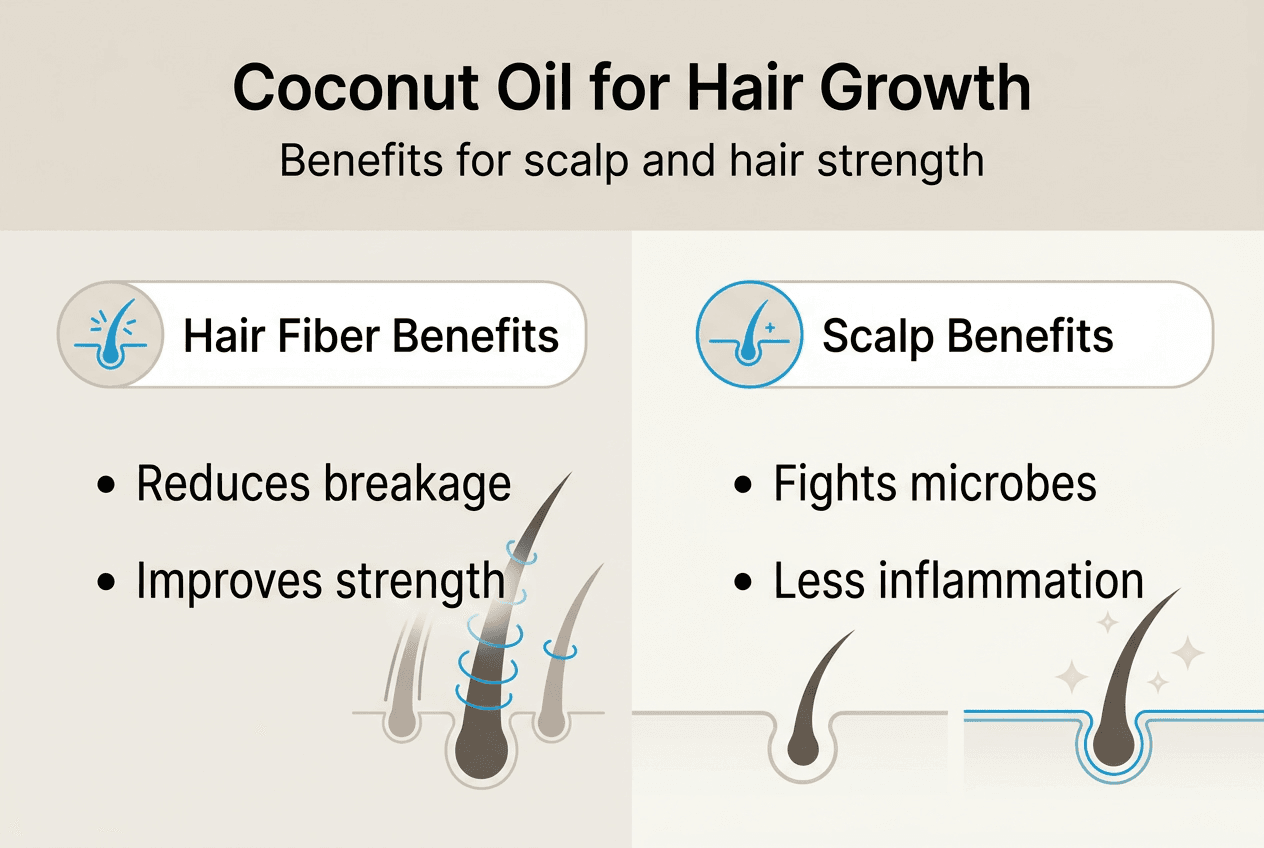
Coconut oil's secret weapon is lauric acid, a medium chain fatty acid that's small enough to penetrate hair fibers and increase tensile strength. Unlike heavier oils that sit on the surface, coconut oil molecules slip between the keratin layers and bind to protein structures inside the hair shaft. This internal reinforcement makes each strand more resistant to mechanical stress from brushing, styling, and manipulation.
Over time, reduced breakage translates to longer retention of hair length. You're not growing hair faster, but you're keeping more of what grows naturally. The cumulative effect creates the appearance of thicker, fuller hair because fewer strands are breaking off prematurely. This is why coconut oil users often report improved hair density after several months of consistent application.
Proper application technique matters significantly for maximizing penetration. Apply coconut oil to damp hair rather than bone dry strands, as moisture helps carry the oil deeper into the fiber structure. Work the oil from mid lengths to ends where damage accumulates most, then gently massage into the scalp. Leave it on for at least 30 minutes or overnight for deep conditioning benefits.
Pro Tip: Warm coconut oil slightly between your palms before application to improve absorption and make distribution easier through your hair.
Consider pairing coconut oil treatments with hair oil for natural hair growth strength routines that address multiple aspects of hair health simultaneously.
"The molecular structure of coconut oil allows it to penetrate the hair cortex, providing protection against protein loss and mechanical damage that other oils cannot match."
Scalp health benefits: antimicrobial and anti-inflammatory effects
A healthy scalp creates the foundation for optimal hair growth, yet many people overlook this crucial factor. Scalp conditions like dandruff, seborrheic dermatitis, and folliculitis create inflammation that disrupts the hair growth cycle, pushing follicles into premature shedding phases. Coconut oil addresses these issues through its natural antimicrobial and soothing properties.
Lauric acid demonstrates powerful antifungal and antibacterial activity against common scalp pathogens. Research shows coconut oil reduces dandruff and inflammation, creating a better environment for hair health. When you massage coconut oil into your scalp, you're not just moisturizing, you're actively combating the microorganisms that cause itching, flaking, and irritation.

Reducing scalp inflammation has direct benefits for hair retention. Inflamed follicles struggle to anchor hair shafts properly, leading to increased shedding and weaker new growth. By calming this inflammation, coconut oil helps follicles complete their natural growth cycles without premature disruption. You'll notice less hair in your brush and shower drain as your scalp environment stabilizes.
The moisturizing effect of coconut oil also prevents the dryness and tightness that trigger excessive scratching. When you scratch an itchy scalp, you damage both the skin barrier and hair follicles, creating a cycle of irritation and hair loss. Breaking this cycle with regular coconut oil scalp treatments allows your skin to heal and your follicles to function normally.
Pro Tip: Massage coconut oil into your scalp using gentle circular motions for 5-10 minutes to increase blood circulation and enhance oil absorption for maximum scalp health benefits.
For comprehensive approaches to reducing hair fall, explore coconut oil for hair fall tips benefits 2025 strategies that combine scalp care with fiber protection.
- Fights fungal infections that cause dandruff and scalp irritation
- Reduces inflammatory responses that weaken follicle attachment
- Soothes dry, itchy scalp conditions that lead to scratching damage
- Creates protective barrier against environmental irritants and pollutants
"Maintaining scalp health is as important as caring for hair strands themselves, coconut oil's antimicrobial properties make it an effective natural solution for common scalp issues that interfere with normal hair growth."
Plain vs. enriched coconut oil: which is better for hair growth?
Walking down the hair care aisle, you'll find plain virgin coconut oil alongside enriched formulas promising enhanced growth benefits. Understanding the actual differences helps you make informed purchasing decisions without overpaying for marketing hype.
A controlled study comparing plain and enriched coconut oil found both reduce hair fall and improve hair count similarly. The enriched version showed slightly earlier visible results in some participants, but by the end of the study period, both groups experienced comparable improvements in hair density and reduction in shedding. Neither version stimulated new follicle formation or altered the fundamental hair growth cycle.
Enriched coconut oils typically contain added vitamins, herbs, or other botanical extracts marketed for hair growth benefits. While these additions may provide marginal benefits, the coconut oil base delivers the primary strengthening and scalp health effects. If you choose an enriched product, verify the additional ingredients have research backing their claims rather than relying on traditional use alone.
Plain virgin coconut oil offers excellent value and purity. You know exactly what you're applying to your hair and scalp without worrying about potential sensitivities to added ingredients. For most people, plain coconut oil provides all the hair strengthening and scalp health benefits needed to support natural hair growth without the premium price tag of formulated products.
Your choice ultimately depends on personal preference and how your hair responds. Some people prefer the convenience of enriched formulas, while others appreciate the simplicity and cost effectiveness of plain coconut oil. Either option supports hair health when used consistently as part of a comprehensive hair care routine.
| Feature | Plain Coconut Oil | Enriched Coconut Oil |
|---|---|---|
| Hair fall reduction | Effective | Effective |
| Scalp health benefits | Strong antimicrobial action | Similar plus added ingredients |
| Hair density improvement | Noticeable over time | Slightly faster initial results |
| New follicle stimulation | None | None |
| Cost | Budget friendly | Premium pricing |
| Ingredient transparency | 100% pure | Varies by formulation |
- Plain coconut oil provides proven strengthening and scalp benefits at lower cost
- Enriched versions may show earlier cosmetic improvements but similar long term results
- Both options require consistent use over months for noticeable effects
- Consider potential sensitivities to added ingredients in enriched formulas
- Neither type stimulates new hair follicle growth or changes natural growth rate
Learn more about coconut oil for hair loss naturally and explore how natural oils promote hair growth through protective and nourishing mechanisms.
How to use coconut oil effectively for natural hair growth
Maximizing coconut oil's benefits requires proper application technique and consistency. Follow these steps to integrate coconut oil treatments into your hair care routine effectively.
- Start with high quality virgin coconut oil that's solid at room temperature and melts easily when warmed.
- Scoop a small amount and warm it between your palms until it liquefies completely.
- Apply to damp, freshly washed hair, starting at the scalp and working through to the ends.
- Massage your scalp using gentle circular motions for 5-10 minutes to increase blood flow and oil penetration.
- Distribute remaining oil through your hair length, focusing on mid lengths and ends where damage accumulates.
- Leave the treatment on for at least 30 minutes, or cover with a shower cap and leave overnight for intensive conditioning.
- Wash out thoroughly using a gentle shampoo, you may need two washes to remove all residue without stripping hair.
- Repeat this process 2-3 times per week for optimal results, adjusting frequency based on your hair's response.
Frequency matters as much as technique. Applying coconut oil too often can lead to buildup that weighs hair down and attracts dirt. Most people see best results with 2-3 weekly treatments, though those with very dry or damaged hair may benefit from more frequent application. Monitor how your hair responds and adjust accordingly.
Complement your coconut oil treatments with gentle hair care practices that minimize damage. Use lukewarm water instead of hot when washing, avoid aggressive towel drying that causes friction damage, and limit heat styling tools that weaken hair structure. These protective measures work synergistically with coconut oil to reduce breakage and support length retention.
Pro Tip: Combine coconut oil with a few drops of rosemary or peppermint essential oil for added scalp stimulation benefits, but test for sensitivity first with a small patch application.
Common mistakes undermine coconut oil's effectiveness. Applying too much creates greasy buildup that's difficult to wash out and can clog follicles. Using coconut oil on dry hair limits penetration compared to damp application. Skipping the scalp massage misses circulation benefits that support follicle health. Inconsistent use prevents the cumulative strengthening effects that develop over months of regular treatment.
Discover personalized approaches with a coconut oil hair routine ai personalized care growth plan tailored to your specific hair type and goals.
Discover personalized hair analysis with MyHair
While coconut oil strengthens your existing hair and improves scalp health, understanding your unique hair characteristics takes your care routine to the next level. MyHair offers ai-powered hair analysis scanner technology that assesses your hair density, strength, and scalp condition with precision that mirrors professional dermatological evaluation.

Our platform provides personalized recommendations that help you optimize natural hair growth routines, including how to best incorporate coconut oil based on your specific hair type and concerns. Track your progress over time with detailed hair score insights that show how your hair health improves with consistent care. The easy hair analysis onboarding process guides you through capturing accurate scans and interpreting your results, making advanced hair analysis accessible from home. Enhance your natural hair growth journey by combining traditional treatments like coconut oil with cutting edge technology that adapts to your evolving needs.
FAQ
Does coconut oil stimulate new hair follicle growth?
No, coconut oil does not directly stimulate new hair follicle formation or increase the number of active follicles on your scalp. Instead, it promotes the appearance of hair growth by reducing breakage and improving scalp health, which allows existing follicles to complete their natural growth cycles without premature shedding. This results in longer, fuller looking hair over time as you retain more of the hair that grows naturally.
Can coconut oil help with dandruff and scalp itching?
Yes, coconut oil effectively addresses dandruff and scalp itching through its lauric acid content, which fights the fungi and bacteria responsible for these conditions. The oil also soothes inflammation and moisturizes dry scalp skin, reducing the itching and flaking associated with dandruff. Regular scalp massages with coconut oil create a healthier environment that supports normal follicle function and reduces irritation driven hair loss.
Is enriched coconut oil significantly better than plain coconut oil?
Both enriched and plain coconut oil reduce hair fall and improve hair density with similar effectiveness. Research shows no significant difference in their ability to stimulate new hair growth or alter fundamental hair growth parameters. Your choice depends on personal preference, budget, and whether you want additional ingredients, though plain coconut oil provides the core strengthening and scalp health benefits at a lower cost.
How often should I apply coconut oil to see results?
Applying coconut oil 2-3 times per week is generally effective for most hair types and concerns. Consistent use over several months is necessary to see noticeable improvements in hair strength, reduced breakage, and overall hair density. Results vary based on your starting hair condition, but most people observe positive changes after 8-12 weeks of regular treatment combined with gentle hair care practices.
Recommended
- Coconut Oil for Hair Loss: Boost Your Growth Naturally | MyHair
- Natural Oils for Hair Growth: Proven Benefits and Uses | MyHair
- Coconut oil hair routine: AI-powered care for growth
- How to Use Coconut Oil for Hair Fall: Tips & Proven Benefits (2025) | MyHair
- Hair Oils - Hair Care - mybestpharmacy.net | Mybestpharmacy.net | Online Pharmacy