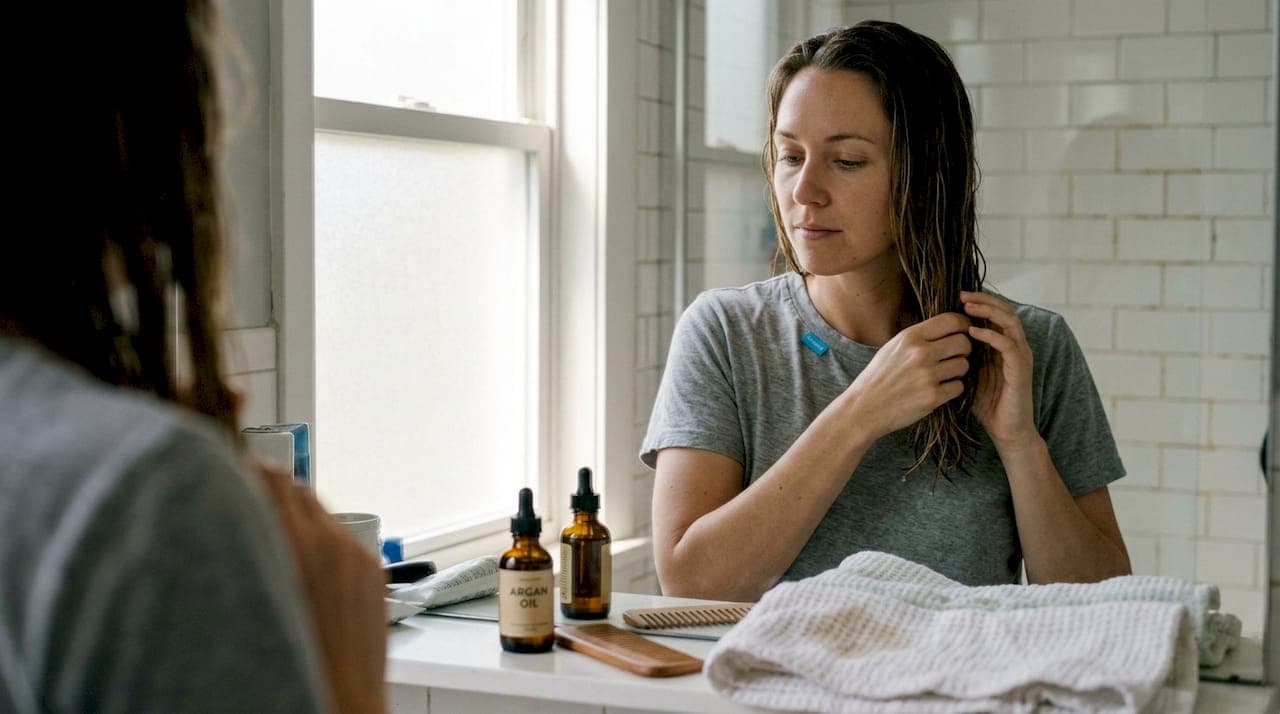
Most people assume that fixing thinning, dull, or brittle hair requires a prescription or an expensive salon treatment. That assumption is wrong. Argan oil, the base of what most people call Moroccan oil, has measurable clinical results behind it, including a 118% boost in shine and a dramatic reduction in shedding. This guide breaks down exactly what Moroccan oil does, what the science actually says, where it falls short, and how to use it correctly so you stop guessing and start seeing real results.
Table of Contents
- What is Moroccan oil hair care?
- How Moroccan oil improves hair: Science and studies
- Moroccan oil for hair loss: Limits and proven uses
- How to use Moroccan oil in your hair routine
- Personalize your hair care journey with Moroccan oil and AI
- Frequently asked questions
Key Takeaways
| Point | Details |
|---|---|
| Shine and strength boost | Moroccan oil can increase hair shine and reduce breakage for visibly stronger hair. |
| Prevention not regrowth | It helps maintain and improve hair but isn’t a primary treatment for genetic hair loss. |
| Best for dryness | Dry, brittle, or processed hair types benefit most from Moroccan oil’s conditioning effects. |
| Moderation is key | Using small amounts regularly produces the best results without making hair heavy or greasy. |
What is Moroccan oil hair care?
Moroccan oil is not a single product. It is a category. The term almost always refers to argan oil sourced from Morocco, a lightweight oil pressed from the kernels of the argan tree. What makes it stand out is its unusually high concentration of unsaturated fatty acids and antioxidant properties, which protect hair from oxidative damage and environmental stress.
You will also see the brand name Moroccanoil® on shelves. That is a specific product line, not a generic oil. Moroccanoil Treatment Original is infused with argan oil and is clinically shown to boost hair shine by up to 118% while conditioning all hair types. Many other quality products use pure argan oil with similar results. The key is checking the ingredient label for Argania spinosa kernel oil near the top of the list.
Understanding the argan oil benefits compared to other popular oils helps you make smarter choices. Here is a quick comparison:
| Property | Moroccan (argan) oil | Camellia oil | Coconut oil |
|---|---|---|---|
| Penetration depth | Medium | Medium | High |
| Conditioning effect | Strong | Moderate | Strong |
| Shine enhancement | Very high | High | Moderate |
| Best for hair type | All types | Fine to normal | Thick, coarse |
| Frizz control | Excellent | Good | Moderate |
Moroccan oil targets a specific set of hair problems. If you are dealing with any of the following, it is worth your attention:
- Chronic dryness and rough texture
- Breakage and split ends
- Lack of shine or flat, lifeless hair
- Mild thinning caused by fragility
- Post-bleach or heat-damaged hair
One important note: not every product labeled "Moroccan oil" contains meaningful amounts of argan oil. Some use it as a marketing term while loading the formula with silicones. Always read the label and learn how argan oil works before buying.
How Moroccan oil improves hair: Science and studies
The science behind Moroccan oil is more solid than most people expect. The active compounds, vitamin E (tocopherol), oleic acid, and linoleic acid, work together to repair the hair's outer cuticle layer, reduce protein loss, and protect against UV and heat damage.
Here is how the process works at a practical level:
- Antioxidants neutralize free radicals that break down the hair shaft over time, especially in color-treated or sun-exposed hair.
- Fatty acids fill gaps in the cuticle, smoothing the surface and reducing friction between strands.
- Vitamin E strengthens the scalp barrier, reducing inflammation that can contribute to shedding.
- Oleic acid improves moisture retention, keeping strands flexible and less prone to snapping.
- Linoleic acid supports sebum balance, which keeps the scalp environment healthier overall.
Argan oil modulates oxidative stress and reduces cellular damage, which directly improves scalp health and the environment where hair grows. This is not just cosmetic. It is biological.
"Moroccanoil Treatment delivers empirical results: shine increased by 118%, shedding reduced by 97%, and tensile strength measurably improved after consistent use." Moroccanoil Treatment Original
Those numbers matter. A 97% reduction in shedding is not a minor cosmetic improvement. It means strands are staying anchored longer and breaking less during brushing and styling. You can explore more scientific argan oil results and natural oils research to see how argan compares to other botanicals in clinical settings.
Experts are clear on one point: Moroccan oil is excellent for conditioning, volume, and shielding against breakage. It is not a pharmaceutical hair regrowth agent. It does not block DHT or stimulate follicles the way minoxidil does. Managing that expectation upfront saves frustration.

Pro Tip: Before adding Moroccan oil to your routine, do a patch test on a small section of hair. Fine hair in particular can get weighed down quickly. Start with one or two drops and assess after a week before increasing the amount.
Moroccan oil for hair loss: Limits and proven uses
If you are losing hair, you need to understand the difference between two very different problems. The first is hair loss caused by fragility, breakage, and poor scalp health. The second is pattern baldness driven by hormones and genetics. Moroccan oil addresses the first. It does not address the second.
"There is limited clinical evidence for argan oil directly regrowing hair in androgenetic alopecia. It excels at reducing breakage and maintaining hair quality, but it does not modulate hormonal pathways." Dr. Serkan Aygin
Here is how Moroccan oil stacks up against other common options:
| Outcome | Moroccan oil | Minoxidil | Coconut oil |
|---|---|---|---|
| Shine improvement | Excellent | None | Moderate |
| Breakage reduction | Excellent | Minimal | Good |
| Actual regrowth | Not proven | Clinically proven | Not proven |
| Scalp health | Good | Neutral | Moderate |
| Side effects | Minimal | Possible irritation | Minimal |
Moroccan oil is the right tool for the right job. It works best for people who:
- Have dry, brittle, or color-treated hair that breaks easily
- Are experiencing thinning due to fragility rather than follicle loss
- Want to improve volume and texture without chemicals
- Are recovering from bleaching, heat damage, or over-processing
- Need an adjunct to medical treatments, not a replacement
For those dealing with more advanced hair loss, hair growth oil comparisons can help you understand where natural oils fit alongside clinical options. If a dry, irritated scalp is part of your issue, moisturizing scalp care with argan oil can meaningfully improve the foundation your hair grows from.
How to use Moroccan oil in your hair routine
Knowing the science is only useful if you apply it correctly. Here is a practical, step-by-step routine that works for most hair types:
- Choose the right product. Look for Argania spinosa kernel oil in the top five ingredients. Avoid products where it appears near the bottom of a long list.
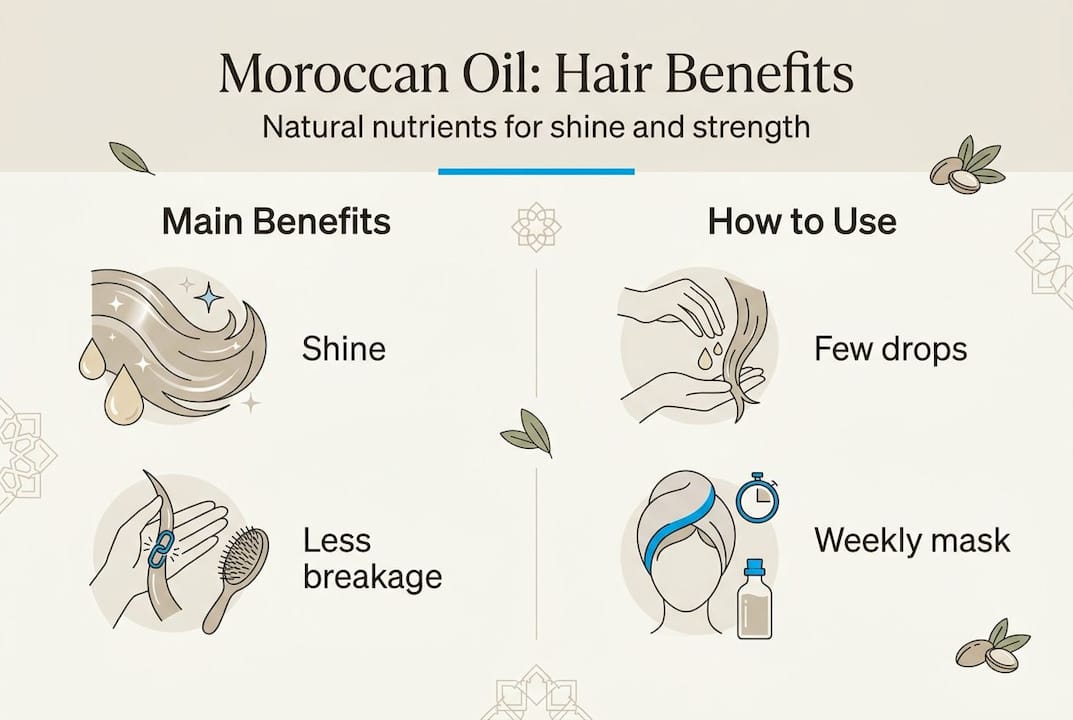
- Apply to damp hair after washing. Towel-dry first so hair is damp, not soaking. This is when the cuticle is most open and absorption is best.
- Focus on mid-lengths and ends. These are the oldest, most damaged parts of your hair. The scalp produces its own oils, so applying there often causes buildup.
- Use 2 to 3 drops for fine hair, up to 5 for thick or coarse hair. Rub between your palms before applying to distribute evenly.
- Style as usual. Moroccan oil speeds drying time and works well under heat tools or air drying.
- Repeat 2 to 3 times per week. Daily use is rarely necessary and can lead to buildup.
Avoid these common mistakes:
- Applying too much product at once, especially on fine hair
- Putting oil directly on the scalp if you have oily roots
- Skipping heat protectant and relying on oil alone before hot tools
- Mixing multiple heavy oils in the same session
Pro Tip: Less is genuinely more with Moroccan oil. Two drops worked through the ends of shoulder-length hair is enough to see a difference. If your hair looks greasy the next morning, you used too much.
For deeper conditioning, Moroccan oil hair masks are a great weekly addition. If volume is your main goal, pair Moroccan oil with a thickening oil routine or explore products for thicker hair that complement argan oil's conditioning effects. For those with very fine or thinning hair who want immediate volume, extensions for thin hair can provide body while your natural hair recovers.
Personalize your hair care journey with Moroccan oil and AI
Now that you understand how Moroccan oil works and where it fits in a hair care routine, the next step is figuring out what your specific hair actually needs. Not every person with dry hair needs the same amount of oil. Not every thinning pattern has the same cause.
MyHair.ai uses AI-powered hair analysis to assess your scalp and hair health from a simple scan, giving you a personalized picture of what is actually happening. From there, the hair care onboarding process builds a routine tailored to your hair type, loss pattern, and goals. You can even track your personal hair score over time to see whether your Moroccan oil routine is actually moving the needle. It turns guesswork into a clear, data-backed plan.
Frequently asked questions
Does Moroccan oil actually promote hair growth?
Moroccan oil supports scalp health and significantly reduces breakage, but direct regrowth evidence for androgenetic alopecia is limited. It is not a substitute for clinically proven regrowth treatments.
How often should I use Moroccan oil for best results?
Most people benefit from applying it 2 to 3 times per week on damp or dry hair. Moroccanoil Treatment conditions all hair types and adjusts well to different textures and frequencies.
Can Moroccan oil make hair greasy if overused?
Yes. Overuse, especially on fine or oily hair, adds weight and greasiness. Expert caution consistently points to starting with a minimal amount and building up only if needed.
Is there a difference between argan oil and Moroccan oil?
Moroccan oil generally refers to argan oil sourced from Morocco. The terms are used interchangeably, though Moroccanoil Treatment is a specific branded product infused with argan oil alongside other ingredients.
What hair types benefit most from Moroccan oil?
Dry, brittle, color-treated, or breakage-prone hair responds best. Moroccanoil Treatment smooths frizz and detangles across all hair types, though fine hair users should apply sparingly.