
Millions of people swear that organic coconut oil made their hair grow faster. Social media is packed with before-and-after photos, and beauty influencers treat it like a miracle cure. But coconut oil does not directly promote hair growth or reverse hair loss conditions. What it does do is genuinely impressive, just different from what most people expect. This article breaks down the real science, explains what organic coconut oil can and cannot do, and gives you a practical roadmap for using it effectively.
Table of Contents
- How does coconut oil work on hair? Separating myth from science
- Why choose organic coconut oil? Benefits beyond basic coconut oil
- How does coconut oil protect hair from damage?
- Best way to use organic coconut oil for hair: Methods, tips, and what to avoid
- Does coconut oil outperform other hair oils?
- Next step: Get a tailored hair oil routine with AI
- Frequently asked questions
Key Takeaways
| Point | Details |
|---|---|
| Growth myth busted | Organic coconut oil protects hair from breakage but does not directly regrow hair or restart hair follicles. |
| Organic offers extra benefits | Virgin and organic coconut oil provide superior antioxidant and scalp health support versus regular coconut oil. |
| Best use is pre-wash | Apply coconut oil as a pre-wash mask for maximum protection without scalp buildup. |
| Personalize for best results | Combining oil use with tailored routines gives the healthiest hair outcomes for your unique needs. |
How does coconut oil work on hair? Separating myth from science
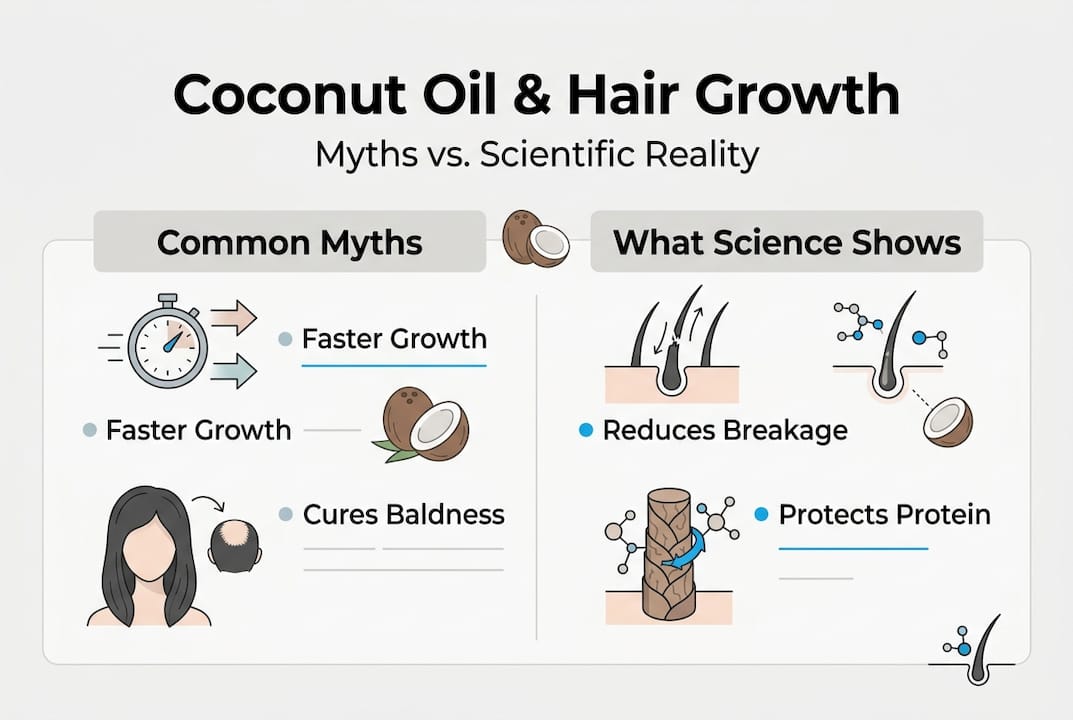
The internet is full of claims that coconut oil triggers faster hair growth. Influencers post length checks, attribute their results to coconut oil, and the cycle repeats. The problem is that no empirical benchmarks confirm a direct increase in hair density or regrowth from coconut oil use. No clinical trial has shown it increases the number of actively growing hairs beyond a placebo.
"There are no clinical trials showing coconut oil restarts dormant follicles or significantly increases anagen (growth phase) hairs."
So why do so many people notice longer, healthier hair after using it? The answer is breakage prevention. When your hair breaks less, it retains length. Coconut oil reduces protein loss by up to 41% in damaged hair compared to other oils. That is not growth stimulation. That is protection, and it is powerful.
Here is a quick breakdown of common myths versus what research actually supports:
- Myth: Coconut oil activates dormant follicles. Truth: No trial has confirmed follicle reactivation.
- Myth: It increases hair density. Truth: No measurable increase in hair count has been documented.
- Myth: It speeds up the growth cycle. Truth: Growth rate stays the same; breakage just decreases.
- Myth: Any coconut oil works equally. Truth: Virgin and organic versions outperform refined options for scalp health.
Understanding coconut oil and hair loss means separating protective benefits from growth claims. If you want to dig deeper into hair growth myths explained, the distinction between retention and regrowth is the most important one to grasp.
Why choose organic coconut oil? Benefits beyond basic coconut oil
Not all coconut oil is created equal. Organic and virgin coconut oil go through minimal processing, which preserves their natural antioxidants, polyphenols, and anti-inflammatory compounds. Refined coconut oil, by contrast, is bleached and deodorized, stripping away many of those beneficial compounds.
Virgin coconut oil provides antioxidant, anti-inflammatory, and antimicrobial benefits for scalp health, potentially preventing pollution-induced hair fall and dandruff. The fatty acid profile is similar across types, but virgin and organic versions are superior due to higher antioxidant content and better scalp barrier support.
| Feature | Virgin/organic coconut oil | Refined coconut oil |
|---|---|---|
| Source/process | Cold-pressed, unrefined | Bleached, deodorized |
| Antioxidant content | High | Low |
| Effect on scalp | Anti-inflammatory, barrier support | Minimal |
| Cost | Higher | Lower |
| Shelf life | 18-24 months | 2+ years |
Scalp conditions that respond well to organic coconut oil include:
- Dandruff caused by dryness or mild fungal imbalance
- Minor scalp irritation and redness
- Dry, flaky scalp from environmental exposure
- Scalp sensitivity linked to product buildup
Pro Tip: If you have sensitive skin, organic coconut oil's purity means fewer additives that could trigger reactions. You get better antioxidant delivery with less risk of irritation compared to refined versions.
For those dealing with coconut oil for damaged hair, the organic version is the clear choice. It also pairs well with other natural products for growth when you want a multi-ingredient approach.
How does coconut oil protect hair from damage?
The secret behind coconut oil's effectiveness is lauric acid. This medium-chain fatty acid has a low molecular weight and a strong affinity for keratin, the protein that makes up your hair. Because of this, lauric acid penetrates the hair shaft deeply, unlike most oils that just coat the surface.
This penetration is what allows coconut oil to reduce protein loss by up to 41% in damaged hair. Other popular oils simply cannot match this.

| Oil | Shaft penetration | Protein loss reduction | Scalp benefit |
|---|---|---|---|
| Coconut oil | Deep | Up to 41% | Moderate to high |
| Sunflower oil | Surface only | Minimal | Low |
| Olive oil | Partial | Moderate | Moderate |
| Mineral oil | None | None | None |
When your hair retains more protein, it stays structurally stronger. That means fewer split ends, less mid-shaft breakage, and a smoother cuticle that reflects light better. Here is what you will notice when coconut oil is working:
- Less hair left on your brush or in the shower drain
- Softer texture after washing
- Fewer split ends at the tips
- More shine and reduced frizz
- Hair that feels thicker and more resilient
This is why people perceive faster growth. The hair is not growing faster. It is simply surviving longer before breaking off. You can personalize your hair routine to maximize these protective effects, and if you want thicker hair naturally, combining coconut oil with the right supporting ingredients makes a real difference.
Best way to use organic coconut oil for hair: Methods, tips, and what to avoid
Application method matters as much as the oil itself. Using coconut oil incorrectly can lead to buildup, greasiness, or even worsened scalp conditions. Here is the most effective approach:
Pre-wash treatment (recommended method):
- Start with damp hair, not soaking wet.
- Warm a small amount of organic coconut oil between your palms until it melts.
- Apply from mid-lengths to ends, avoiding the scalp if you are prone to oiliness or buildup.
- Gently work it through with your fingers.
- Leave on for 10 to 20 minutes, or overnight for deeper conditioning.
- Wash out thoroughly with your regular shampoo, lathering twice if needed.
- Follow with conditioner as usual.
Applying to the pre-wash mask on damp hair and rinsing thoroughly prevents residue from weighing hair down. Focus on the lengths and ends, where damage is most concentrated.
Common mistakes to avoid:
- Using too much oil, which leads to greasy, limp hair
- Skipping the rinse or not shampooing thoroughly enough
- Applying directly to the scalp if you are prone to dandruff or buildup
- Using it daily, which can cause protein overload in some hair types
- Expecting results after just one use
Pro Tip: For extra damage repair, leave coconut oil in overnight. But if you have fine or oily hair, start with just 20 minutes. Overnight treatments work best for thick, coarse, or chemically treated hair.
For most people, one to two treatments per week is the sweet spot. More than that can cause buildup without adding extra benefit. If you want more guidance on how to use coconut oil for hair fall, or want to explore other natural oils for growth, frequency and layering strategies matter a lot.
Does coconut oil outperform other hair oils?
Coconut oil is impressive, but it is not the only option. Argan oil and castor oil are two other popular choices, each with distinct strengths.
| Feature | Coconut oil | Argan oil | Castor oil |
|---|---|---|---|
| Shaft penetration | Deep | Surface | Surface |
| Protein loss reduction | Up to 41% | Minimal | Minimal |
| Scalp health | Moderate to high | Moderate | High |
| Effect on growth | Indirect (breakage prevention) | Indirect (moisture) | Indirect (circulation) |
| Ease of use | Medium (can be greasy) | Easy (lightweight) | Difficult (very thick) |
| Cost | Low to moderate | Moderate to high | Low |
Here is a quick pros and cons summary:
- Coconut oil pros: Deep penetration, strong protein protection, affordable, widely available
- Coconut oil cons: Can cause buildup, not ideal for fine or low-porosity hair
- Argan oil pros: Lightweight, great for frizz and shine, easy to apply
- Argan oil cons: No shaft penetration, minimal structural repair
- Castor oil pros: Supports scalp circulation, thick coating for moisture retention
- Castor oil cons: Very thick, hard to rinse, no protein protection
In one RCT, enriched coconut oil showed over 50% reduction in hair fall by day 28, while plain coconut oil showed a 30% reduction. Both groups improved meaningfully, suggesting coconut oil alone still delivers real results.
The best approach is often a combination. Use coconut oil as your primary pre-wash treatment for protein protection, and layer in argan or castor oil based on your specific needs. Check out top oil recommendations and good oils for growth to build a routine that fits your hair type.
Next step: Get a tailored hair oil routine with AI
Coconut oil is a protector, not a miracle growth cure. Used correctly, it reduces breakage, supports scalp health, and helps your hair look and feel significantly better. But the best results come from matching the right oils and routines to your specific hair biology.
MyHair.ai uses advanced AI hair analysis to assess your scalp condition, hair thickness, and loss patterns, then delivers personalized oil and supplement recommendations based on what your hair actually needs. No guesswork. No generic advice. You can start your onboarding in minutes and see your hair score to understand exactly where you stand and what steps will move the needle for your specific goals.
Frequently asked questions
Can organic coconut oil regrow lost hair or treat baldness?
No clinical trials confirm that coconut oil regrows lost hair or reverses baldness. It reduces breakage and improves hair appearance, but it cannot reactivate dormant follicles.
Is it better to apply coconut oil before or after washing hair?
Apply coconut oil as a pre-wash mask on damp hair for 10 to 20 minutes before shampooing. This method delivers the most benefit and makes rinsing easier.
Why choose organic or virgin coconut oil over regular coconut oil?
Organic and virgin coconut oil retain higher antioxidant levels and fewer additives. Virgin coconut oil provides antioxidant and antimicrobial benefits that refined versions largely lack, making it better for scalp health and sensitive skin.
How often should I use coconut oil for hair health?
Most people benefit from one to two treatments per week as a pre-wash mask. Using it more frequently can cause buildup without adding extra protective benefit.