
Many believe shea butter and coconut oil are hair growth miracles, but the reality is more nuanced. While these natural oils deliver clear benefits for hair health, their impact on actual growth remains debated among experts. Enriched coconut oil reduced hair fall by over 50% compared to plain versions in clinical trials, yet specialists caution against viewing them as growth stimulants. This guide uses science and expert perspective to cut through myths, helping you choose wisely. You'll learn how these oils really work, practical application tips, and how to maximize their benefits for your unique hair needs.
Table of Contents
- How do shea butter and coconut oil work for hair?
- Comparing shea butter and coconut oil: Which is better for hair growth?
- Practical tips: How to use shea butter and coconut oil for your hair routine
- Who benefits most? Hair types, conditions, and what to expect
- Common pitfalls and myths: What most people get wrong
- Personalize your hair growth journey with science-backed tools
- Frequently asked questions
Key Takeaways
| Point | Details |
|---|---|
| Moisture over miracle growth | Shea butter and coconut oil boost hair health and moisture but won’t deliver miracle hair growth. |
| Herb-enriched oils excel | Oils enriched with herbs reduce hair fall and strengthen more effectively than plain oils. |
| Routine and type matter | How you use these oils—and matching with your hair type—drives the best results. |
| Set realistic expectations | Expect healthier, stronger hair, not immediate new growth, when using these natural oils. |
How do shea butter and coconut oil work for hair?
Understanding their effects starts with a closer look at what makes shea butter and coconut oil so popular for hair care. These natural ingredients have earned their reputation through specific biochemical properties that interact directly with hair structure and scalp health.
Shea butter comes packed with vitamins A and E, essential fatty acids, and powerful anti-inflammatory compounds. These components work together to seal moisture into hair strands while soothing irritated scalp tissue. The vitamin E acts as an antioxidant, protecting hair from environmental damage and oxidative stress that can weaken follicles over time.
Coconut oil contains medium-chain fatty acids, particularly lauric acid, that penetrate hair strands more effectively than most other oils. This unique molecular structure allows coconut oil to reduce protein loss from hair, which is crucial because protein makes up the structural foundation of each strand. When hair loses protein through washing, heat styling, or chemical treatments, it becomes brittle and prone to breakage.
Experts widely agree these oils improve hair moisturization and scalp health, creating an environment where hair can thrive. However, contrasting views exist regarding their role as growth stimulants. Plain versions support health and moisture retention, but enriched blends with herbs may deliver more pronounced benefits for reducing hair fall and supporting growth.
Key nutritional components and their functions:
| Component | Found In | Primary Benefit |
|---|---|---|
| Vitamin A | Shea Butter | Supports sebum production, scalp health |
| Vitamin E | Shea Butter | Antioxidant protection, reduces oxidative stress |
| Lauric Acid | Coconut Oil | Penetrates hair shaft, reduces protein loss |
| Oleic Acid | Both | Moisturizes and softens hair strands |
| Stearic Acid | Shea Butter | Seals moisture, adds shine |
The science behind these oils reveals why they excel at certain functions while falling short on others. When you apply shea butter or coconut oil to your hair, you're essentially creating a protective barrier that locks in moisture and shields strands from damage. This protection reduces breakage, which can make hair appear fuller and healthier over time.
What these oils don't do is directly stimulate hair follicles to produce new growth at a faster rate. Hair growth happens at the follicle level, deep within the scalp, where factors like blood circulation, hormone balance, and nutrient availability play the dominant roles. Surface treatments with oils primarily affect the hair shaft itself, the visible part that extends from your scalp.
How these oils support hair health:
- Create a moisture barrier that prevents water loss from hair strands
- Reduce friction between hair strands, minimizing breakage during styling
- Provide nutrients that strengthen the hair shaft structure
- Soothe scalp inflammation that can interfere with healthy hair cycles
- Protect against environmental stressors like UV radiation and pollution
For those exploring natural products for hair growth, understanding this distinction matters. You'll see better results when you set realistic expectations and use these oils as part of a comprehensive approach rather than relying on them as standalone solutions.
The difference between plain and enriched oils deserves special attention. Research shows that coconut oil infused with specific herbs outperforms plain coconut oil in reducing hair fall and improving overall hair quality. This suggests that while the base oils provide foundational benefits, strategic additions can amplify their effectiveness.
When comparing various natural oils for hair growth, shea butter and coconut oil consistently rank among the top choices for their proven moisturizing and protective properties. They may not trigger rapid new growth, but they create optimal conditions for your existing hair to reach its full potential.
Comparing shea butter and coconut oil: Which is better for hair growth?
Now that you know what each offers, let's see how shea butter and coconut oil stack up side by side. This comparison will help you choose the right option for your specific hair goals and concerns.
Direct comparison of key benefits:
| Feature | Shea Butter | Coconut Oil | Enriched Coconut Oil |
|---|---|---|---|
| Moisture Retention | Excellent | Very Good | Very Good |
| Hair Strength | Good | Excellent | Superior |
| Scalp Health | Excellent | Good | Very Good |
| Protein Loss Prevention | Moderate | High | High |
| Hair Fall Reduction | Moderate | Good | Excellent |
| Shine Enhancement | Good | Excellent | Excellent |
| Penetration Depth | Surface | Deep | Deep |
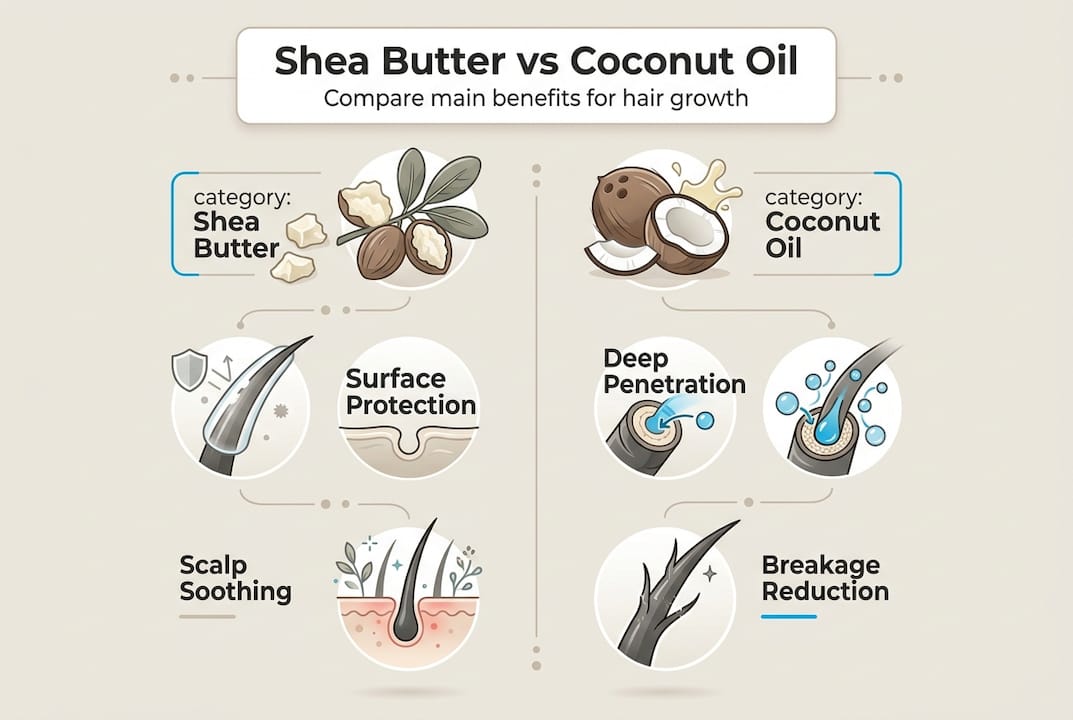
The data reveals important distinctions. Shea butter excels at surface-level protection and scalp soothing, making it ideal for dry, irritated scalps and hair that needs intense moisture sealing. Its thicker consistency creates a robust barrier against environmental damage and moisture loss.
Coconut oil, particularly in its virgin, unrefined form, penetrates deeper into the hair shaft. This penetration ability means it can actually strengthen hair from within by preventing protein degradation. Enriched coconut oil reduced hair fall by more than 50% compared to plain coconut oil in an eight-week controlled trial, demonstrating the potential of strategic formulation.

For those dealing with coconut oil for hair loss, the enriched versions show particular promise. The addition of herbs and botanical extracts appears to enhance the base oil's effectiveness, though the exact mechanisms require further research to fully understand.
Pro Tip: If you have fine or oily hair, start with coconut oil because it rinses out more easily than shea butter. For thick, coarse, or very dry hair, shea butter's heavier consistency provides superior moisture sealing. You can also blend both oils in equal parts to get combined benefits, warming them together until they form a smooth mixture.
The expert consensus remains clear: these oils are excellent for general hair health and reducing breakage, but they're not miracle growth stimulants. This realistic perspective helps you make informed decisions rather than chasing unrealistic promises.
Your choice between shea butter and coconut oil should align with your primary hair concerns. If breakage and protein loss are your main issues, coconut oil's penetrating properties make it the stronger choice. If you're battling dryness, scalp irritation, or need heavy-duty moisture sealing, shea butter delivers superior results.
Many people find success with personalized coconut oil routines that adapt to their hair's changing needs throughout the year. Your hair may need different approaches in winter versus summer, or during periods of stress versus stability.
The enriched oil advantage deserves emphasis. While plain coconut oil and shea butter provide solid baseline benefits, formulations that incorporate complementary ingredients show enhanced results in clinical settings. This suggests that the future of natural hair care lies not in single ingredients but in thoughtfully combined formulations.
Practical tips: How to use shea butter and coconut oil for your hair routine
Choosing the right oil is just the start. Here's how to make your routine work best for your hair, with step-by-step guidance that maximizes benefits while avoiding common mistakes.
Application method for optimal results:
- Start with clean, damp hair for better absorption and distribution
- Warm a small amount of oil between your palms until it liquefies
- Apply to your scalp first, using fingertips to massage in circular motions for 3-5 minutes
- Work the remaining oil through your hair length, focusing on the ends
- Cover with a shower cap or warm towel to enhance penetration
- Leave in for 20-60 minutes for regular treatments, or overnight for intensive care
- Rinse thoroughly with lukewarm water, then shampoo as usual
- Repeat 1-3 times per week depending on your hair's dryness level
The scalp massage step is crucial and often overlooked. Those few minutes of circular massage stimulate blood flow to hair follicles, which supports nutrient delivery and waste removal. This mechanical stimulation may contribute more to hair health than the oil itself in some cases.
Timing matters more than most people realize. Leaving oil on too long can lead to buildup, while removing it too quickly limits absorption. The 20-60 minute window hits the sweet spot for most hair types, allowing adequate penetration without excessive residue.
Pro Tip: Blending oils amplifies their benefits. Try mixing 2 parts coconut oil with 1 part shea butter, adding a few drops of rosemary or peppermint essential oil for additional scalp stimulation. Warm this blend gently before application for easier distribution and enhanced absorption.
Research shows that enriched coconut oil outperformed plain versions in reducing hair fall while boosting shine and strength in controlled trials. This evidence supports the practice of enhancing base oils with complementary ingredients.
"The key to success with natural oils isn't just what you use, but how consistently and correctly you apply them. Irregular use yields irregular results, while a disciplined routine creates cumulative benefits that compound over time."
Frequency guidelines vary by hair type. Fine or oily hair typically needs oil treatments once per week maximum, while thick, coarse, or chemically treated hair can handle 2-3 weekly applications. Pay attention to how your hair responds and adjust accordingly.
Overnight treatments deliver intensive conditioning but require proper preparation. Use an old pillowcase you don't mind staining, and consider wrapping your hair in a silk or satin scarf to prevent oil transfer. Morning removal requires thorough shampooing, sometimes twice, to eliminate all residue.
For those following comprehensive hair growth routine tips, these oils should complement rather than replace other essential practices. Proper nutrition, stress management, and gentle handling all contribute to optimal hair health alongside topical treatments.
Spotting quality products protects your investment and results. Real, unrefined shea butter should be ivory or light yellow, never pure white, with a subtle nutty aroma. It should melt at body temperature and feel smooth, not grainy. Virgin coconut oil appears solid below 76°F, turns clear when liquid, and smells distinctly like coconut.
Avoid products with added fragrances, colors, or preservatives when possible. These additives dilute the beneficial compounds and can irritate sensitive scalps. The ingredient list should be short, ideally just the oil itself.
When exploring using coconut oil for hair fall, remember that consistency trumps intensity. Regular, moderate applications outperform sporadic intensive treatments in long-term results.
Who benefits most? Hair types, conditions, and what to expect
You might wonder if these oils work for your unique hair concerns. Here's what research and experts say about who sees the best results and what outcomes you can realistically expect.
Hair types and conditions that benefit most:
- Dry, brittle hair that breaks easily during styling or brushing
- Curly or coily hair textures that struggle with moisture retention
- Chemically treated hair damaged by coloring, relaxing, or perming
- Hair exposed to frequent heat styling with tools like flat irons or blow dryers
- Scalps with inflammatory conditions like mild dandruff or irritation
- Hair experiencing seasonal dryness from cold weather or indoor heating
- Aging hair that has lost elasticity and natural oil production
These categories share a common thread: they all involve some form of moisture deficit or structural weakness that oils can address. The protective and moisturizing properties of shea butter and coconut oil directly target these specific vulnerabilities.
What you can expect from consistent use centers on hair health improvements rather than dramatic growth acceleration. Your hair will likely feel softer, look shinier, and break less frequently during styling. These changes create the appearance of fuller, healthier hair as you retain more of what you grow naturally.
What you shouldn't expect is rapid new hair growth or reversal of genetic hair loss patterns. These oils work on the hair shaft and scalp surface, not on the complex hormonal and genetic factors that control follicle activity and growth cycles.
Studies show up to 50% reduction in hair fall with enriched coconut oil formulations compared to plain oils, representing significant improvement for those struggling with excessive shedding. This statistic comes from controlled clinical trials measuring actual hair fall over eight weeks.
Realistic timelines help set appropriate expectations. You'll notice immediate softness and manageability after your first treatment, but structural improvements take longer. Reduced breakage becomes apparent after 2-4 weeks of consistent use, while decreased hair fall may take 6-8 weeks to measure reliably.
The contrasting expert views on these oils as growth stimulants highlight an important distinction. They're excellent for health and moisture, creating conditions where hair can reach its genetic potential, but they don't override your natural growth rate or follicle activity.
People with fine hair need special consideration. While these oils offer benefits, heavy application can weigh down fine strands and make hair look greasy or flat. If you have fine hair, use minimal amounts, focus on the ends rather than roots, and consider lighter oils like argan or jojoba as alternatives.
Those building a strong hair care routine should view these oils as one component of a multi-faceted approach. Combine them with proper nutrition, gentle handling, stress management, and appropriate hair care products for comprehensive results.
Age-related hair changes respond particularly well to these oils. As we age, our scalps produce less natural sebum, leading to drier hair that's more prone to breakage. Supplementing with external oils compensates for this decline, helping mature hair maintain its strength and appearance.
Common pitfalls and myths: What most people get wrong
To get the best results, it's crucial to clear up some widespread myths and expensive missteps that prevent people from achieving their hair goals with these natural oils.
Persistent myths debunked:
- Myth: Applying more oil produces faster results. Reality: Excess oil leads to buildup, greasiness, and difficult removal without additional benefits.
- Myth: These oils will make hair grow significantly faster. Reality: They reduce breakage and improve health, which preserves length, but don't accelerate growth rate.
- Myth: All coconut oil and shea butter products are equally effective. Reality: Quality, purity, and processing methods dramatically affect results.
- Myth: You should leave oil in your hair for days for maximum benefit. Reality: Prolonged exposure can attract dirt and cause scalp issues without improving outcomes.
- Myth: These oils work the same for everyone. Reality: Hair type, porosity, and individual chemistry create vastly different responses.
The growth stimulant myth causes the most disappointment. Contrasting expert views consistently show that while these oils excel at health and moisture, they're often overestimated as growth stimulants. This gap between expectation and reality leads people to abandon effective treatments prematurely.
The "more is better" trap wastes product and creates problems. Your hair can only absorb so much oil. Beyond that saturation point, additional application just sits on the surface, making hair look greasy and attracting environmental debris. A quarter-sized amount typically suffices for shoulder-length hair.
Quality matters enormously. Refined, processed oils lose many beneficial compounds during manufacturing. Unrefined, virgin, cold-pressed versions retain the full spectrum of vitamins, fatty acids, and antioxidants that deliver results. The price difference is modest but the effectiveness gap is substantial.
Many people apply oils to dry hair, which limits absorption. Damp hair has slightly opened cuticles that allow better penetration. This simple timing adjustment can significantly improve results without changing products or techniques.
The hype versus evidence distinction requires critical thinking. Social media and marketing often showcase dramatic before-and-after photos that may involve multiple interventions, professional styling, or even different people. Trustworthy information comes from peer-reviewed studies and consistent expert consensus.
Real limits exist with any topical treatment. If you're experiencing hair loss from hormonal imbalances, nutritional deficiencies, medical conditions, or genetic factors, surface oils alone won't resolve the underlying cause. They can support overall hair health while you address root issues, but they're not standalone solutions for medical hair loss.
For those researching natural hair products for growth, maintaining realistic expectations prevents disappointment and helps you appreciate the genuine benefits these oils provide. They're valuable tools in your hair care arsenal, not magic bullets.
Personalize your hair growth journey with science-backed tools
Armed with these insights, here's an even smarter next step for optimizing your results. While shea butter and coconut oil offer proven benefits for hair health, understanding your unique hair characteristics takes your routine from generic to genuinely effective.
Your hair responds differently to treatments based on factors like porosity, density, scalp condition, and even your diet and stress levels. What works brilliantly for someone else might produce mediocre results for you, not because the product is ineffective, but because your hair has different needs.

MyHair's AI-powered hair analysis takes the guesswork out of hair care by providing personalized insights based on your specific hair patterns and conditions. Instead of trying random products and hoping for results, you can identify exactly what your hair responds to best. The platform tracks changes over time, helping you see which interventions actually work and which ones waste your money. You can get your hair score to establish a baseline, then monitor improvements as you implement targeted strategies. The hair analysis onboarding process is straightforward, giving you detailed assessments that inform smarter decisions about products, routines, and realistic goals for your unique hair journey.
Frequently asked questions
Can shea butter and coconut oil really make hair grow faster?
These oils mainly support stronger, healthier hair and may reduce breakage, but are not proven to directly speed up new hair growth.
What's the best way to apply shea butter and coconut oil for results?
Massage a small amount onto your scalp and hair, leave in 20-60 minutes or overnight, then rinse thoroughly. Enriched coconut oil outperformed plain versions in reducing hair fall.
Who should avoid shea butter or coconut oil on hair?
Anyone with nut allergies, very fine or oily hair, or active scalp conditions should patch test or consult a dermatologist before regular use.
How quickly can you expect results from using these oils?
Noticeable moisture and softness appear after a few uses, but reducing hair fall or breakage may take several weeks of consistent application.