The best hair breakage treatment product is the one that matches what is breaking your hair. Conditioners, leave-in treatments and oils coat the strand and cut friction. Bond-building and keratin-type treatments target the hair's internal structure. None of them works for long if the heat, chemicals or tension causing the damage carry on. We built our app around that idea: scan your hair, see what is going on, then choose products for your own pattern instead of guessing from a shelf.
TL;DR
- Breakage means the hair shaft snaps along its length. Shedding means the whole hair leaves the follicle. They need different responses.
- Products that coat and condition the strand (moisturizing conditioners, leave-ins, oils) are the everyday core of breakage care. Bond-building and keratin-type treatments are the targeted extra.
- Stopping the cause comes first: less heat, fewer chemical treatments, gentler handling.
- A broken strand cannot be repaired, but follicles stay intact, so new hair grows in. Judge results over months, not days.
- Tracking your hair with regular scans shows whether a product is helping. See a dermatologist for sudden, patchy or persistent loss.
Table of Contents
- Breakage, shedding and hair loss are not the same problem
- What actually treats hair breakage
- The main types of breakage treatment products
- Match the product to the cause
- The habits that make products work
- Using breakage products safely
- Will hair grow back after breakage?
- How to tell if a product is working
- Where our app fits
- Our perspective
- When to see a dermatologist
- FAQ
- Sources
Breakage, shedding and hair loss are not the same problem
Before you buy anything, work out which one you have. The treatments differ.
In shedding disorders such as telogen effluvium, complete hair fibers are released from the follicle. In a hair shaft disorder, the fiber fractures along its length, which leaves short hairs and makes your hair look less dense even though the follicles are still working. Telogen effluvium is a temporary type of shedding that often follows a stressful event, illness or major life change.
The same page explains that some shaft defects are inherited, while others are acquired through chemical, thermal, mechanical or environmental damage. Acquired damage is the kind products and habit changes can address.
Signs that point to breakage rather than shedding:
- Short, uneven pieces of hair around your face, crown or along the length.
- Split ends, frizz or a rough, straw-like feel.
- No white bulb at the end of the fallen hair.
- Hair that seems to stop growing past a certain length.
If you want a deeper look at what causes it, our guide to what is really damaging your hair walks through the common culprits, and our piece on hair breakage from bleach covers the most frequent chemical cause.
What actually treats hair breakage
A clinical review of trichorrhexis nodosa, the common structural weakness behind breakage, describes treatment in two parts. The first is avoiding the physical and chemical exposures that cause it: wide-toothed combs, less frequent brushing and scalp scratching, and minimal heat styling and chemical treatment. The second is topical support: pomades, conditioners and oils to hydrate the hair, and keratin treatments to restore structure.
The International Academy of Cosmetic Dermatology puts it as stopping the offending agent first, then using moisturizing conditioners that coat the hair and help reduce cuticle porosity. It adds that when damage is severe, especially with splitting ends, cutting the damaged hair may be the only fix.
That gives you an order of operations: remove the cause, add products that protect and condition, and trim what cannot be saved.
The main types of breakage treatment products

Moisturizing conditioners and deep conditioning masks
These are the foundation. The American Academy of Dermatology (AAD) recommends applying a moisturizing conditioner after every shampoo, and using a leave-in conditioner or detangler. A deep conditioner once a week is a sensible step up for dry, brittle hair. Look for words like "moisturizing," "repair" or "strengthening" on the label, then check that it suits your hair texture.
Leave-in treatments and detanglers
These stay on the hair and reduce friction while you comb, style and sleep. Because mechanical stress is one of the biggest breakage drivers, a good leave-in matters most for long, curly, fine or tangle-prone hair. Apply it to damp hair and work through gently from the ends upward.
Hair oils and serums
The clinical review lists plant oils used in hair products, including avocado, argan, coconut, olive, jojoba, grapeseed and rosemary, typically applied after washing and used every other day or once a week. A small amount on the ends is usually enough. Oils are best for smoothing, shine and cutting friction, so use them on the mid-lengths and ends, not as a scalp treatment.

Keratin-based treatments
Keratin products aim to restore the hair's filament structure. This is also the category where ingredient safety matters most, so read the safe-use section below before choosing one.
Bond-building treatments
These are designed for hair damaged by bleach, color and heat, where the internal protein bonds are weakened. They are usually used as a pre-shampoo or post-shampoo treatment at a set interval. Follow the label for timing, since more is not better.
Gentle shampoo
This is a product too, and it counts. The AAD advises a gentle shampoo for people managing hair loss. Harsh cleansing on already fragile hair makes everything else harder.
Match the product to the cause
Use this as a starting point.
| Likely cause | What to prioritize | Habit to change |
|---|---|---|
| Bleach, permanent color, perms | Moisturizing conditioner, weekly deep conditioning, bond-building treatment | Space out touch-ups; permanent color is typically redone at the roots every 2 to 4 months |
| Heat styling | Leave-in with heat-protective claims, smoothing oil on ends | Lowest heat setting; reserve flat irons and curling irons for special occasions |
| Brushing, towel friction, tight styles | Detangling leave-in, wide-toothed comb | Microfiber towel, looser ponytails and buns |
| Relaxers | Moisturizing conditioner, deep conditioning | Wait longer between relaxer applications |
| Dry, brittle, no clear trigger | Moisturizing conditioner, leave-in, oil on ends | Review the whole routine and get a scalp check if it persists |
The permanent-color timing comes from the International Academy of Cosmetic Dermatology, which explains that permanent color damages the cortex's keratin proteins and that once the cuticle and cortex are permanently damaged, breakage can follow.
The habits that make products work
Products only repair so much. The AAD's list of practical steps reads like a breakage routine:
- Use a gentle shampoo and a moisturizing conditioner after every wash.
- Add a leave-in conditioner or detangler.
- Wrap hair in a microfiber towel so it dries faster.
- Skip hot-oil treatments.
- Stop at-home coloring, perming and chemical straightening or relaxing while hair recovers.
- Limit curling irons, flat irons and hot combs, and use the lowest heat setting on a blow-dryer.
- Stop wearing hair tightly pulled back, and brush or comb gently.
All of these appear in the AAD's hair tips. Pick the two or three that match your own triggers instead of changing everything at once. For a fuller routine, see our healthy hair care routine and our tips for stopping hair breakage.
Using breakage products safely
Keratin smoothing treatments and formaldehyde
Some keratin smoothing products contain methylene glycol, which releases formaldehyde gas when heated. A product warning filed on reginfo.gov says these products should be used only in well-ventilated areas. It lists possible effects of exposure, including eye and throat irritation, headaches, dizziness, breathing problems and skin irritation. It says the product should not be used on hair that is breaking, splitting, shedding or damaged, or by people who are sensitive to formaldehyde or have conditions such as asthma.
For breakage, this means choosing conditioning, leave-in and oil products over heated smoothing treatments, and reading the label of any keratin product for ingredients and directions. The clinical review notes that not every keratin formulation contains formaldehyde. It also says alternatives such as glyoxylic acid, cysteine and carbocysteine treatments are generally safer medically, though damage can still occur if they are misused or overused.

Relaxers
The International Academy of Cosmetic Dermatology notes that breakage from relaxers can be reduced by waiting at least 6 to 8 weeks between applications. It also reports that relaxers have been associated with central centrifugal cicatricial alopecia, a form of permanent scarring hair loss, in women of color. If you see scalp pain, burning or bald patches after relaxing, stop and see a dermatologist.
Supplements
It is tempting to add a pill to a breakage routine. The AAD points out that the FDA does not review dietary supplements for safety and effectiveness before they are sold, and that too much of certain nutrients, including selenium, vitamin A and vitamin E, has been linked to hair loss. Check with your doctor before starting a high-dose supplement, especially if you take medication.
Will hair grow back after breakage?
Yes. Breakage affects the strand, not the follicle, so your follicles keep producing hair. That is why the American Hair Loss Association describes broken hairs as making the scalp look thin even though the follicle can still grow hair.
The wait is about length, not about the follicle. Cleveland Clinic explains that the growth phase of a hair lasts two to eight years, so a healthy strand has plenty of time to grow once it stops being damaged. Hair grows slowly, so treat results in stages:
- First few weeks: hair feels softer and tangles less. This is the conditioning effect, and it is real, but it is surface-level.
- Two to three months: fewer short broken pieces and less snapping when you brush.
- Six months and beyond: new, undamaged length begins to replace the older, weakened sections. How long this takes depends on how long your hair is.
If what you are seeing is actually shedding after an illness, surgery or a baby, the AAD says regrowth usually begins 3 to 6 months after shedding starts, with most people seeing complete regrowth within 6 to 8 months. A dermatologist can also tell you whether your hair may regrow on its own.
How to tell if a product is working
This is where most people go wrong. They judge a product by how their hair feels the day after, switch products every few weeks and never learn which change helped.
A simple, repeatable approach:
- Take a baseline. Photograph your hair in the same light, at the same angle, once a week or once every two weeks.
- Change one thing at a time. Add a new conditioner or oil, keep everything else the same, and give it at least a month or two.
- Note the triggers. Write down when you color, heat style or wear tight styles.
- Compare over months. Look at the same views and ask whether the short, snapped pieces are fewer.
This is the process our app is built to make easier. You scan your hair, get a detailed assessment, and track how it changes over time. Our scans are designed to pick up individual patterns and issues, and the product recommendations that follow are tailored to what your scan shows.
Where our app fits
If you want one place to scan, track and choose products, start with the free plan on our site. It gives you access to hair analysis and product recommendations so you can see what suits your hair before you commit to anything. For advanced analysis features, the monthly plan is $9.99 per month, and you can see both options on our subscription page.
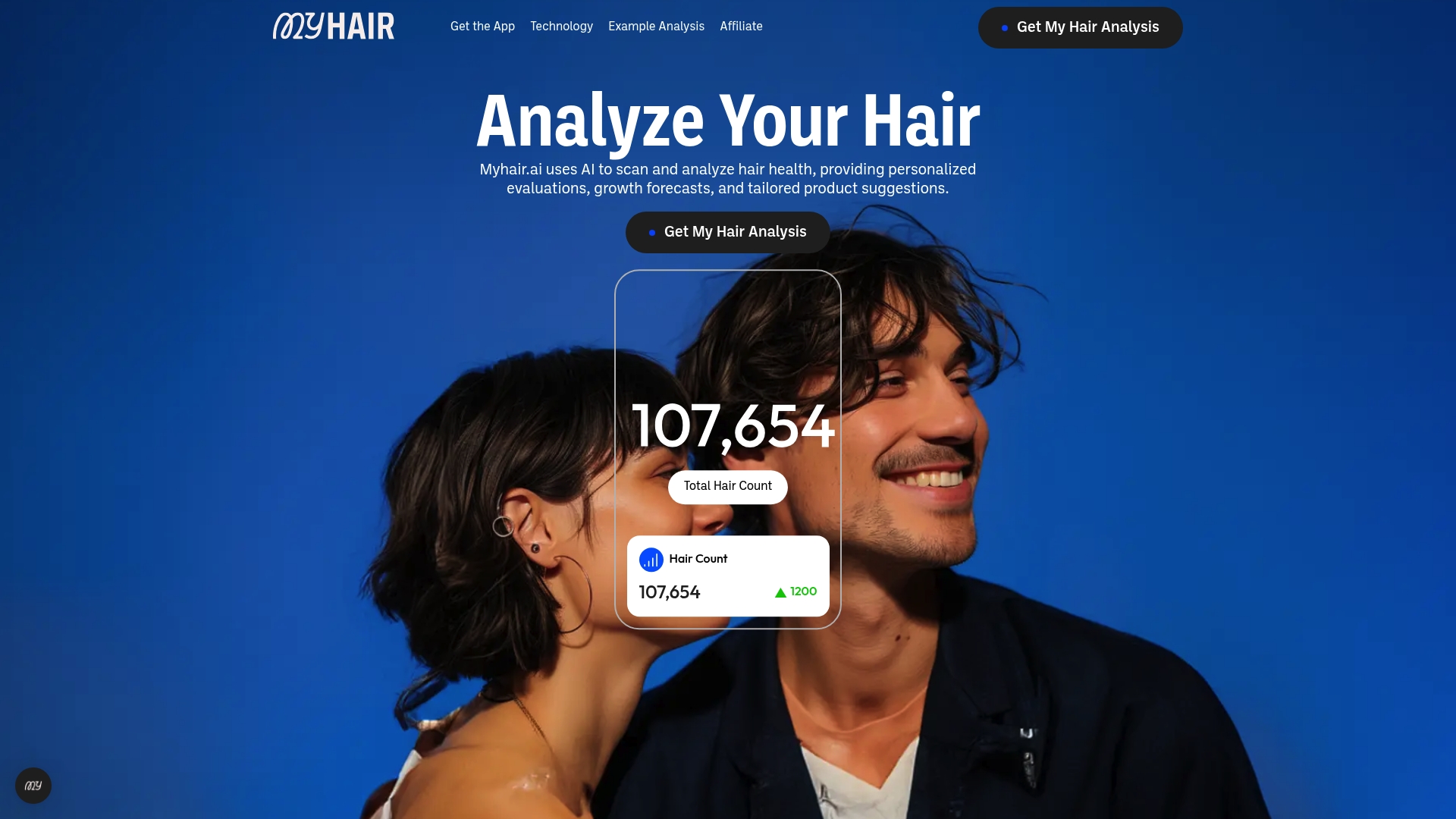
If your hair concern goes beyond breakage, such as a widening part or progressive thinning, our directory of hair clinics and hair restoration doctors helps you find a specialist. If you are unsure whether you are seeing breakage or thinning, our guide on spotting thinning hair explains the difference.
Our perspective
Most people shop for hair breakage the wrong way round. They start with a product, then hope it matches the problem. We think the order should be reversed: understand your own hair first, then choose.
Breakage is rarely one thing. It is usually a mix of heat, chemical processing and everyday friction, stacked on a strand that is already fragile. That is why the same conditioner transforms one person's hair and does nothing for another's. A scan-based assessment is designed to show you your own pattern, so the products you buy are chosen for that pattern and not for a label's promise.
The second thing we care about is time. Hair is slow, and a month of inconsistent use tells you nothing. Tracking your hair over time turns a vague feeling ("it seems better?") into something you can compare. That is what our app is for: a clear baseline, regular check-ins and recommendations that change as your hair does.
And when what you are seeing is more than breakage, we want you to get to the right specialist quickly. That is why we pair analysis with a directory of clinics and hair restoration doctors.
Cyriac
When to see a dermatologist
Products and habit changes suit breakage on its own. Book an appointment with a dermatologist if:
- hair loss is sudden or comes in patches;
- your scalp is painful, itchy, red, scaly or has sores;
- shedding continues for more than a few months, or your part keeps widening;
- hair loss started after a new medication;
- hair changes come with fatigue, weight changes or other symptoms.
Cleveland Clinic's Dr. Bergfeld advises giving your doctor a full hair history so they can tell whether you are dealing with shedding or breakage. Bring your scan history and photos: they show how things changed over time. If you want a specialist near you, you can browse our hair clinic directory.
FAQ
What is the best treatment for hair breakage?
There is no single product. Treatment starts with stopping the cause, such as heat, chemicals and rough handling. It then adds a moisturizing conditioner, a leave-in and, for dry ends, a light oil, as dermatology sources describe. Severely split ends are often best trimmed.
Can broken hair be repaired?
Products can smooth, coat and strengthen a damaged strand so it snaps less, but a strand that has already broken does not regrow from the break. What you can do is prevent further damage and let healthy, new hair grow in from the follicle.
Which hair cream is good for hair breakage?
Look for a moisturizing conditioner or leave-in cream that suits your hair type, and apply it consistently after washing. The AAD recommends a moisturizing conditioner after every shampoo and a leave-in conditioner or detangler. Our scan-based recommendations narrow the choice to your own hair.
How do you treat extremely brittle hair?
Start by pausing at-home coloring, perming, chemical straightening and high heat. Use a gentle shampoo, moisturizing conditioner and leave-in, and handle hair with a wide-toothed comb and a microfiber towel. Avoid heated keratin smoothing products on hair that is already breaking, as the product warning states. If brittleness is sudden or comes with scalp symptoms, see a dermatologist.
How long until I notice less breakage?
Softer feel can come within weeks, but fewer broken hairs usually take a couple of months, and replacing damaged lengths takes longer. Tracking your hair with the same photos or scans each time makes the change visible.
Sources
- Hair Shaft Defects, American Hair Loss Association
- A Clinical Review of Trichorrhexis Nodosa, Open Dermatology Journal
- Hair, International Academy of Cosmetic Dermatology
- Hair loss: Tips for managing, American Academy of Dermatology
- Can COVID-19 cause hair loss?, American Academy of Dermatology
- Hair loss: Diagnosis and treatment, American Academy of Dermatology
- Keratin treatment product warning, reginfo.gov
- How Much Hair Loss Is Normal and When To Worry, Cleveland Clinic