Prenatal vitamins do not grow hair on their own. Health.com's medically reviewed guide states that no research supports the claim. The nutrients inside them can matter if you are low in one of them, and that is the one situation where hair may respond. So the useful question is not "which prenatal should I buy?" but "what is behind my thinning?" I built my approach around that question, and in this article I walk you through the evidence, the safety limits, and a way to track what is really happening on your scalp.
TL;DR
- I found no good evidence that prenatal vitamins improve hair growth in people who are not pregnant and not deficient.
- Iron, vitamin D and a few other nutrients can help hair only when a blood test shows you are low.
- A prenatal carries more iron and folic acid than a non-pregnant adult needs, so taking one "just in case" has real downsides.
- Postpartum shedding is temporary and tied to hormones, not to a missing pill.
- The smarter move is to find the cause, then track your hair over weeks and months to see whether anything is working.
Table of Contents
- Why prenatals have a reputation for thicker hair
- What the research says about vitamins and hair
- What is in a prenatal, and which parts touch hair
- Taking a prenatal when you are not pregnant
- Postpartum shedding is not a vitamin problem
- What to do instead: find the cause first
- How to tell whether anything is working
- Tracking your hair with MyHair
- Our perspective
- FAQ
- Sources
Why prenatals have a reputation for thicker hair
Many women notice fuller hair during pregnancy and credit the vitamin. Health.com's reviewers point instead to hormone shifts, mainly higher estrogen, which keeps hairs in their growth phase longer. When estrogen falls after delivery, those hairs shed together. The vitamin was along for the ride.
The second source of the myth is a real effect that gets misread. If your hair is thinning because you are low in iron, correcting that can help, and a prenatal contains iron. The hair improved because the deficiency was fixed, not because prenatals are a hair product. The same goes for shedding that stops by itself: a common type called telogen effluvium (a temporary shedding phase, usually after stress, illness or a big life change) resolves on its own schedule, and whatever you took that month gets the credit.
What the research says about vitamins and hair
I only lean on peer-reviewed reviews and medical bodies here, because hair supplement marketing is full of claims that no one has tested.
A 2026 review by Ravipati and Tosti found that vitamin deficiencies are documented in people with alopecia areata (patchy autoimmune hair loss) and telogen effluvium. It also found limited scientific evidence that supplements improve hair in healthy people who are not deficient, and that clinical trials are scarce.
A 2018 review in Dermatology and Therapy goes nutrient by nutrient:
- Vitamin D supplementation can improve symptoms of androgenetic alopecia (pattern hair loss) and telogen effluvium when levels are low.
- Iron is recommended for iron-deficient patients, with adequate vitamin C.
- There was insufficient data to recommend zinc, riboflavin, folic acid or B12.
- Neither vitamin E nor biotin was supported for these conditions.
Harvard Health says the same in plain terms: vitamin D and iron may be recommended when blood tests confirm a deficiency alongside hair loss, and evidence is conflicting for most of the rest.
What is in a prenatal, and which parts touch hair
Prenatals typically contain B vitamins, calcium, choline, folic acid, iron, omega-3 fatty acids, and vitamins C and D, according to Health.com. Here is how that lines up with the hair evidence above.
| Ingredient | Evidence for hair | When it may matter |
|---|---|---|
| Iron | Supported when deficient | Low ferritin (stored iron) on a blood test |
| Vitamin D | Supported when low | Low blood level with pattern hair loss or shedding |
| Vitamin C | Helps iron use | Alongside iron deficiency |
| Folic acid, B12 | Insufficient data to recommend | Only for a diagnosed deficiency |
| Biotin | Not supported for these conditions | Uncommon true deficiency |
| Omega-3, calcium, choline | No hair evidence in the sources I reviewed | General nutrition |
Biotin deserves its own note because it is the ingredient most often marketed for hair. Verywell Health says the evidence is insufficient to confirm a benefit, which may exist only for people with low biotin, an uncommon condition. I cover the lab test side in more depth in my biotin evidence check.
Taking a prenatal when you are not pregnant
Prenatals are built for pregnancy needs, so the doses sit above what most other adults require. That is a safe-use question, and these are the figures worth knowing.
Iron. A prenatal commonly has 27 mg per daily dose, while nonpregnant adults need 8 mg (men) or 18 mg (women), as a Mayo Clinic Health System dietitian told Business Insider. Verywell Health lists the upper limit at 45 mg and says excess iron can cause secondary hemochromatosis (iron overload) with abdominal pain, joint pain and digestive symptoms. A 2020 review by Burns, Perez-Sanchez and Katta found that long-term iron use in non-deficient people, even at low doses, has caused overload symptoms such as constipation and reduced zinc uptake.
Folic acid. The adult recommended intake is 400 mcg and the upper limit is 1,000 mcg, per Verywell Health. Excess can mask a B12 deficiency, which may show up as fatigue, nerve symptoms or cognitive changes.
Biotin. Harvard Health notes that excess biotin interferes with thyroid and hormone lab tests. A 2025 review in Nutrients adds that biotin at doses up to 10 mg can distort immunoassays, including tumor markers, and advises stopping it at least one week before blood work. If you are about to have labs, tell the clinician ordering them about every supplement you take.
Selenium and vitamin A. The Burns review describes a randomized trial in which 300 mcg a day of selenium for five years increased all-cause mortality assessed ten years later. Harvard Health says too much vitamin A or selenium can increase hair loss. More is not better for hair. I look at this more in supplements that can cause hair loss.
If you are pregnant, breastfeeding, have a history of cancer, take medications, or have a condition affecting how you handle iron, talk to your doctor or obstetric provider before changing any supplement. The 2025 Nutrients review is clear that supplement safety depends heavily on a person's medical context.

Postpartum shedding is not a vitamin problem
If you are searching this because your hair is falling out after a baby, the pattern is well known. Health.com's reviewers describe postpartum hair loss as temporary shedding from falling estrogen that does not require a prenatal vitamin. A UK clinical guide for GPs, GP Atlas, which draws on British Association of Dermatologists guidance, says telogen effluvium is self-limiting. Density usually returns 6 to 9 months after the trigger resolves, and full recovery can take up to a year.
That guide also says no drug is licensed to shorten the shedding and advises against "hair vitamins" as a treatment. If you are nursing, ask your provider which supplement suits you. For practical steps while you wait, I put together a guide to reducing visible shedding in the first days.
What to do instead: find the cause first
The same GP guide lays out the sensible order: confirm the diagnosis, run a blood screen (blood count, ferritin, thyroid and vitamin D), and correct reversible triggers like iron deficiency or thyroid disease. It describes a trial of iron as reasonable when ferritin is below 40 µg/L. The Dermatology and Therapy review reports that most authors prescribe iron below a similar ferritin threshold. These are decisions for you and your doctor, based on your own results.

If the cause turns out to be pattern hair loss, supplements are not the main tool. A 2009 review in American Family Physician reports that topical minoxidil (2% and 5%) and oral finasteride are the FDA-approved treatments for male pattern hair loss in men over 18, and that minoxidil 2% is the one approved for women over 18. Results take 3 to 6 months to appear, and finasteride can cause sexual side effects in under 2% of men under 40. Check current labeling with a dermatologist, since approvals and options can change.
For women weighing options, my guide to hair growth treatment for women walks through them, and the key factors that affect hair growth explains the biology behind it.
How to tell whether anything is working
Hair grows about half an inch a month, and a change in shedding takes weeks to show. That is why people give credit to the wrong thing: they start a pill, hair looks better three months later, and they never know whether it was the pill, the season or the shedding cycle ending.
Here is the routine I recommend:
- Get a baseline. Before you change anything, document your hair density and hairline in the same light and angle.
- Change one thing at a time. If you start a supplement, a shampoo and a treatment in the same week, you will not know which one mattered.
- Repeat the check on a schedule. Every two to four weeks is enough for hair that changes slowly.
- Compare against your own history. Your trend matters more than a single day.
- Bring the record to your appointment. A dated record gives a doctor or hair specialist far more to work with than "it seems thinner."
Tracking your hair with MyHair
This is the problem I built MyHair to solve. The app analyzes your hair from a scan, gives you a detailed hair health assessment, tracks how your hair changes over time, and offers tailored product recommendations based on your results. You can start with the scanner and see where your hair stands today.
There is a free plan, and the monthly plan is $9.99 per month, with a yearly option on the same page for the paid features.
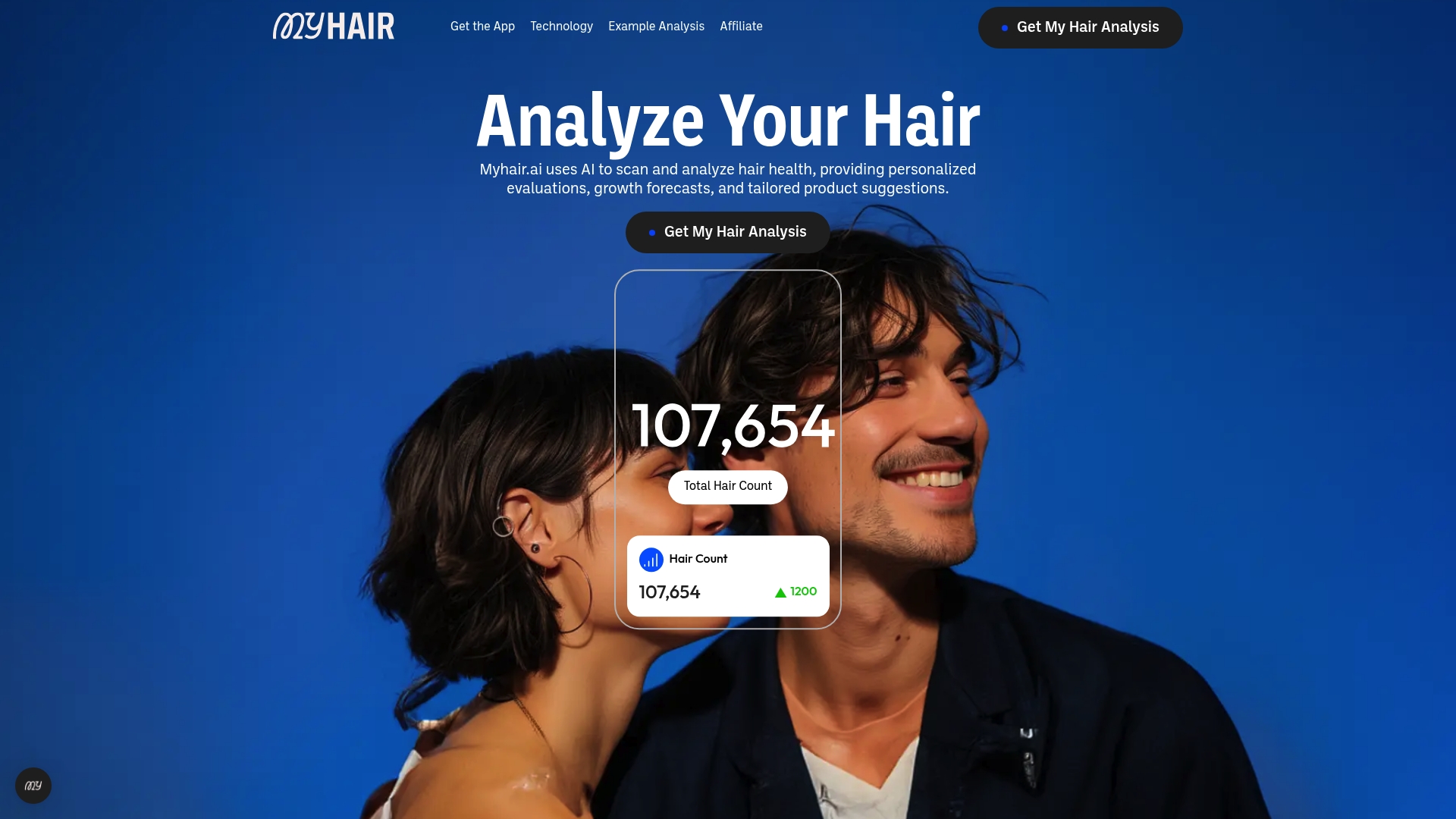
If your tracking points toward something a supplement will not fix, MyHair also has a directory of hair clinics and hair restoration doctors, so the next step is already in one place. If you want to know which products suit thinning hair while you work on the cause, I keep a guide to hair products for thinning hair.
Our perspective
I get asked about prenatals for hair more than almost any other supplement question, and the honest answer is that the question is one step too early. People want a product before they know the cause.
We built MyHair around that gap. A scan gives you a starting point, tracking over time shows you a direction, and the product recommendations and clinic directory give you somewhere to go once you know what you are dealing with. The research says nutrient fixes help when a deficiency exists. We believe the way to learn that is a record of your own hair plus your own lab results, not a guess at the pharmacy shelf.
Our approach is to make that record easy to keep, so that when you sit down with a doctor, you are bringing weeks of dated evidence rather than a feeling. That is the difference between hoping a pill works and knowing whether anything has changed.
Tilen
FAQ
Do prenatal vitamins help hair grow?
Not in people who are not deficient, as far as the research shows. Health.com's medical reviewers state that no research supports the claim, and the 2026 Ravipati and Tosti review found limited evidence that supplements improve hair in healthy people. If you are low in iron or vitamin D, correcting that can help.
Is it safe to take prenatals when you are not pregnant?
They are not designed for you, and the dose of iron is higher than a nonpregnant adult needs: 27 mg versus 18 mg for women and 8 mg for men, per the Mayo Clinic Health System dietitian quoted by Business Insider. Excess iron and folic acid have documented risks, so check with your doctor before taking one regularly.
What is the best vitamin for hair growth?
No single vitamin grows hair across the board. Vitamin D and iron have support when blood tests show a deficiency, and Harvard Health says evidence is conflicting for most others. A blood test tells you which, if any, applies to you.
Is biotin better than a prenatal for hair?
The evidence does not favor either. The 2018 Dermatology and Therapy review did not support biotin for hair loss conditions, and biotin can interfere with lab tests, including thyroid panels. Tell your clinician before blood work if you take it.
Can men take prenatal vitamins for hair growth?
Men need 8 mg of iron a day, far less than a prenatal's 27 mg, and the hair evidence does not support it. If your hair is thinning, a doctor can check your blood levels and discuss treatments with proven results.
Sources
- Prenatal Vitamins for Hair Growth? (Health.com)
- Vitamins and Hair: Sham or Science? (PubMed)
- The Role of Vitamins and Minerals in Hair Loss: A Review (PMC)
- Vitamins, minerals, and hair loss: Is there a connection? (Harvard Health)
- What Happens If You Take Prenatal Vitamins When You're Not Pregnant (Verywell Health)
- Prenatal Vitamins Won't Grow Hair, Nails in People Who Aren't Pregnant (Business Insider)
- Risks of Skin, Hair, and Nail Supplements (PMC)
- Safety First: A Comprehensive Review of Nutritional Supplements (Nutrients, PMC)
- Telogen Effluvium: diagnosis, treatment and referral (GP Atlas)
- Hair loss treatment review (American Family Physician, 2009)